

Batteries won't cut it – we need solar thermal technology to get us through the night
- Written by The Conversation
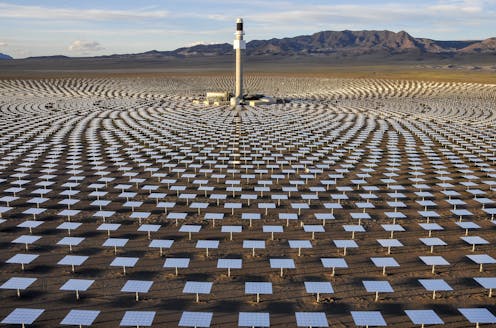
Australia’s transition to renewables is gathering speed, but there’s a looming problem with storage. We will need much more long-duration storage to get us through the night, once coal and fossil gas exit the system.
We also need to find new and better ways to create heat for industrial processes. Renewables can supply much of that heat during the day, but energy storage will be required to meet industry’s night-time heat needs.
Solar thermal technology has the potential to provide both long-duration storage and industrial heat, yet it has been largely overlooked in the Australian context. That is about to change.
The CSIRO Renewable Energy Storage Roadmap identifies a mix of technologies will be required, across sectors, to meet Australia’s energy storage needs, particularly at night. Solar thermal will be an important part of the mix.
Batteries alone won’t cut it. They’re good for short-duration storage, ranging from mere minutes to an hour or two. But you’d need an awful lot of them, at enormous cost, to cover 8-12 hours. Solar thermal becomes cost-effective for long-duration storage at scale, and brings other benefits too.
Solar Power at Night using Concentrated Solar Power by Engineering with Rosie.Read more: Australia's energy market operator is worried about the grid's reliability. But should it be?
Introducing thermal energy storage
The Australian Energy Market Operator (AEMO) identified storage of four to 12 hours’ duration as “the most pressing utility-scale need in the next decade”. That’s what’s required “to manage stronger daily variations in solar and wind output, and to meet consumer demand, also during more extreme days, as coal capacity declines”.
Most people know about lithium-ion battery (chemical) storage and pumped hydro (mechanical) storage. However, thermal energy storage is not well understood or recognised. This is partly due to perceived costs and engineering challenges. However, as concentrated solar thermal plants are built all over the world - 30 are being developed in China alone – the knowledge base is growing.
More than 80% of Australia’s total energy use involves a thermal process:
- combustion of coal and gas for electricity
- combustion of fuels for transport
- combustion of fuels for industrial process heat.
A large proportion of these existing fossil-fuel thermal processes can be met with renewable thermal energy storage.
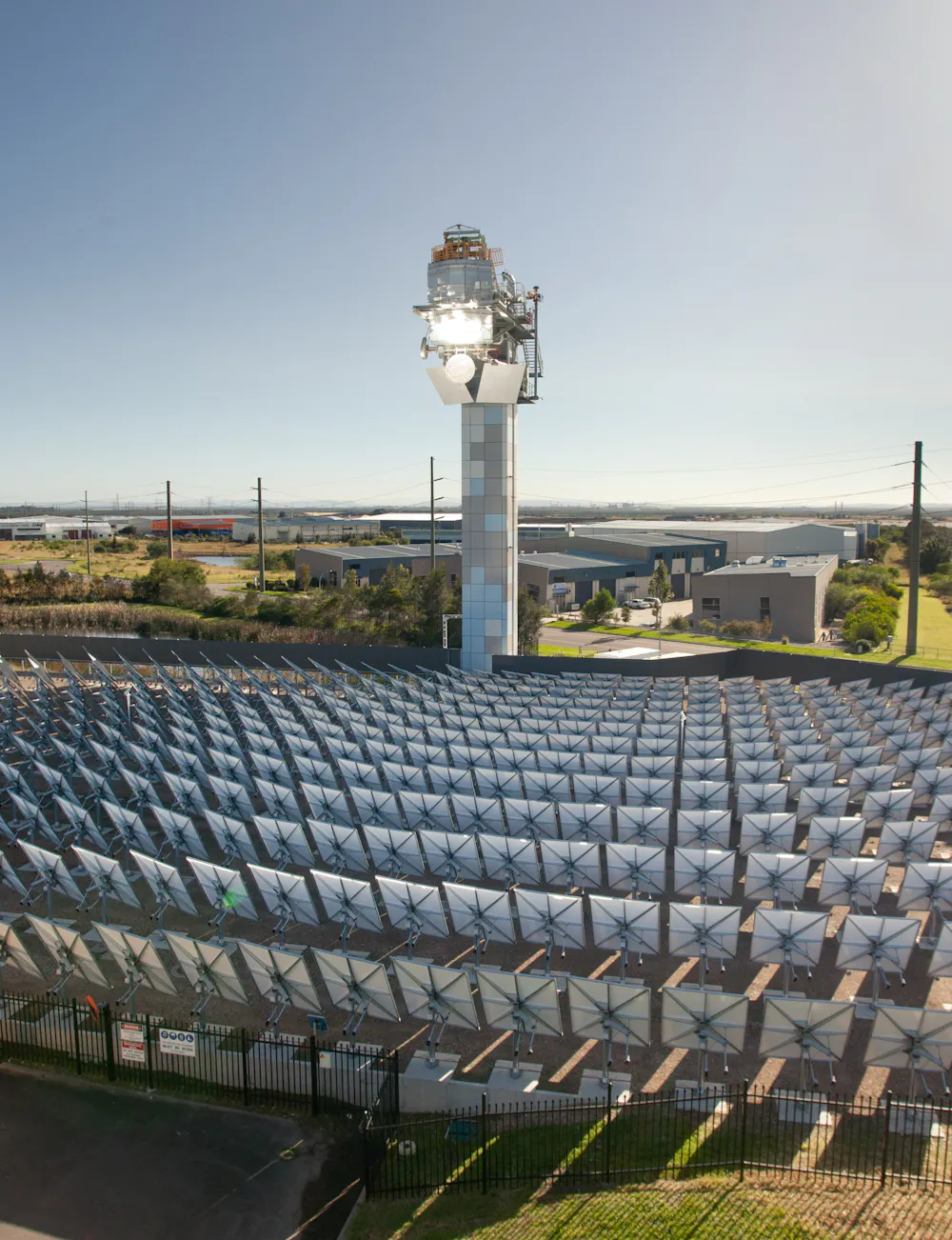
The CSIRO Roadmap found thermal energy storage was a relatively low-cost solution with multiple applications, including utility-scale power generation, renewable fuel production and industrial process heat.
For utility-scale power generation, the lowest cost technology for eight-hour storage in 2050 is thermal energy storage using concentrated solar thermal power. The cost in 2050 was slightly over A$100/MWh, compared with lithium-ion battery at A$140/MWh and pumped hydro at around A$155/MWh.
For 24-hour storage technologies in 2050, thermal energy storage was again the lowest cost at A$99/MWh, compared with pumped hydro at A$145/MWh or grid-charged electrical (using solar photovoltaics and wind) thermal energy storage at A$150/MWh.
Short-duration storage is likely to remain the domain of lithium-ion battery for at least up to two hours duration, and perhaps as high as four hours.
Here’s how it works
Concentrated solar thermal power uses mirrors to convert sunlight into heat energy. This heat energy is typically stored.
The stored thermal energy can then be used, at any time of day or night, on demand, to produce steam for electricity production, or heat/steam for industrial processes.
The system typically provides for six to 24 hours of operations. What this means is concentrated solar thermal can provide continuous, on demand power and/or process heat 24/7. It can also simultaneously generate power and store heat at the same time.
The stored thermal energy is typically used at night. Concentrated solar thermal systems deployed in China, Spain, the United States, South America, Africa and the Middle East generally have over ten hours of storage, which allows for the overnight generation of renewable power and heat.
Concentrated solar thermal is also a synchronous technology because it uses a traditional spinning turbine (identical to those used in coal-fired power plants). This creates much-needed system-strength and frequency services to the grid. In essence, when coal fired power stations close, concentrated solar thermal is a technology that could continue to provide essential system services.
While more than 100 concentrated solar thermal plants, generating 7GWh of power, have been deployed around the world, the technology has not yet been deployed at scale in Australia. This will soon change with the construction by Vast Solar of a 30MW concentrated solar thermal plant in Port Augusta, supported in part by the federal government. The project will have ten hours of thermal energy storage to generate power for supply to the grid, primarily at night. The project will also provide renewable heat and power to produce more than 7,000 tonnes of green (renewable) methanol each year. (Methanol is an essential chemical building block for hundreds of consumer and industrial products such as paints, carpets, fabrics, building materials and liquid fuels).
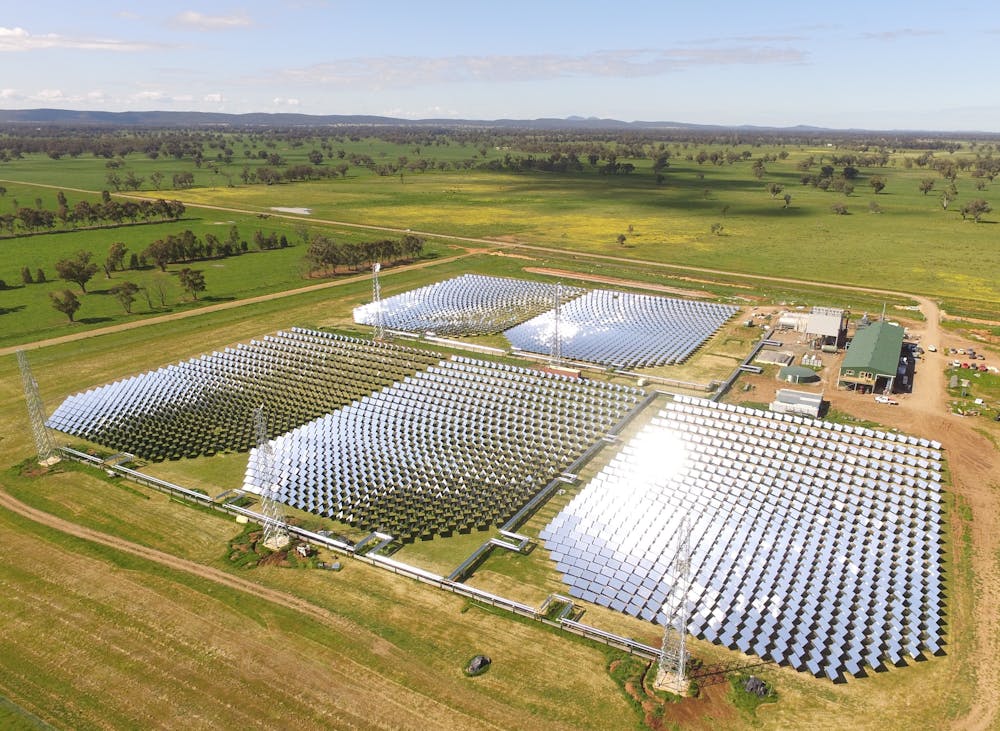 In Vast Solar’s modular design, deployed at the Jemalong Pilot Plant in central western New South Wales, there are five separate arrays, each concentrating solar radiation onto their own 27m thermal receiver tower.
Vast Solar, Author provided
In Vast Solar’s modular design, deployed at the Jemalong Pilot Plant in central western New South Wales, there are five separate arrays, each concentrating solar radiation onto their own 27m thermal receiver tower.
Vast Solar, Author provided
Heed the warning
We need to start building long-duration energy storage systems now, so we have secure and reliable power when the sun doesn’t shine and the wind doesn’t blow. We also need to replace fossil fuels used to create industrial process heat.
Sectors such as mining, industry, transport, agriculture, and households all require secure, reliable, and affordable renewable energy. For many sectors, this need occurs at night, and that necessitates storage.
Editor’s note: Dominic Zaal contributed to the CSIRO Renewable Energy Storage Roadmap as one of a number of internal and external technical advisers.
Read more: Australia's 116 new coal, oil and gas projects equate to 215 new coal power stations


