

Why are First Nations children still not coming home from out-of-home care?
- Written by The Conversation
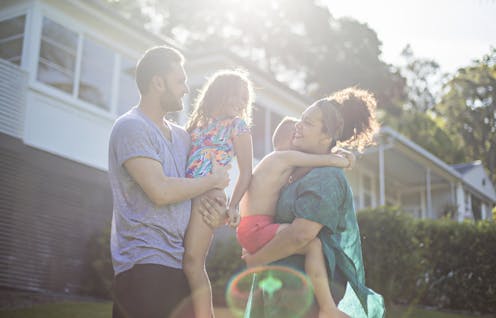
Reducing the number of First Nations children in out-of-home care is a priority of the national Closing the Gap targets.
However, child protection authorities have been removing First Nations children from their parents at increasing rates over the past decade. This is due to a range of factors, including over-surveillance of First Nations families and systemic racism leading to social disadvantage, service and structural inequalities, and mandatory reporting.
For all children, the preferred outcome is for them to return to their birth parents as soon as they are safe and able to do so. This is called reunification or restoration.
Our research, to be published later this year, suggests reuniting children with their parents can reduce the number of Aboriginal and Torres Strait Islander children in care, instead of moving them out of the system through guardianship or adoption by non-Indigenous parents.
However, reunification of First Nations children with their parents is largely overlooked in child and family welfare practice.
Read more: Our child protection system is clearly broken. Is it time to abolish it for a better model?
The numbers show we’re not closing this particular gap
Under the Closing the Gap targets, the government aims to reduce the rate of over-representation of First Nations children in out-of-home care by 45% by 2031.
Government efforts to achieve this have mostly focused on preventing children entering out-of-home care through early intervention and preservation work. This means working to keep families together when concerns have been raised about the safety of children. However, there are still high numbers of First Nations children in out-of-home care, despite these efforts.
The recent release of the annual Australian Institute of Health and Welfare Child protection Australia 2021-22 report reveals the number of First Nations children living in out-of-home care on June 30 2022 was 19,432 nationwide.
This represents 43% of all children in out-of-home care on that date, and an increase of nearly 12% over the past five years.
In NSW, the number of First Nations children living in out-of-home care has increased by 48% over the past decade. Meanwhile, the numbers of First Nations children being reunified with birth parents has decreased by 41% over the same period.
Our new research found a reunification rate of just 15.2% for over 1,000 Aboriginal children in out-of-home care in NSW over the last decade who were part of a longitudinal study.
It is clear to see there is a serious problem: First Nations children are coming into care and not going home.
Legislation and child protection services in Australia create barriers to reuniting First Nations families.
In New South Wales, for example, parents are given about two years to make the changes required so their children can return home, or they transition to long-term care. These expectations put considerable pressure on families who do not have access to support systems or have difficulty addressing structural challenges such as housing.
If reunification is not possible, the next best alternative for First Nations children is to live with other family members, or a First Nations family in their same community. If this is not possible, the next option is foster care, preferably with a First Nations person or family.
But many First Nations children are placed with non-Indigenous foster carers. These children are at a high risk of growing up disconnected from their family and culture. This undermines connections of First Nations children to family and kin, community, Country and the crucial role of culture and lifelong wellbeing.
Bring Them Home, Keep Them Home
Bring them home, keep them home is a collaborative research project involving a team of First Nations and non-Indigenous researchers working alongside Aboriginal community-controlled organisations delivering out-of-home care services and AbSec, the NSW child and family peak body.
This project is focused on understanding the best practices to bring First Nations children back to their families. It explores the experiences of First Nations parents who have had their children placed in out-of-home care, and have either been reunited or are still navigating the system to get them back.
Our research identified two key groups, each with specific needs.
The first group consisted of (mostly young) children recently removed from their parents on short-term or interim orders. These parents are required by child protection authorities to demonstrate they have made swift and significant changes to address the causes of removal. They are unable to address many of these issues without support, such as housing insecurity and family violence.
The second group was a larger group of children and adolescents who have been living in out-of-home care on long-term guardianship and custody orders. These children may have the opportunity to return home to their families. Many want to return home and demonstrate this by running away and going back to their families.
In all states and territories, there are laws that give parental responsibility back to parents if they make an application to the Children’s Court to overturn the guardianship or custody orders.
However, many parents are unaware this is an option for them. Unless the child can no longer live with their out-of-home carer, or a parent pursues legal options, children often remain in out-of-home care until they are 18.
Where to from here
For reunification to be successful, greater investment needs to be provided to culturally safe services to support families. As of 2020-21, only 17% of funding for child protection services went to First Nations-led organisations. The remaining funds went to child protection interventions and out-of-home care services.
Resourcing for caseworkers and child protection services needs to be focused on reuniting potentially thousands of First Nations families who have been failed by child protection systems.
Child protection systems also need to recognise that First Nations children’s cultural and family connections are vital to their wellbeing. First Nations families need better support to stay together, prevent child protection entries and bring their children home.
We acknowledge and thank our research partners, AbSec, Waminda, South Coast Medical Service Aboriginal Corporation, and Illawarra Aboriginal Corporation, for their continued leadership and commitment to this research.


