

Two new Australian mammal species just dropped – and they are very small
- Written by The Conversation
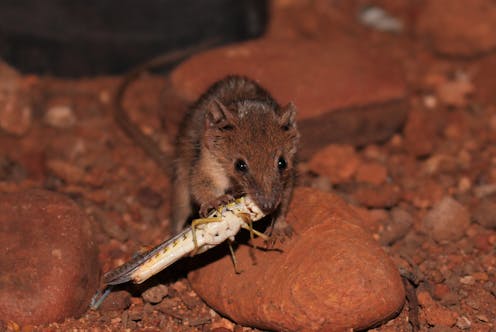
You probably know about the Tasmanian devil. You might even know about its smaller, less-famous relative, the spotted-tailed quoll.
But these are far from the only meat-eating marsupials. Australia is home to a suite of other carnivorous and insectivorous pouched mammals as well, some of them the size of a mouse or smaller.
Tiniest of all are the planigales, some of which weigh less than a teaspoonful of water. Despite their size, these fierce predators often take on prey as big as themselves.
To date, there are four known species of planigale found across Australia. We have recently discovered another two species, both inhabitants of the Pilbara region of northwest Western Australia: the orange-headed Pilbara planigale (Planigale kendricki) and the cracking-clay Pilbara planigale (P. tealei).
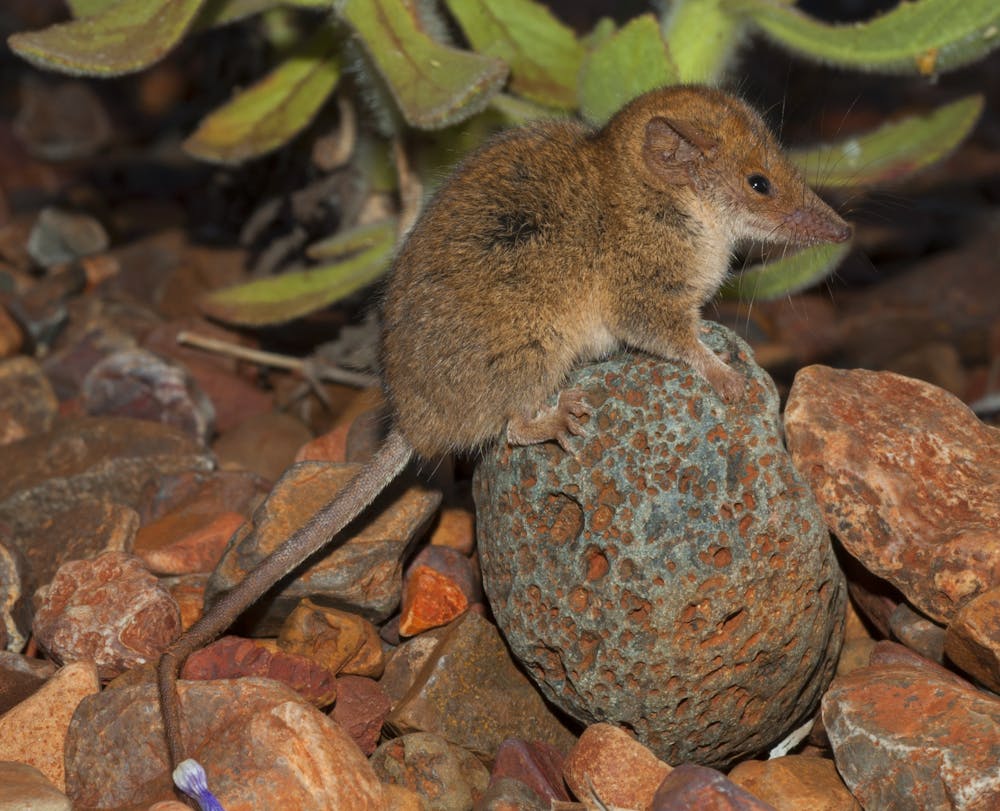
How many kinds of planigale are there?
The name planigale translates to “flat weasel”, an allusion to their extremely flat heads, which allow them to shelter in small cracks in rocks and clay soils. Planigales are among Australia’s smallest mammals, with some weighing an average of 4–6 grams (and measuring around 11cm in length), and other species a bit larger at 8–17 grams (and 13cm long).
Scientific studies from the late 1970s onward using body-shape and DNA data have suggested there are many more planigale species than we think.
We put these theories to the test, and found that planigales in the Pilbara display unique body shapes and are genetically unrelated to any of the four known planigale species.
Why have these species only been described now?
The process of describing these two new species was actually started more than 20 years ago, by scientists who were working at the Western Australian Museum at the time.
Their work began after ecologists conducting surveys for developing mines in the Pilbara were capturing planigales that didn’t really fit the descriptions of the known species. For want of a better option, they were still usually identified as either the common planigale (P. maculata) or the long-tailed planigale (P. ingrami).
Read more: Australia has hundreds of mammal species. We want to find them all – before they're gone
Scientists led by taxonomist Ken Aplin began examining specimens held in the WA Museum and sequencing their DNA. These studies helped to confirm the discovery of two new species.
Sadly, Ken fell ill and passed away in 2019. This is where we stepped in.
Through support from the Australian Biological Resources Study and the Queensland University of Technology we were able to finish off Ken’s species descriptions and submit the research for publication. This is a crucial step in taxonomy – the species description has to be published before the new name can be considered official.
What do we know about the new species?
Both new species occur in the Pilbara and surrounding areas. The orange-headed Pilbara planigale is the larger of the two, weighing an average of 7g (up to 12g for large males) with a longer, pointier snout and bright orange colouring on the head.
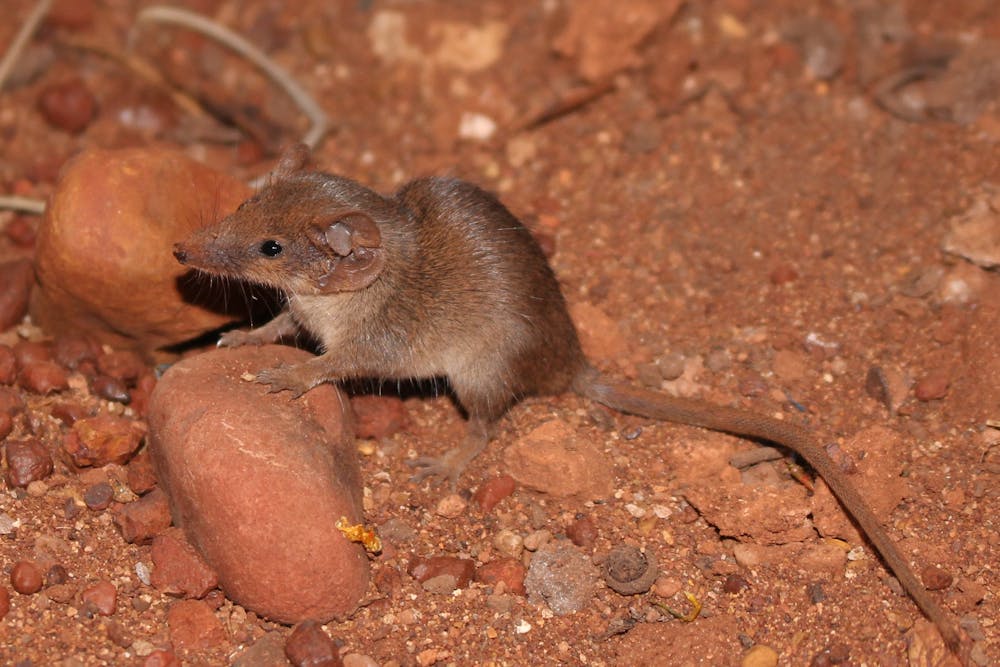 The cracking-clay Pilbara planigale (P. tealei) has only been found on cracking-clay soils.
Linette Umbrello, CC BY-SA
The cracking-clay Pilbara planigale (P. tealei) has only been found on cracking-clay soils.
Linette Umbrello, CC BY-SA
The cracking-clay Pilbara planigale is much smaller, averaging just 4g with darker colouration and a shorter face. It has only been found on cracking clay soils, hence its name.
The orange-headed Pilbara planigale has been found on rocky and sandy soils as well, but both species require a dense cover of native grasses to persist. Both species actively forage during the night, while taking shelter during the day.
This means the two widespread species, the common planigale and the long-tailed planigale, do not occur in the Pilbara or on neighbouring Barrow Island, as was previously thought.
There is still a lot more work for us to do as there remain two “species complexes” of planigales. These are groups where genetic data suggests a species is comprised of multiple different forms.
We’ll be following up on this with more analysis to define more of Australia’s tiniest mammals.


