

Too many renters swelter through summer. Efficient cooling should be the law for rental homes
- Written by The Conversation
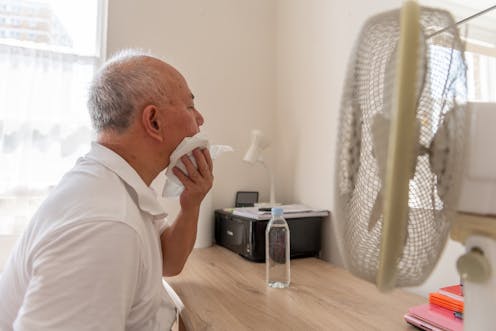
Summer is coming – and it’s starting earlier, becoming hotter and lasting longer. As the hot weather hits, many renters will be sweltering in their homes.
The World Health Organization recommends a list of actions for people to deal with heat. At the top of the list is “keep your home cool”. But for many renters, this isn’t possible.
In recent years, Australian research reports and news articles have emphasised the physical and mental impacts of extreme heat on people living in private and social rental housing. Tenant advocacy group Better Renting’s “Sweaty and Stressed” report, for example, although based on a fairly small sample, found temperatures in rental properties across Australia last summer were above 25°C for 45% of the time (and much more often in some states).
These reports generally find three potential problems:
- rental properties lack fans or air conditioners
- renters who have cooling appliances don’t use them due to the cost
- some homes can’t be kept at an acceptable temperature even when using cooling appliances.
Poor housing quality, such as lack of insulation, also affects home owners, especially those on low incomes. However, renters are usually less able to modify their homes.
The clear evidence of the harm resulting from living in hot homes points to the need to make effective cooling mandatory in rental housing.
Read more: Extreme weather is landing more Australians in hospital – and heat is the biggest culprit
Governments have done little to help
Despite tenant advocates’ work on this issue, governments have done little to protect renters from the heat.
Victoria and Tasmania have minimum rental standards relating to heating, but not cooling. No state or territory makes cooling mandatory in rental properties. The ACT comes closest with minimum standards for energy-efficient ceiling insulation.
The National Cabinet agreement in August, A Better Deal for Renters, did not specifically mention minimum standards on cooling.
The lack of action perpetuates the idea that energy-efficient cooling is simply a matter of comfort. But hot homes have extensive health and wellbeing implications, so it’s a matter of the right to healthy housing.
Read more: No back door for 5 years: remote community's High Court win is good news for renters everywhere
Excessive heat harms people
The impacts of heat go beyond feeling tired, irritated and sweaty. Hot conditions affect cognitive function.
For example, a study of university students exposed to extreme heat found those living in air-conditioned rooms had better memory, attention and thinking speed than those in non-air-conditioned rooms. This finding highlights how heat can reduce learning ability and productivity.
Excessive heat can also affect mental wellbeing and hormonal mood control. The results include heightened aggression and stress and decreased happiness and motivation.
Heat affects quality of sleep, too. That’s bad for people’s health, with effects such as obesity and poorer quality of life.
The impacts are unequal
Renters’ unequal access to cooling in their homes perpetuates health disparities between both individuals and socioeconomic groups.
The health impacts of heat exposure are particularly bad for susceptible groups. For example, older people and children have less ability to regulate body temperature and cope with heat. And conditions such as diabetes, cardiovascular disease, kidney diseases and respiratory diseases such as asthma can hamper the ability to control body temperature.
Heat also worsens mental illnesses, causing higher rates of anxiety and depressive episodes. Lifestyle behaviours such as substance abuse, particularly of alcohol, increase vulnerability to heat and dehydration.
People on low incomes are more likely to live in poor-quality rental housing that gets too hot. As well as restrictions on the cooling systems they can install, they are least able to afford air conditioning. This puts them at a higher risk of illness or even death.
What are the solutions?
Given there are three main problems – lack of cooling appliances, cost of cooling appliances, and poor home design and ineffective insulation – we need multiple solutions.
In the short term, rental standards should be reformed to include cooling appliances. In Victoria, for example, rental homes must have fixed heaters that meet energy-efficiency standards. Similar standards for cooling are needed (as the Greens have advocated).
In parallel, there are longer-term solutions that minimise the need for cooling devices such as air conditioning. Their use contributes to climate change (if not powered by 100% renewable energy).
One of these is setting passive building design standards. Building design, placement and materials can help control temperature by reducing heat gain (using insulation, shade, windows and so on) and increasing cooling methods such as air flow.
Such design standards would create homes that use less energy to cool. In France, for example, “summer comfort” standards dictate that buildings must be a comfortable temperature even without air conditioning.
While these standards could be applied to new home designs, older properties would have to be retrofitted. Research has found that motivating landlords to undertake retrofitting is difficult. It requires a form of enforceable minimum standards.
The local environment in which houses are built also plays a role. Greenery is a nature-based solution to cool urban areas. Trees around a house can provide direct cooling shade.
In summary, we need to provide renters with access to fans and air conditioners so they don’t keep suffering in the heat. We must also enhance our housing stock so we don’t depend on these appliances to keep cool in a more environmentally sustainable future.
Make it a national priority
The number of renters in Australia is likely to rise as home ownership falls further out of reach. Temperatures are rising too.
At the same time, the home environment is becoming more important. Australians spend a lot of time indoors, including working from home.
Ensuring everyone has housing that can keep them cool should be a national housing policy priority.
Read more: How 5 key tenancy reforms are affecting renters and landlords around Australia


