

We analysed citizen science to find Australia’s top 10 most elusive birds
- Written by The Conversation
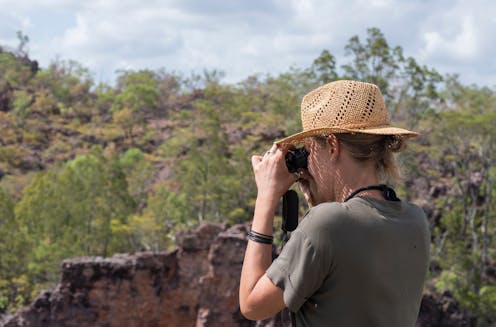
Australia is one of the greatest places to see birds. We are fortunate to have more than 800 different bird species across the nation. At least 370 species are found nowhere else on Earth. They range from the iconic Australian magpie to the migratory short-tailed shearwater, the golden-shouldered parrot and the delightful superb fairy-wren.
Every day, thousands of birdwatchers are out spotting birds. Yet despite this enthusiasm, there’s a lot still to learn. More than 200 species are already listed as threatened with extinction but others may also be struggling and we just don’t know it yet.
In our new research, we used citizen science data to rank Australia’s birds in terms of how well they are known. We looked at how often birdwatchers spot each species and where they find birds, compared with how often they look, to determine rates of survey success. This quantifies how “well known” each species is.
We found a quarter of all Australian bird species can be considered well surveyed and adequately represented in our sightings databases. Many of these species have ranges that overlap with the densely populated regions of Australia. And some, like the southern cassowary and eastern rosella, are well known to most Australians. At the other end of the spectrum, some birds are very hard to find. Here’s Australia’s top 10 most elusive birds.
Taking advantage of citizen science
Before smartphones took off, birders would take notes in their private notebooks. They might share details of interesting sightings on internet forums or birdwatching clubs, but otherwise most knowledge was locked away from scientists and conservationists.
Now birders are increasingly taking advantage of easy-to-use birding apps such as eBird run by Cornell Lab of Ornithology in the United States, and Birdata from Birdlife Australia.
Collectively, these two platforms contain more than 40 million bird occurrence records spanning the entire country. That represents 3.8 million volunteer hours, or more than 430 years of effort.
Using these apps, birdwatchers and scientists alike can quickly collate bird records at a specific location.
As conservation scientists and ornithologists, we wanted to work out how to identify species we know very little about because poorly known species may be disappearing without us realising. While some researchers have already highlighted serious declines in poorly known species like the red goshawk, swift parrot and buff-breasted buttonquail, we recognised citizen science databases as a vast untapped source of knowledge for all of our native birds.

Australia’s most elusive birds
In our new study, published in the journal Emu (Austral Ornithology), we looked at millions of citizen science bird records. We focused on 581 terrestrial, native species.
We found a group of 56 “hide and seek” champions of Australia. These are the species which are seen least often by birdwatchers. Many of these species exhibit cryptic behaviour or are primarily nocturnal, which explains why they are not regularly seen by citizen scientists. However, we have serious concerns for a handful of these species.
The Coxen’s fig parrot emerges as a species of major concern. Birders recorded more than 300,000 surveys within this species’ range in the rainforests of south-east Queensland and northern New South Wales. Yet only four sightings of this tiny green parrot are documented in our combined citizen science database. None of these sightings were accompanied by photo or video evidence. In fact there has never been a photo of a live bird of this species. Our research suggests this species is well and truly “lost to science” and may already be extinct.
Another species of increasing concern is the buff-breasted buttonquail of far north Queensland. Only seven sightings of this bird are recorded in our combined dataset. Recent research suggests many reported sightings of this species may be mistaken. As with the Coxen’s fig parrot, no photo of a living buff-breasted buttonquail has ever been taken. Nevertheless, there is some hope for this elusive species, as its range has been less comprehensively surveyed by birdwatchers. There is now a concerted effort to find them.
We can all play a role
Our analysis shows much of Australia is not frequented by birdwatchers, so birds in our least populated areas are still poorly known to contemporary science. Some of the most sparsely surveyed regions include Australia’s many deserts, and remote areas such as the Nullarbor Plain, Arnhem Land and western Cape York Peninsula.
Australians can help these elusive birds by heading outdoors with a smartphone and a pair of binoculars. Records of scarce birds will become increasingly important as species continue to decline. Even records of more common birds in backyards have value too. The more information we have, the more chance we can slow the rate of extinction and conserve our amazing birdlife.


