

Senate estimates and inquiries: what are they, what’s the difference, and why do we have them?
- Written by The Conversation
In recent times, we’ve seen plenty of big news stories emerge from senate inquiries and estimates hearings.
Senate inquries have examined hot-button issues as diverse as disruption in school classrooms, the November 8 Optus service outage, and questionable tax minimisation advice from the “big four” accounting firms.
Estimates hearings have, if anything, been even more sensational. Earlier in the year, former Reserve Bank of Australia governor Philip Lowe copped a grilling over inflation and rising rents. Senior public servant Jim Betts likewise endured a couple of very tense exchanges. One was about his t-shirt, and the other concerned a degrading “hotties list” that allegedly circulated among some male graduates in his department.
But what actually are senate estimates? And what’s the difference between estimates and inquiries?
Read more: Grattan on Friday: It can be a battle to get information from the Albanese government
The history of senates
Before getting into the weeds, it’s important to understand why we even have a senate.
The word senate comes to us via old French from the Latin root senex, which means “old man” – the same etymology as “senior” (and the less flattering “senile”).
This is because senates and “upper houses” in parliamentary systems have traditionally been dominated by older representatives of the establishment. As James Madison, one of the framers of the US Constitution, argued, senators’ age (and, hopefully, wisdom) helped them resist the “impulse of sudden and violent passions” and the tyranny of the majority.
Even today, the average age of a US senator is over 65. Traditionalists were recently scandalised by the idea of relaxing the dress code to allow hoodies in the chamber.
Little wonder, perhaps, that Paul Keating famously considered our own Senate to be “unrepresentative swill”.The basic idea of all this, dating back to ancient Rome, is that a senate’s role in the division of powers is to be a stately and deliberative check on populist politicians and policy.
This is why senates and other “upper houses” around the world typically have the power to review and amend legislation passed by their colleagues in the “lower house”.
The importance of committees
Even when it is not debating bills in the chamber, the Australian senate continues to play this role in our democracy by scrutinising government business in its committees. These committees conduct their own hearings, investigations and inquiries.
Broadly speaking, and with some exceptions, there are three types of senate committee:
standing committees, which serve for the full length of the parliament
select committees, which serve for shorter periods and investigate specific issues
joint committees, which have members from both the senate and the House of Representatives.
There are eight standing committees in the Australian Senate. Each covers different broad areas of policy (like economics or education), and conducts estimates hearings in its area.
So what are senate estimates?
According to senate standing orders, estimates hearings are committee proceedings in which senators may “ask for explanations from ministers in the senate, or officers, relating to items of proposed expenditure”.
After the budget is handed down in May, senior officials and ministers must front up to standing committees to answer questions about estimates (hence the name) of their expenditure for the coming year.
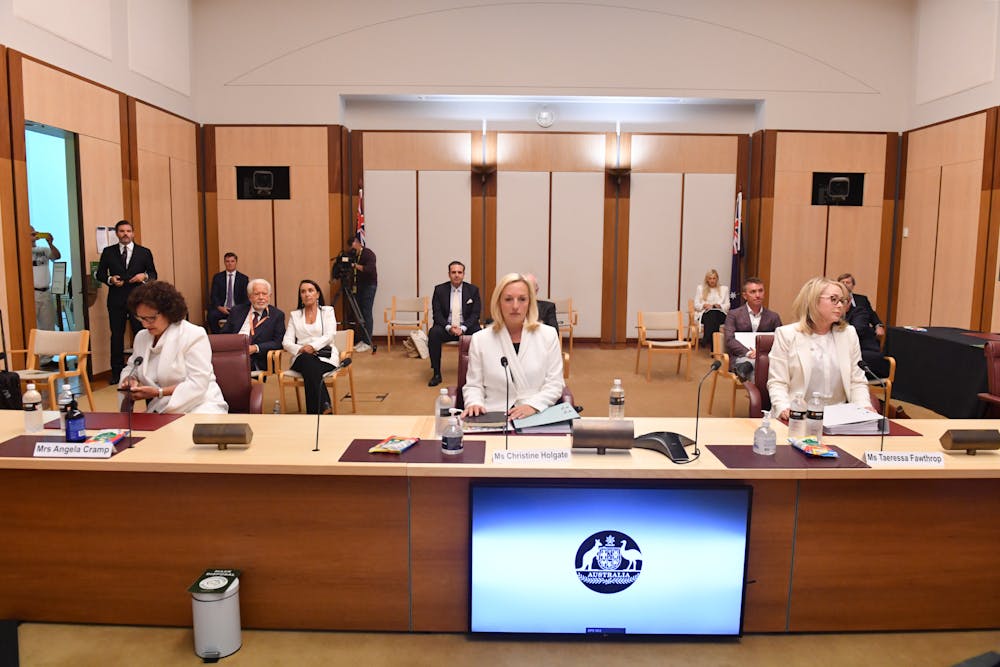
These hearings are mostly pretty staid affairs. Invariably, however, members manage to find time for political bunfights as well.
Sometimes these more sensational moments are actually about budgets and expenses (Cartier watch, anyone?). But they’re just as likely to be squabbles between opposing politicians (who could forget this testy exchange, for example).
Read more: Australia Post CEO Christine Holgate quits in Cartier watches affair
What about senate inquiries?
Unlike estimates, senate inquiries are set up as needed to investigate specific policy issues.
For this reason, they are mostly undertaken by standing committees but can also be assigned to select committees. For example, current inquiries into disaster resilience, the cost of living, and the shenanigans at the Perth Mint are being run by select committees.
The other thing to know about senate inquiries is that while they’re not always high profile, there are a lot of them. The senate may only sit for 60-odd days a year, but this doesn’t mean senators get an easy ride.
Read more: Question Time reforms are worthy but won't solve the problem of a broken political culture
There are 52 senate inquiries happening right now. Each is run by a committee of between six and ten senators. This means that each senator is typically on several committees at once, with responsibility for several inquiries at the same time. That’s in addition to all their other responsibilities.
Once completed, these inquiries publish reports of their findings. Sometimes these reports have a big impact. Other times, they go straight into the proverbial bottom drawer.
Senate estimates and inquiries were once lower profile. They continue to serve their essential oversight purpose, but it can sometimes feel like we’re hearing about them more and more often. This might not be such a good thing.
With greater public profile comes a risk that they will deteriorate further into political theatre and grandstanding. Cynical political operators see them increasingly as an opportunity to score points with the media and please the party machine.
But if senate estimates and inquiries go the way of rowdy question time, the upper house’s ability to provide effective and diligent scrutiny will suffer. We will all lose out as a result.


