

If the ABS guts Australia’s time use survey, women’s work will count for little
- Written by The Conversation
Childcare is probably Australia’s largest industry, most of it unpaid.
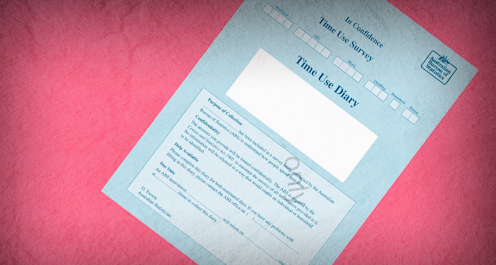
We know this because of Australian Bureau of Statistics time use surveys. Since 1992 these surveys have recorded what thousands of Australians say they do with their time in diaries kept for 48 hours.
But if the Bureau of Statistics proceeds with its current plans for scaling down the survey we soon won’t be able to tell.
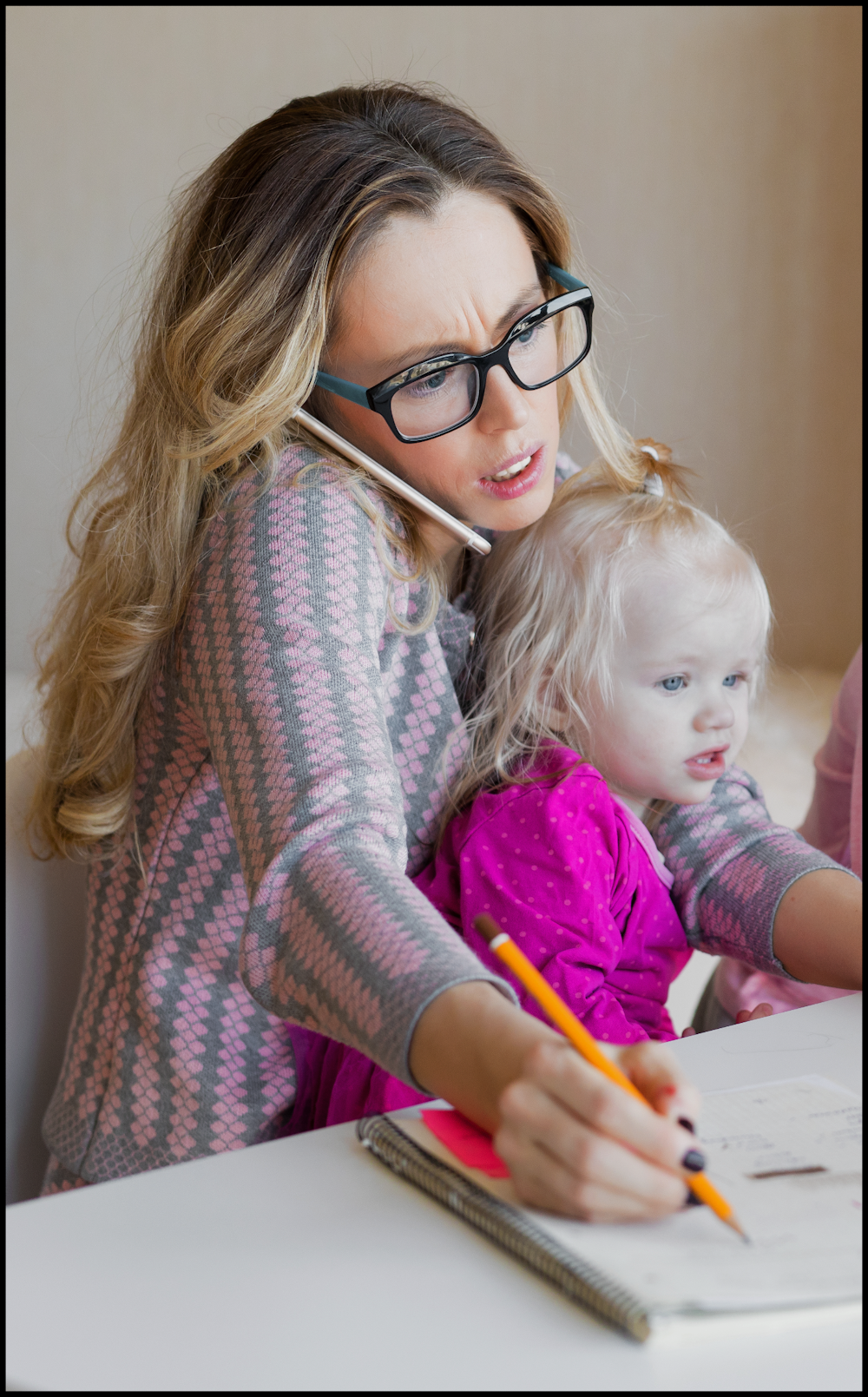
Australia has not only led the world in recording time use, but also in recording simultaneous activities – what Australians do when they multitask.
In 1997 the survey found that whereas the average time spent on childcare as a main activity was about two hours per day, the average when simultaneous activities were taken into account was closer to seven hours per day. Among the simultaneous activities were preparing meals and washing clothes.
In 2013 the scheduled five-yearly update was shelved to make budget savings. It wasn’t revived until 2020-21, but amidst the chaos of COVID, physical diaries were replaced with online diaries without an expectation they be completed in real time.
Online, without context
Now the bureau wants to keep it that way. It has told a meeting of stakeholders it plans to conduct the survey each year instead of once every five years, but online rather than via diaries in order to make it less tiring for respondents. It would be cheaper too.
It also wants to exclude simultaneous activities.
This means we will no longer get a good read on the total amount of childcare and other domestic activities we are doing. Our surveys will also no longer be directly comparable to those of other countries.
Missing as well would be contextual information such as who else is present, location, mode of transport, and use of mobile phones and other devices.
Time-use expert Lyn Craig of the University of Melbourne says that without the contextual data the bureau proposes to leave out we won’t be able to capture the full dimensions of care work, including whether the breakdown by gender is changing.
Michael Bittman, who was seconded to the ABS for the first national time use survey and has chaired United Nations committees on time-use methodology, says the proposed changes will “take Australia from being a leader to a laggard”.
Lighter than the world’s lightest
The International Labour Organisation has designed a light one-day time use survey that will take just 15 minutes to complete, intended for poor countries.
What Australia’s bureau is proposing looks as if it will take even less time, making it one of the poorest time use surveys on the planet.
The survey needn’t be annual, as year-on-year changes are usually small. A substantial survey conducted once every five years would be much better.
Where the bureau thinks a survey is important, it conducts it face-to-face. That’s what it does with Australia’s six-yearly Household Expenditure Survey, the one used to determine what Australians spend their money on, which forms an input to the consumer price index.
It’s a question of priorities
That expenditure survey requires far more work on the part of the respondent than the time use survey, including access to mortgage documents and piles of bills.
If the bureau remains committed to doing the time use survey online, it should do it in a way consistent with the best practice in the rest of the world.
International researchers are developing an electronic light diary that collects information about secondary activities and contexts. It has been approved for use in nine countries.
Those who specialise in time-use research say the bureau’s current plan is destined to fail. There’s a good deal of women’s unpaid work it won’t capture.
In 1988 New Zealand economist Marilyn Waring wrote a famous book called Counting for Nothing about how women and the environment were invisible in policymaking.
If the bureau proceeds as planned, it will take us back toward those days.
Read more: A decade after the arrival of the smartphone, we're about to find out how we use our time


