

From invisible segregation to the visible heart: what 100 years of kitchens can tell us about domestic labour
- Written by The Conversation
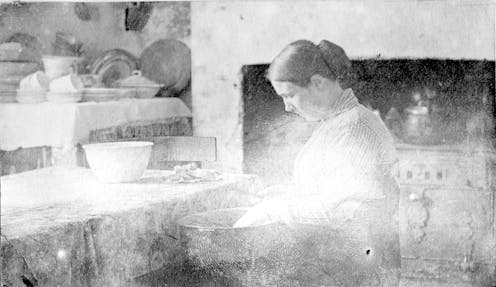
Long before COVID shone a spotlight on working from home, the realms of home and work have always been blurred – particularly for women as “housewives”, working mothers and caregivers, and those employed as servants or “home help”.
Historic Australian houses with conserved kitchens and associated service and servant rooms are an evocative source to turn to to experience places of domestic labour.
I recently visited four historic houses in Victoria that are open to the public to get a better understanding of these women who worked from home.
Spanning the mid-19th century to the early 1950s, these houses tell us much about the history of paid and unpaid domestic work, overwhelmingly carried out by women. They vividly show how home work shifts from being totally segregated and seemingly invisible towards becoming the visible heart of the modern house.
Read more: Dream homes of the future still stuck in the past
Como House and Garden
Como House, built from the 1840s onwards in the south-east suburbs of Melbourne, is a substantial home and garden, its longest residents being the Armytage family.
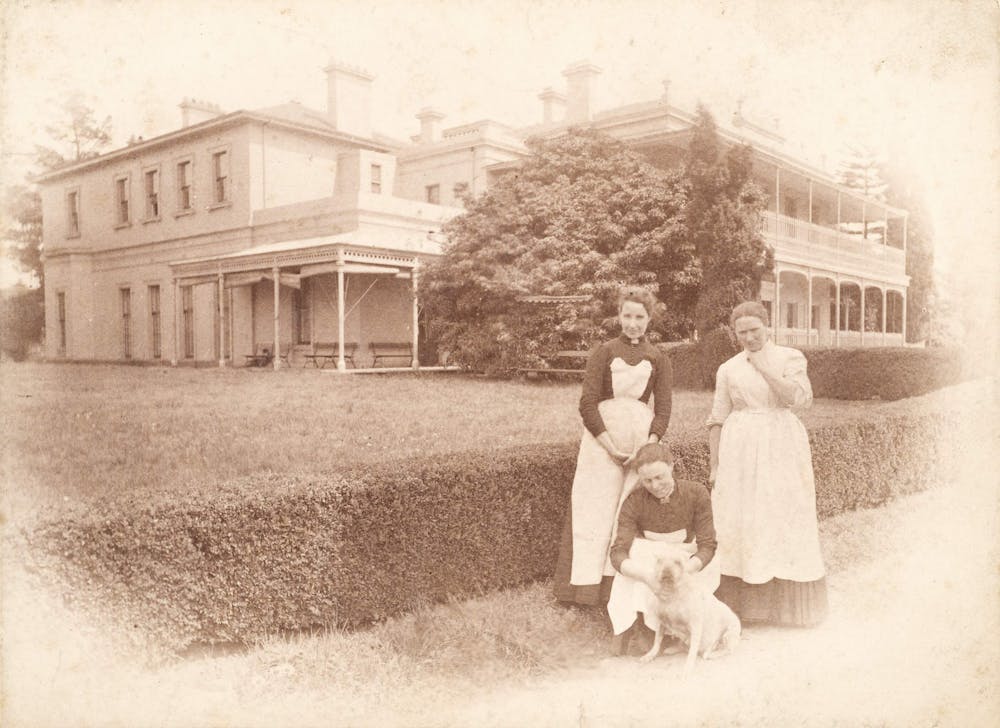
The traditional English upstairs and downstairs segregation here occurs all on one level, with a separate outbuilding wing constructed sometime between 1846–1855.
This separation between servant and served spaces ensured the smells and noise of cooking and cleaning could be contained. There were less opportunities for chance interactions between staff and the family.
It certainly wasn’t designed for convenience.
Around the well-scrubbed wooden kitchen table, all sorts of domestic tasks were carried out, including the making of candles, the salting down of vegetables, the boiling up of soap, and the preserving of fruits. Walls were simply whitewashed for hygiene and high windows only modestly aided ventilation from the smoke of the ovens.
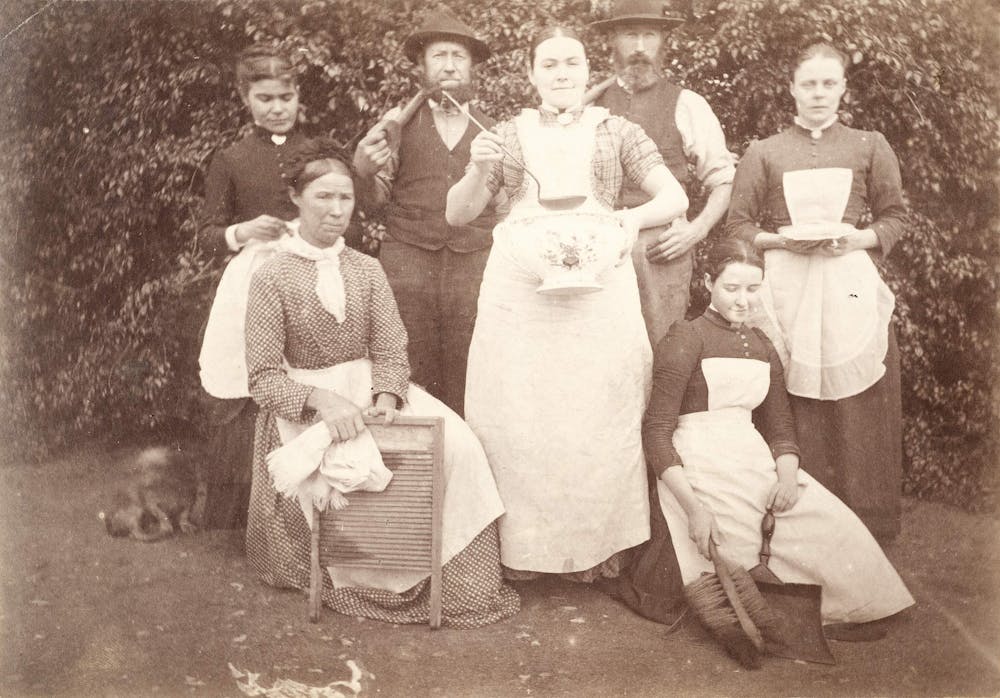 A group of servants featuring gardeners, cook, laundry woman and maids, taken by Ada Armytage in the Como gardens.
University of Melbourne Archives
A group of servants featuring gardeners, cook, laundry woman and maids, taken by Ada Armytage in the Como gardens.
University of Melbourne Archives
Historical records of servant labour in Australia are relatively scarce, but we can start to imagine their lives through the domestic technologies and spaces that remain intact.
Change was slow. Rudimentary fire boxes and bread ovens from the early colonial days were gradually replaced with cast iron ranges imported from England in the 19th century, depending on household wealth. The existing Pullinger range at Como dates from 1880. Gas was mistrusted by many house mistresses and cooks but became a necessity in the face of domestic labour shortages.
Como House didn’t have a gas stove until the early 20th century. And although Melbourne was an early adopter of electrification since 1867, electricity was only installed at Como in the 1890s. This was not typical of all households until as late as 1950. Visitors can appreciate the labour-saving innovation of plumbed-in enamelled sinks and brass taps that alleviated the burden of fetching water manually.
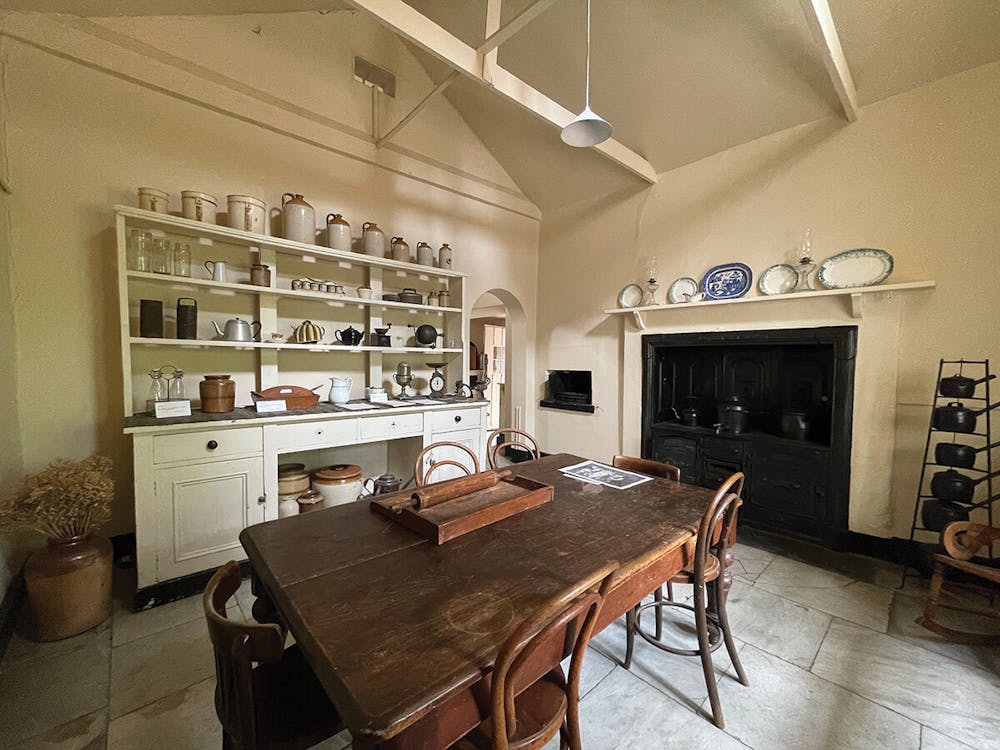 The kitchen at Como House today.
Hannah Lewi
The kitchen at Como House today.
Hannah Lewi
Rippon Lea Estate
Although the presence of employed home help feels very absent in empty heritage houses today, visitors can get glimpses into the evolving relationships between home labour and domestic technologies, and about the conditions of female servants whose employment declined rapidly in the early 20th century from 150,000 in 1911 to 42,000 in 1947.
Rippon Lea, also in south-east Melbourne, is one of Australia’s largest and most intact heritage homes, built from the 1860s. Here, domestic work goes back underground with extensive kitchen, pantry and cellar rooms in the basement. It was originally designed by Reed and Barnes for the Sargoods, and then sold to the Nathan family. Louisa Nathan extensively remodelled the kitchens and added a glamorous swimming pool in the 1930s.
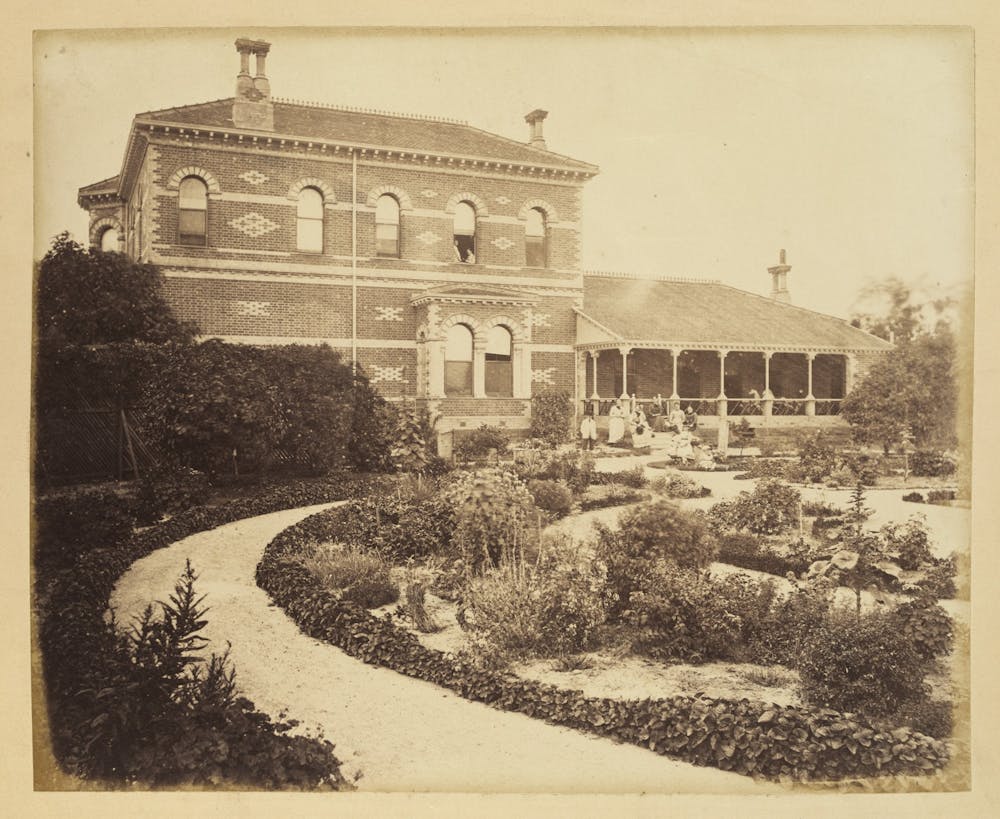 Rippon Lea House, photographed in 1880.
State Library Victoria
Rippon Lea House, photographed in 1880.
State Library Victoria
The now abandoned original service rooms are overwhelmingly dark: the slate floors and low levels of daylight maintained relatively constant temperatures. Servants were on call 24-hours-a-day until more regulation of working conditions in Australia was gradually achieved.
An intricate system of bells and, later, electrical alarms and a hydraulic powered dumbwaiter linked the downstairs with upstairs. They are all symbolic of servants’ lack of agency over their own time and bodies.
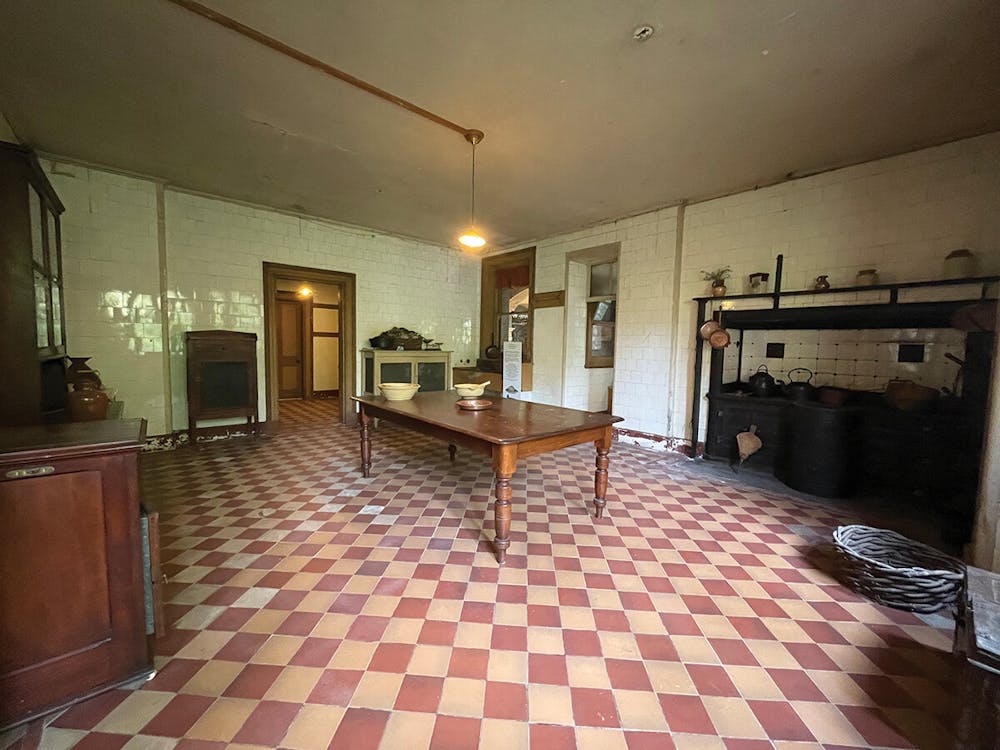 The basement kitchen space at Rippon Lea.
Hannah Lewi
The basement kitchen space at Rippon Lea.
Hannah Lewi
The Heights
The Heights in Geelong was built in 1854 as a prefabricated house of German origin for Charles Ibbotson. The kitchen was renovated in the 1930s into a modern, streamlined pale yellow and chrome “fitted” kitchen.
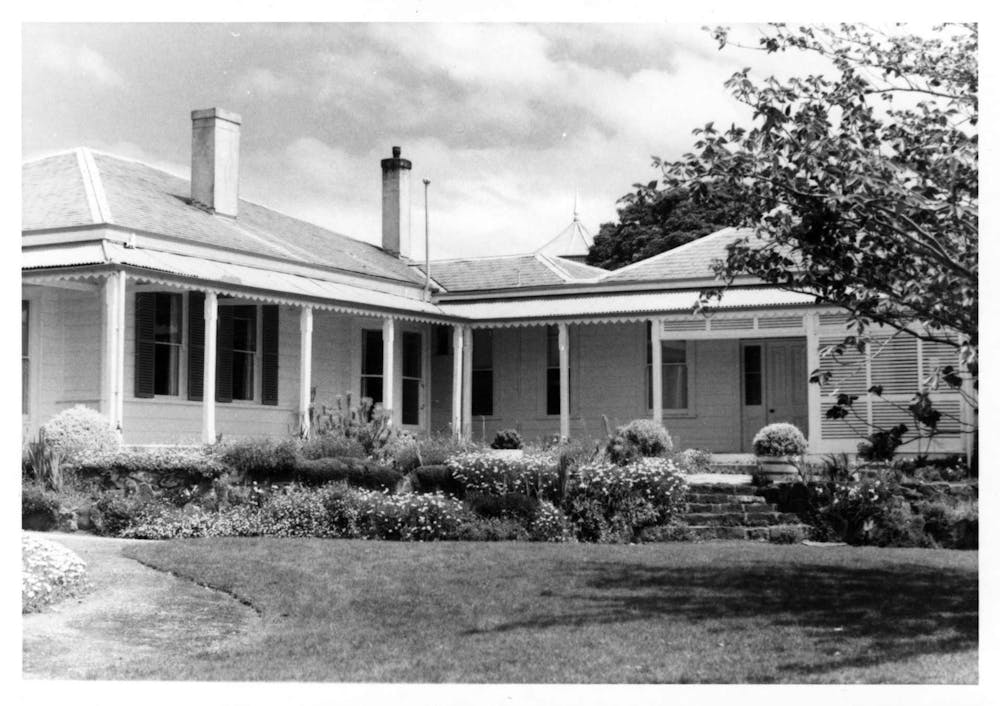 The Heights, Geelong, photographed in 1975.
John T Collins/State Library of Victoria
The Heights, Geelong, photographed in 1975.
John T Collins/State Library of Victoria
New electric appliances displayed on benchtops promised efficiency in the face of far less available home help. The kitchen also starts to include more habitable and informal spaces in which to prepare and eat simple meals by a much smaller staff, or wives and mothers. At the Heights there is a sunny eating nook with a large table and ample built-in cupboards.
Here the kitchen has become more central within the main house plan, but remains quite a discrete space with electric service bells still a feature.
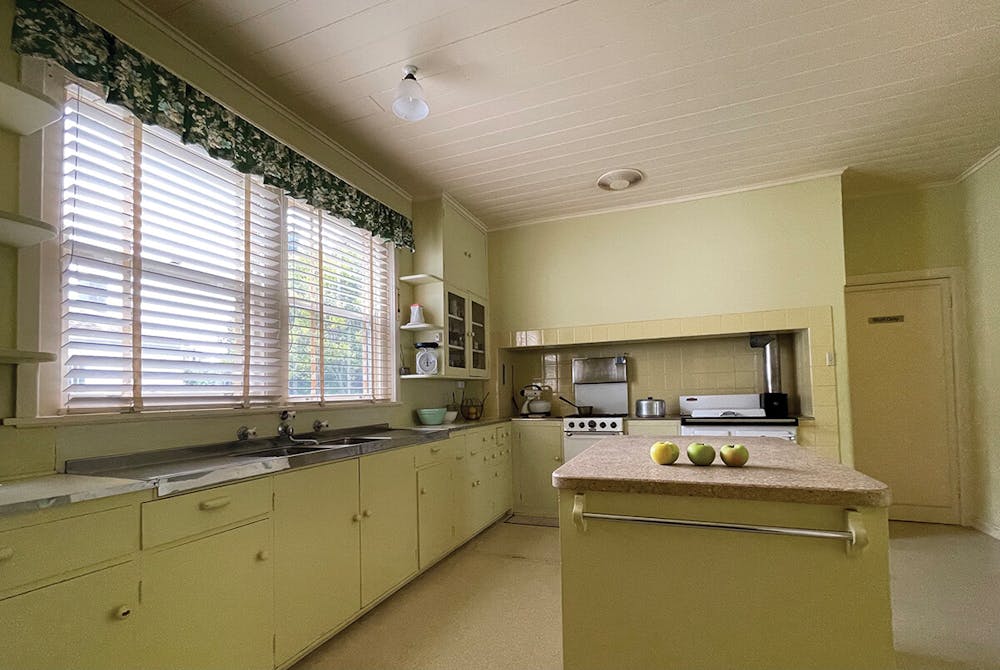 The yellow streamlined kitchen at The Heights.
Hannah Lewi
The yellow streamlined kitchen at The Heights.
Hannah Lewi
Read more: Great time to try: cleaning the house (while fitting in a workout)
Boyd House II
The innovative Boyd House in South Yarra was designed by the architect Robin Boyd in the 1950s. It captures the huge changes in home design and ways of living post-World War II.
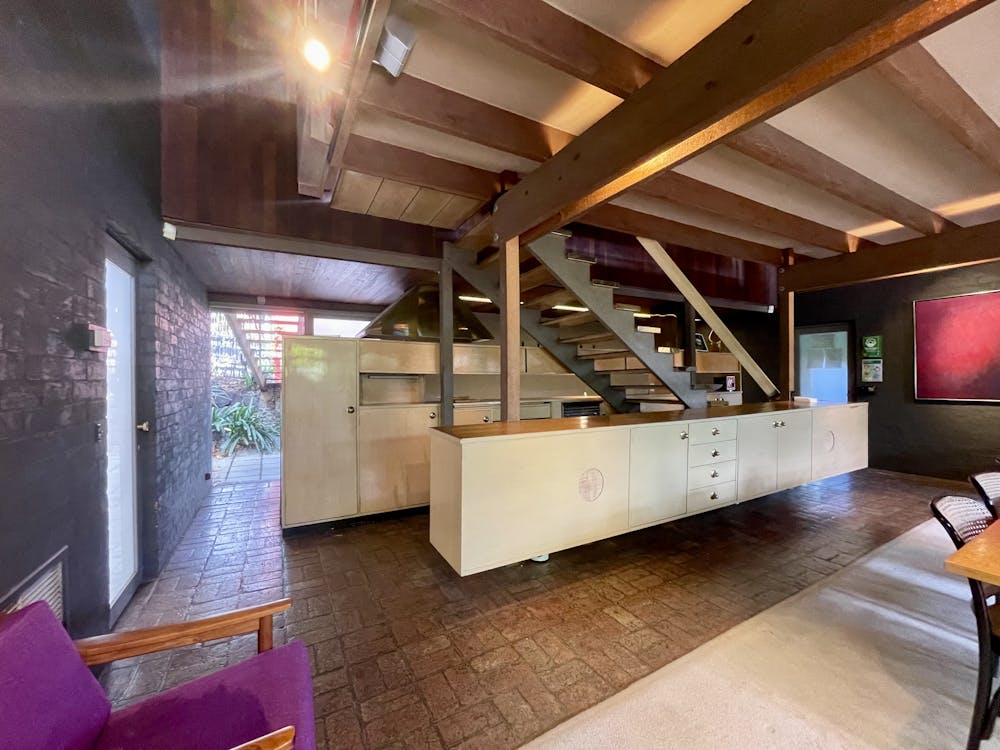 The kitchen is at the centre of Boyd House.
Hannah Lewi
The kitchen is at the centre of Boyd House.
Hannah Lewi
Kitchens had now become smaller, more open and central to the main living areas. Housewives took over much, or all, of the burden of housework. The promise of electric appliances well and truly replaced servants – here, hidden away in built-in cupboards.
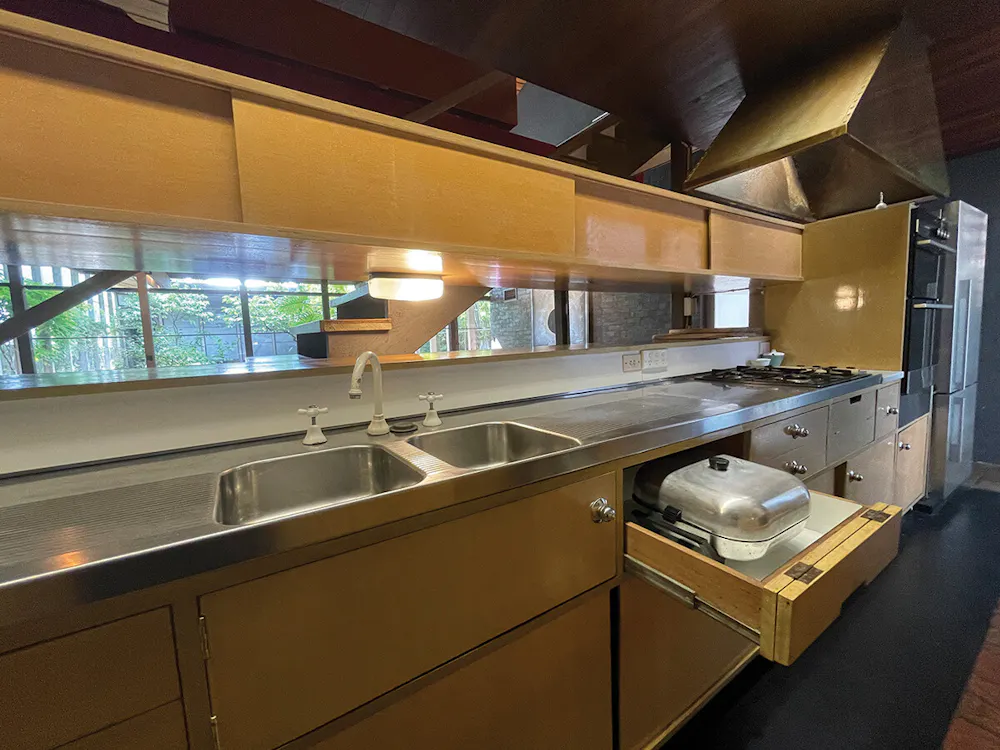 At Boyd House appliances are hidden away.
Hannah Lewi
At Boyd House appliances are hidden away.
Hannah Lewi
From a visit to these four houses, the contrasting antecedents of today’s “servantless” kitchens as places of domestic work can be traced. The traditional kitchen remains a discrete room displaying, perhaps, a porcelain “butler” sink, copper pans, white-washed timber and a free-standing stove.
By contrast, the contemporary minimalist kitchen is now located within the main living space, and is designed to conceal the multitude of appliances in an attempt to make domestic labour invisible.


