

Grand designs? Why many Australian architects say their career makes them unhappy
- Written by The Conversation
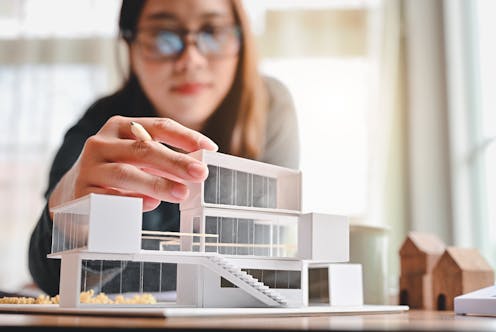
For years there have been suggestions of widespread poor wellbeing among architects. In many ways this is not surprising. It’s well established the profession has a culture of long hours and (often unpaid) overtime, relentless and pressured deadlines, high responsibility and liability and surprisingly low starting pay, even after five years of university education.
Add to this the increasing pressures facing all workers in the construction industry, including new procurement and contracting models, and it seems like a recipe for trouble.
But up until now the perception has been just that. Despite much concern and discussion, a mountain of anecdotal evidence, and a lot of harrowing stories, there have been little firm data to elucidate the problems – let alone to suggest means of improvement.
Now our new research, undertaken over the past four years, suggests the story is not quite as straightforward, nor as entirely dire, as it might first appear.
So are architects actually struggling?
Is the overall wellbeing of architects negatively affected by their work lives? The short answer is, in many cases, yes.
Using the Australian Unity Personal Wellbeing Index, we found the subjective quality of life of our respondents was substantially lower than that of the general working population.
Furthermore, our first practitioner survey, in 2021, found 42% of the 2,066 respondents considered working in architecture to have had a negative overall effect on their wellbeing, with 50% saying the overall effect had been positive.

A significant portion of our respondents felt anxious, distressed, overworked, exhausted, underpaid and generally frustrated by workplace dynamics and circumstances outside their control, with elevated levels of burnout and role overload.
In response to our open-ended survey questions, respondents wrote tens of thousands of words – heartfelt and sometimes distressing accounts of struggles in their work lives.
Serious as they are, though, the negative findings only tell half the story. Many architects also reported their love for the profession, their sense of purpose, and their pride in what they do. Many reported a strong sense of professional identity and creative role identity, and a deep conviction about the benefits good design can bring to the world.
 Many architects had a deep conviction about the benefits good design can bring to the world.
Daniele Buso/Unsplash
Many architects had a deep conviction about the benefits good design can bring to the world.
Daniele Buso/Unsplash
But it was telling that, while many respondents were personally committed to the profession and believed deeply in the benefits it could bring society, they would not recommend it as a career to others.
Many perceived an imbalance between effort and reward, and believed practising architecture often undermined their personal wellbeing.
As one respondent wrote: “I do love it, I just find that it’s overwhelmingly exploitative.”
The contradictions of (over)commitment
These apparent contradictions make more sense when we consider how the profession sits at the intersection of the creative and construction industries.
The work of architects straddles the creative and pragmatic. It can be a highly complex intellectual puzzle, requiring exceptional skill and inventiveness in problem-solving, alongside the integration and synthesis of often conflicting requirements.
Design is an absorbing, challenging, creative endeavour. The intensity of project-based work, and the sense of camaraderie and pleasure of collaboration, are enormously valued by practitioners. But they also have a propensity to become too much – to flip from being a positive to a negative influence on wellbeing.
 The work of architects straddles the creative and pragmatic.
sculpies/Shutterstock
The work of architects straddles the creative and pragmatic.
sculpies/Shutterstock
The satisfactions of architectural practice are inherently entangled, it seems, with its risks. These hazards can be either ameliorated or exacerbated by cultures in specific workplaces, and what is normalised in the profession as a whole.
Across the board, the hazards are clearly made worse by downward pressure on the time and money available to complete work, because of fee pressures, risk shifting in the construction industry, and sometimes unsustainable business management practices within architecture.
Systemic change is required
Understanding and addressing work-related wellbeing is crucial to the future of the architecture profession as a viable and fulfilling career path, and for realising the benefit design can bring to the world.
Improving wellbeing within the profession, and elsewhere, starts with an ethical proposition: people deserve to feel supported to do their work, in a psychologically safe environment where demands are clear and reasonable, and rewards are commensurate.
 People deserve to feel supported to do their work in a psychologically safe environment.
Hitdelight/Shutterstock
People deserve to feel supported to do their work in a psychologically safe environment.
Hitdelight/Shutterstock
Above all, their legal rights and entitlements must be respected.
Many architects characterise the challenges to wellbeing in the profession as systemic. Our research found they’re not just a result of isolated instances, nor the “fault” of any single group, professional role or practice type.
This is a structural situation to which the whole profession is subject, and is certainly not something that can be fixed with individual self-care.
Our project will culminate in a symposium in Melbourne on May 8 and 9 where we will discuss our findings and, more importantly, endeavour to chart a path forward to systemic change.


