

Julian Assange’s appeal to avoid extradition will go ahead. It could be legally groundbreaking
- Written by The Conversation
Wikileaks founder Julian Assange’s challenge to the order for his extradition to the United States to face charges of computer misuse and espionage will continue, after the High Court in London rejected US government assurances that his rights to freedom of expression would be protected.
On March 26, the High Court conditionally granted Assange the right to appeal the UK Home Secretary’s order that he be extradited. The High Court granted Assange the right to appeal on three grounds and agreed to hear a full appeal on those grounds only.
The court sought assurances from the US that the risks posed to Assange if he were extradited could be prevented. It decided the assurances were insufficient. So what happens now?
What were the legal arguments?
The first ground of appeal accepted by the court is that extradition would be incompatible with Assange’s right to freedom of expression, as guaranteed by article 10 of the European Convention on Human Rights. The second ground, related to the first, is that he would be discriminated against on the basis of his nationality because he could, as a non-citizen of the US, be unable to rely on First Amendment freedom of speech rights.
The final ground of appeal is inadequate protection for the principle of specialty. This is the guarantee in the US–UK extradition treaty, common to many such treaties, that the person subject to extradition may only be tried for crimes listed in the extradition request.
The issue of specialty is significant in this case because the US could have charged Assange with crimes that attract the death penalty. The UK – like many countries, including Australia – will not extradite where there is a real risk the person could be executed.
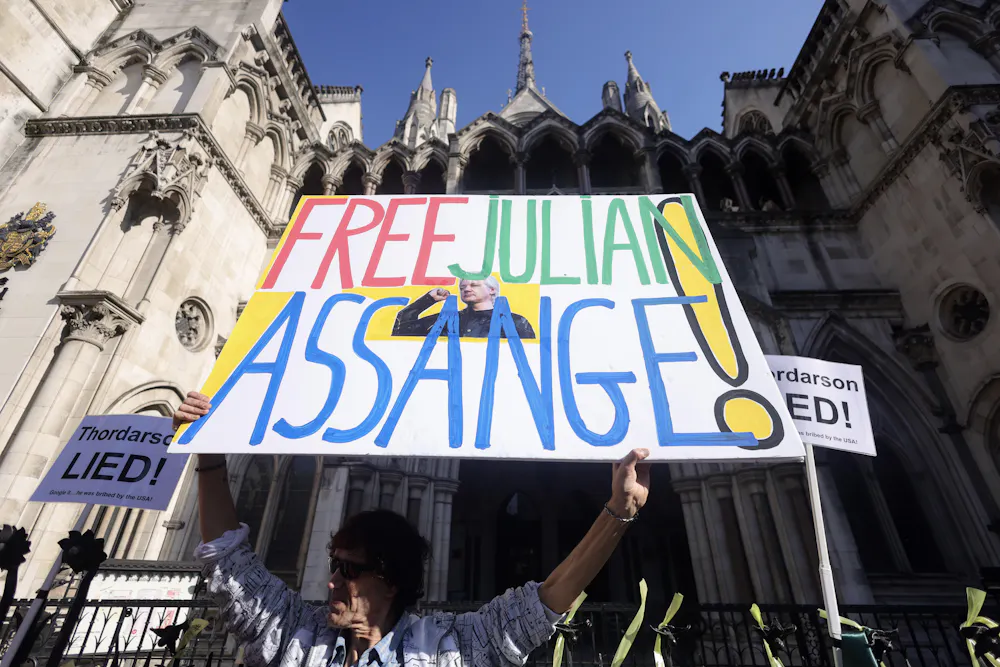
Having accepted these grounds of appeal, the court gave the US until April 16 to provide assurances it would act to prevent the risks arising from the three grounds. The US met that deadline, so the question for the court was whether the assurances were sufficient to remove the potential for violation of Assange’s rights.
Assange’s supporters argued that the assurances, particularly on freedom of expression, were inadequate.
What is meant by ‘assurances’?
Assurances are an important part of contemporary extradition law, but they are controversial.
They are given where extradition could credibly lead to violation of legal protections, usually human rights. Many Western countries will only extradite people to the US if the charges would not lead to the death penalty, or if the relevant prosecution authority agrees not to seek the death penalty.
New Zealand courts grappled with whether assurances given by the Chinese government were adequate. In a long-running case that only ended this year, the courts ultimately decided it would be safe to extradite Kyung Yup Kim, who faces murder charges in China.
At today’s hearing, Assange’s lawyers accepted the assurances on the principle of specialty. They accepted the US provided binding and unambiguous commitments not to increase the charges or seek the death penalty.
 Julian Assange’s wife, Stella says after years in court, the charges against her husband should be dropped.
TOLGA AKMEN/EPA
The decision came down to whether the assurances on freedom of expression were adequate. Edward Fitzgerald KC, for Assange, argued these assurances offered no guarantee as they only promise Assange can raise the issue and not that he can rely on the First Amendment.
Further, he argued the assurances do not commit the prosecution to support any First Amendment claim by Assange. The assurances as drafted do not bind the prosecution to any position, and even if they did, the trial court could reject the prosecution position. This point was accepted by the US.
The US government argued there was no discrimination based on nationality, because nationality is not the same as citizenship, which is the basis for preventing Assange from relying on the First Amendment. Mark Summers KC, for Assange, argued that nationality is wider than, and inclusive of, citizenship – Assange is therefore both a non-citizen and a non-national of the US.
The court gave a brief judgement stating there would be a full appeal on the freedom of expression and nationality discrimination grounds in relation to all charges Assange faces. He now must wait for an appeal date to be determined, probably in the second half of this year.
This appeal will be legally groundbreaking. The European Court of Human Rights has never decided a case arguing extradition would violate freedom of expression, so the High Court will be the first to decide whether a potential violation of freedom of expression could be a bar to extradition.
Unless either the US or the UK decides to end the judicial pursuit of Julian Assange, legal history will be made in the next decision on his case.


