

What is a virtual emergency department? And when should you ‘visit’ one?
- Written by The Conversation
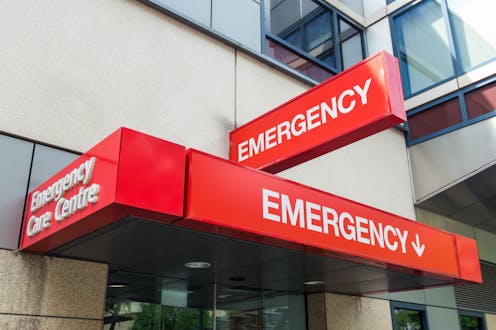
For many Australians the emergency department (ED) is the physical and emblematic front door to accessing urgent health-care services.
But health-care services are evolving rapidly to meet the population’s changing needs. In recent years, we’ve seen growing use of telephone, video, and online health services, including the national healthdirect helpline, 13YARN (a crisis support service for First Nations people), state-funded lines like 13 HEALTH, and bulk-billed telehealth services, which have helped millions of Australians to access health care on demand and from home.
The ED is similarly expanding into new telehealth models to improve access to emergency medical care. Virtual EDs allow people to access the expertise of a hospital ED through their phone, computer or tablet.
All Australian states and the Northern Territory have some form of virtual ED at least in development, although not all of these services are available to the general public at this stage.
So what is a virtual ED, and when is it appropriate to consider using one?
How does a virtual ED work?
A virtual ED is set up to mirror the way you would enter the physical ED front door. First you provide some basic information to administration staff, then you are triaged by a nurse (this means they categorise the level of urgency of your case), then you see the ED doctor. Generally, this all takes place in a single video call.
In some instances, virtual ED clinicians may consult with other specialists such as neurologists, cardiologists or trauma experts to make clinical decisions.

A virtual ED is not suitable for managing medical emergencies which would require immediate resuscitation, or potentially serious chest pains, difficulty breathing or severe injuries.
A virtual ED is best suited to conditions that require immediate attention but are not life-threatening. These could include wounds, sprains, respiratory illnesses, allergic reactions, rashes, bites, pain, infections, minor burns, children with fevers, gastroenteritis, vertigo, high blood pressure, and many more.
People with these sorts of conditions and concerns may not be able to get in to see a GP straight away and may feel they need emergency advice, care or treatment.
When attending the ED, they can be subject to long wait times and delayed specialist attention because more serious cases are naturally prioritised. Attending a virtual ED may mean they’re seen by a doctor more quickly, and can begin any relevant treatment sooner.
From the perspective of the health-care system, virtual EDs are about redirecting unnecessary presentations away from physical EDs, helping them be ready to respond to emergencies. The virtual ED will not hesitate in directing callers to come into the physical ED if staff believe it is an emergency.
The doctor in the virtual ED may also direct the patient to a GP or other health professional, for example if their condition can’t be assessed visually, or if they need physical treatment.
The results so far
Virtual EDs have developed significantly over the past three years, predominantly driven by the COVID pandemic. We are now starting to slowly see assessments of these services.
A recent evaluation my colleagues and I did of Queensland’s Metro North Virtual ED found roughly 30% of calls were directed to the physical ED. This suggests 70% of the time, cases could be managed effectively by the virtual ED.
Preliminary data from a Victorian virtual ED indicates it curbed a similar rate of avoidable ED presentations – 72% of patients were successfully managed by the virtual ED alone. A study on the cost-effectiveness of another Victorian virtual ED suggested it has the potential to generate savings in health-care costs if it prevents physical ED visits.
Only 1.2% of people assessed in Queensland’s Metro North Virtual ED required unexpected hospital admission within 48 hours of being “discharged” from the virtual ED. None of these cases were life-threatening. This indicates the virtual ED is very safe.
The service experienced an average growth rate of 65% each month over a two-year evaluation period, highlighting increasing demand and confidence in the service. Surveys suggested clinicians also view the virtual ED positively.
What now?
We need further research into patient outcomes and satisfaction, as well as the demographics of those using virtual EDs, and how these measures compare to the physical ED across different triage categories.
There are also challenges associated with virtual EDs, including around technology (connection and skills among patients and health professionals), training (for health professionals) and the importance of maintaining security and privacy.
Nonetheless, these services have the potential to reduce congestion in physical EDs, and offer greater convenience for patients.
Eligibility differs between different programs, so if you want to use a virtual ED, you may need to check you are eligible in your jurisdiction. Most virtual EDs can be accessed online, and some have direct phone numbers.


