

Coal-free in 14 years as renewables rush in: new blueprint shows how to green the grid – without nuclear
- Written by The Conversation
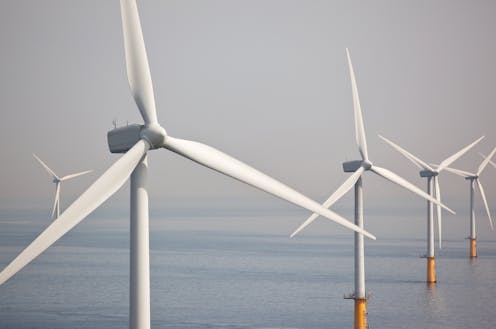
Coal will no longer be burned for power in Australia within 14 years. To replace it will require faster deployment of solar and wind, storage, new transmission lines and some firming gas capacity.
That’s a very brief summary of a large and influential document – the Integrated System Plan issued by the Australian Energy Market Operator (AEMO) every two years.
The latest version of this plan was issued today. Think of it as a roadmap, showing what we need to build and where to be able to wean ourselves off burning fossil fuels for electricity.
It shows the lowest cost way to give us electricity in the future is renewable energy, connected with transmission and distribution, firmed with storage and using gas-powered generation as farmers might use a diesel generator – as a backup plan.
What about nuclear, given Peter Dutton’s pledge to build seven reactors? The plan doesn’t consider it, because nuclear power is currently not legal. But an accompanying AEMO fact sheet notes CSIRO’s GenCost report found nuclear generation to be a lot more expensive than other options:
In fact, it is one of the most expensive ways to generate electricity according to GenCost [and] the time it would take to design and build nuclear generation would be too slow to replace retiring coal fired generation.
What is this plan for?
Australia’s main grid connects eastern and southern states, where most of us live. Historically, it was built to connect cheap but polluting coal plants to large cities.
As coal plants retire, we need a different grid so we can draw renewable power from many different locations and use storage as backup.
That’s what this plan is intended to do. To create it, AEMO relies on detailed modelling and consultation across the energy sector. This brings it to what the operator calls an “optimal development path” – energy speak for the cheapest and most effective mix of electricity generation, storage and transmission, which meets our reliability and security needs while supporting emission cutting policies in the long-term interests of consumers.
One of the most important roles for the plan is to show where we need new electrical infrastructure – especially transmission lines.
The key findings of the final plan have not materially changed from the draft. But there are some changes worth noting.
Emissions reductions to the fore
In November last year, emissions reductions were formally embedded as an objective in our national electricity laws.
In March this year, the market commission issued guidelines on how to apply these changes to the objectives in various processes, including the Integrated System Plan.
There are important figures in this guidance, namely the value of emissions reduction, set at A$70 per tonne today to $420 per tonne by 2050. This is not a direct carbon price. It lets us assess the value of different grid pathways in terms of cutting emissions.
AEMO calculated an extra $3.3 billion in benefits realised in the optimal development path when including this value. Including this benefit is expected to help get some transmission projects get approval.
More storage, delayed transmission
New transmission projects have also proved controversial and difficult to develop, while the New England renewable energy zone in NSW has hit substantial delays. AEMO’s draft plan envisaged this important solar and wind rich region would be reach full capacity by 2028. This has blown out to 2033.
The good news? In the seven months since the draft came out, a huge amount of new storage has begun to arrive. Some 3,700 megawatts of storage capacity (10.8 gigawatt hours worth of energy) have progressed to the point it can be included in the plan.
There are signs the renewable roll-out has slowed down, due to grid congestion, approvals and the need for more transmission lines. Things are still ticking along – since the draft plan was put out for consultation in December last year, another 490 megawatts of large-scale generation has entered the grid. This does need to speed up: the plan envisages 6,000 megawatts of renewable capacity, including rooftop solar, arriving yearly.

What does it say about nuclear power?
Nothing at all. The Integrated System Plan only models technologies legal in Australia, such as black coal with carbon capture and storage. Nuclear power was banned by the Howard Coalition government in the late 1990s.
The AEMO fact sheet makes mention of nuclear to point out that it is a very expensive form of energy and would not arrive in time to replace retiring coal plants. We would need something else in the interim.
The Coalition has indicated it would support new gas-fired to ensure the electricity grid remained reliable until nuclear plants were online.
What about ‘renewable droughts’?
To smooth out the peaks and troughs of renewable generation, we will need different firming technologies. These include storage such as batteries and pumped hydro, as well as traditional hydro, gas and other fuelled generation. Firming help manage changes in supply and demand and ensure a reliable system. Demand response – where users are rewarded to use less during peak periods – can also help ensure reliability.
AEMO’s report argues “flexible gas” generation will have to provide back-up supply during periods of what Germans call “dunkelflaute” – long periods of dark and still days during mid-winter, when solar and wind generation go missing. Flexible gas is expected to play a role for extreme peak demand, particularly in winter.
But this capacity is expected to be very rarely used. Think of “flexible gas” as you would a diesel generator – you’ve got it as a backup if needed. In the near future, a generator like this may generate just 5% of its annual potential. The emissions intensity of a grid with so little gas generation will be tiny.
Does this mean we’ll never be able to entirely banish fossil fuels? Not necessarily. Greener alternatives, such as green hydrogen or methanol, might mean we can take the last step away from burning fossil fuels for power.
Read more: Clean energy slump – why Australia’s renewables revolution is behind schedule, and how to fix it


