

Plastic Free July is a waste of time if the onus is only on consumers
- Written by The Conversation
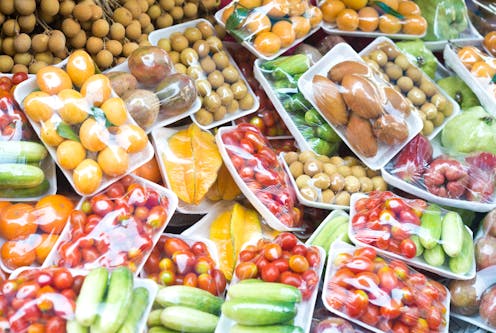
Every year, the Plastic Free July campaign asks us to refuse single-use plastic. The idea is that making a small change in our daily lives will collectively make a big difference. And hopefully, better behaviour will stick and become a habit.
The intent is good, but consumers shouldn’t have to bear full responsibility for plastic pollution. Individual sacrifices – particularly temporary ones – won’t make a significant difference.
Governments, manufacturers and retailers need to get serious about tackling this problem. If Plastic Free July put pressure on the supply side of the equation, rather than demand, it could be more successful.
Our research spans food packaging including plastics, waste, sustainable consumption and social practices. We know consumer demand is only one part of the picture. Eliminating plastic waste requires broader systemic changes.
The cabbage dilemma
Research shows consumers generally want to do the right thing by the environment but find it challenging.
Coming out of a supermarket with no packaging is difficult. There are few unpackaged food items and even when there is a choice, the unpackaged item may be more expensive.
Have you ever been stuck in the supermarket, choosing between the large head of cabbage you know you won’t finish before it goes bad, or the plastic-wrapped half-cabbage you really need?
Consumers should not be forced to choose between food waste (another huge problem) or plastic waste. Maybe there’s another way. For example, why not sell cabbages of different sizes? Why do we need to grow such large heads of cabbage anyway?
Both plastic consumption and food waste can be addressed by changing how we produce and distribute certain foods.
Governments, manufacturers and retailers must drive change
The onus for reducing plastic consumption and waste should be placed firmly on those who make plastic and profit from selling their products, as well as those who make and sell products wrapped in plastic packaging.
Research has shown just 56 companies globally are responsible for more than half of the branded plastic pollution that ends up in the environment.
Companies profit from using plastics because it is cheaper to use than changing to alternatives, such as cardboard or compostable materials, or using less packaging. This means companies choosing to avoid using plastics face unfair competition.
It’s a tough habit to kick. Industry-led voluntary schemes are limited in terms of both participation and outcomes. Many companies are failing to meet their own plastic reduction goals.
Governments need to step in and force companies to take responsibility for the plastic and packaging they manufacture. In practice, this could involve similar schemes to the container deposit scheme for beverage containers, or returning plastics to stores.
Replacing voluntary schemes with mandatory regulations and increased producer responsibility means companies will have to invest in long-term changes designed with care.
What’s Plastic Free July?Cities are built around plastic
Our previous research has shown plastic performs an essential role in some, constrained circumstances. We found vulnerable householders often rely on plastic to make life manageable, such as using plastics to cover belongings on the balcony, or using plastic cutlery and plates in student apartments with minimal kitchen space. This includes people with accessibility needs, people relying on public transport to shop for groceries, or people who are financially constrained or living in small high-rise apartments.
Unsustainable lifestyles are not so much a choice as a product of poorly planned cities, housing and regulations. It is all very well if you are mobile and well-located, but if you live in a poorly serviced distant suburb and transport groceries or takeaway food or buy things on the go, then plastic is perhaps the only current affordable way to make it work.
So campaigns and solutions that do not consider how everyday lives and economy are intertwined with plastics can exclude people and spaces who can’t access the alternatives.
For example, there are ways to make convenience eating more sustainable in education settings. We have shown how canteens and microwaves in shared spaces can enable people to access affordable food with their friends, as in University Mensa in Germany.
Our new research will explore how single-use food-related plastics and packaging form an integral part of our daily lives, including shopping, work, cooking and storage.
Sometimes new policies inadvertently disadvantage certain groups and communities, such as the aged, less mobile, people living in apartments, or low socio-economic groups. Before we roll out new policies and regulations, we need to understand the roles these materials play and the kinds of services and value they provide.
We aim to develop a framework to inform policies and strategies that enable a just and inclusive transition to reduced plastic use.
What about after July?
Plastic Free July and similar campaigns are based on idea that making a temporary change will lead to more permanent lifestyle changes. But research shows temporary shifts are very different to structural, permanent shifts in practices.
Supermarkets will still wrap items in plastic and sell single-use plastic, even if we try to buy less during Plastic Free July.
Ultimately, the focus should be on designing effective infrastructure and policy solutions for lasting results, considering how demand for plastic is produced in the first place.
Some of these changes will require a shift in community expectations and food culture.
Rather than pointing the finger at consumers, let’s get to work on redesigning our cities. We need to rethink how everyday practices, manufacturing and distribution systems are structured to eliminate plastic waste.


