

My children are jet-lagged. Can I give them melatonin to help them sleep?
- Written by The Conversation
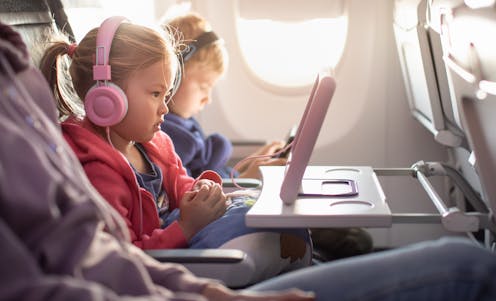
Dealing with time zone changes and jet lag can eat into the time we have to enjoy our holiday, or make adjusting to life at home all the more difficult. It can be even harder for children – and when children don’t sleep well, parents don’t either.
Around one in four children already have trouble getting to sleep, or getting back to sleep when they wake in the night. This can worsen when travelling internationally.
In a bid to help children’s general sleep problems, some parents have resorted to giving their children lollies, or gummies, containing melatonin. Some parents have also turned to melatonin to help their child sleep in the new time zone or when they return home.
Melatonin is a naturally occurring hormone secreted in our brains. Its main purpose is to maintain our sleep and wake cycles by making us sleepy at night time. But does it work to combat kids’ jet lag? And is it safe?
Adults have used melatonin for a long time
Melatonin is produced by the pineal gland in the brain in response to darkness.
Melatonin sets off a series of physiological processes which help promote sleepiness and the onset of sleep at the end of the day. So it can be really effective at helping adults get to sleep.
The use of melatonin in adults as a sleep aid has more than tripled in the last few years. And adults have long used melatonin to treat jet lag.
Who can access it in Australia?
In Australia, melatonin is categorised as a pharmaceutical product. This means it can only be accessed via prescription and overseen by a medical professional.
Australia’s regulator, the Therapeutic Goods Administration, advises it can only be prescribed for children with autism, attention-deficit hyperactivity disorder (ADHD) or Smith-Magenis syndrome (a genetic developmental disorder that affects many parts of the body). This is because there is evidence that melatonin can improve insomnia symptoms (difficulties getting to sleep or staying asleep) in children with these conditions.
Melatonin is not recommended for use in children without these diagnoses.
We don’t know if it’s safe or effective for other kids or babies
The latest expert advice from the International Paediatric Sleep Association melatonin task force, of which I am a member, recommends melatonin supplements should not be used for children aged under two years and should be restricted to children with the above diagnoses, until further data is available.
This is because we don’t know the effect melatonin has on typically developing children and there is no data for babies and toddlers. The data we have is only in neurodivergent children.
Scientifically, we cannot extrapolate the evidence from children with neurodevelopmental disorders to the broader child population because of the physiological and psychological differences in these two populations.
We have no data to help us understand whether taking melatonin to facilitate sleep in time zone changes is safe or effective.
So how are parents getting it?
Some parents access melatonin online, from overseas markets such as the United States.
In the US, melatonin isn’t categorised as a pharmaceutical product but as a dietary supplement. The US Food and Drug Administration does not regulate dietary supplements in the same way as pharmaceutical products.
As a result, melatonin is readily available over the counter in the US and online without prescription and without the need for medical oversight for people of any age.
You don’t know what you’re getting
Drug regulation agencies don’t rigorously monitor the contents of online products for safety or efficacy, so we cannot be sure whether melatonin gummies sourced overseas are safe or effective.
The contents also vary widely, as shown in studies analysing the contents of commercially available melatonin supplement brands. Melatonin levels ranged from very minimal content to more than four times the amount stated on the label.
Some products even contained serotonin. Serotonin is a neurotransmitter which has a complex relationship with melatonin. It has been implicated in the presentation of aggression and hyperactivity, and is often used in medications for depression and anxiety under strict medical supervision. Unknown consumption of serotonin would be a cause for concern.
Bottom line
While melatonin seems to be an effective drug in adults and children with neurodevelopmental disorders, evidence for the use of melatonin in typically developing children is extremely limited to non-existent.
We don’t know if it’s safe and effective in typically developing babies, toddlers or children – and using online products makes it even more precarious.
Until we have the evidence, it’s safest to rely on behavioural sleep recommendations. This includes making sure a child’s sleep and wake times are consistent and paying attention to light exposure. Avoiding excess screen exposure in the evening or at bedtime, and increasing exposure to light in the mornings, will maximise melatonin secretion at the correct times of the day night cycle.
Making sure young children get exposure to natural light in their holiday destination is a good way for children to adapt to new time zones.


