

'A human being, not just mum': the women's liberationists who fought for the rights of mothers and children
- Written by The Conversation
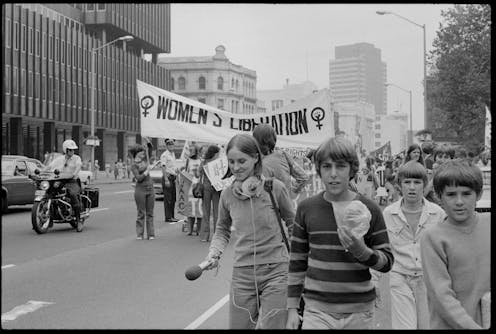
Mother’s Day has long been exploited for commercial and political gain. This year, again, my inbox is filled with gift ideas to “make mum smile”. With the federal election looming, we can expect candidates to make the most of this weekend to demonstrate their pro-family credentials.
But advertisers and politicians are not the only ones with a stake in Mother’s Day. The day’s origins lie in feminist campaigns in the late 19th and early 20th century to promote peace and greater recognition of women’s social and economic contribution as mothers.
For subsequent generations of feminists, it has proven to be a site of contest. This was especially so in the 1970s, when women’s liberationists set out to challenge prevailing expectations of female domesticity.
In their view, the dominant model of the male breadwinner and female homemaker was a leading source of women’s oppression. Many felt Mother’s Day only reinforced the problem.
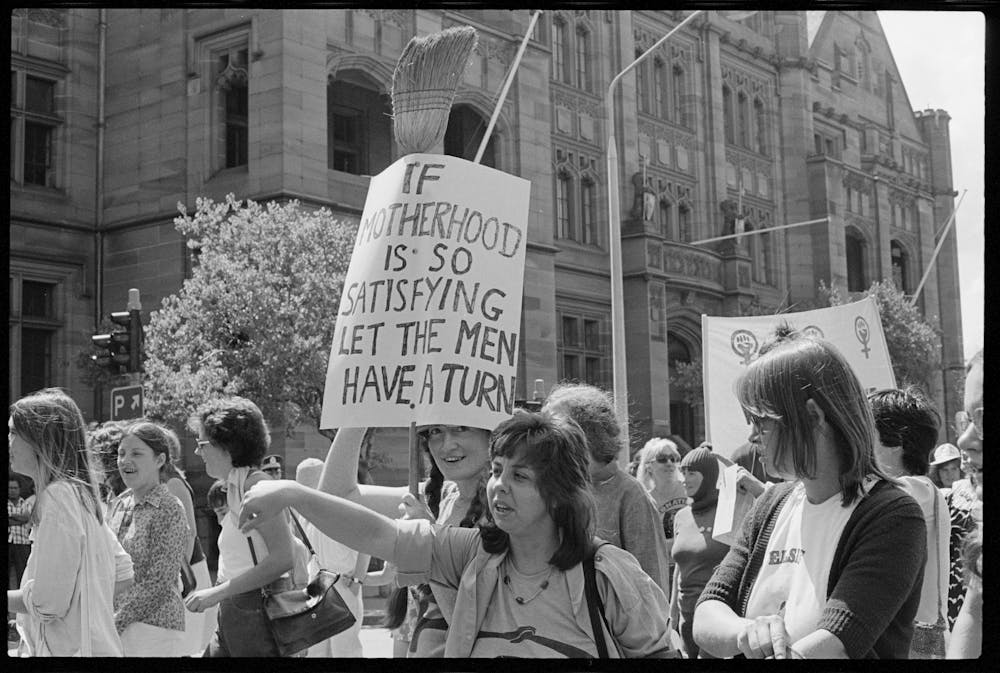
A pamphlet issued by Adelaide women’s liberationists in 1971 claimed Mother’s Day was little more than an exercise in hypocrisy.
For one day, the pamphlet asserted, society paid lip service to women’s “martyrdom” in the home. For the rest of the year, their domestic labour remained invisible and their “basic needs” were left unmet – including for some independence from their children.
But it is worth noting women’s liberationists argued the “cult” of domesticity not only had dire consequences for women, but for children too. On this Mother’s Day, it bears remembering activists were committed to their joint liberation.
Liberation for children
This vision was put forward most explicitly in North American radical feminist Shulamith Firestone’s bestseller, The Dialectic of Sex: The Case for Feminist Revolution (1970).
The book is now best known for its forthright critique of maternity: Firestone went so far as to describe pregnancy as “barbaric” and advocated for artificial reproduction in its place.
But The Dialectic of Sex was also noteworthy for Firestone’s analysis of children’s status in the nuclear family and the power parents wielded over them. Mothers played a particularly insidious role, Firestone argued, in the psychological formation of children, determining “what they become as adults and the sorts of relationships they are able to form”.
Read more: Shulamith Firestone: why the radical feminist who wanted to abolish pregnancy remains relevant
Firestone’s views on the subject were far from exceptional. Indeed, the concept of children’s liberation reverberated through a wide range of feminist texts of the period.
And as I discovered when I started looking for evidence of the concept’s impact in Australia, it was also put into practice in diverse ways.
For feminist mothers in the 1970s, access to affordable childcare services was an especially high priority – not only to enable their equal participation in public life, but because of its benefits for children’s social development and connection beyond the nuclear family.
This sentiment was best captured in the slogan used at protest marches: “Free Mum, Free Dad, Free Me, Free Child Care”.
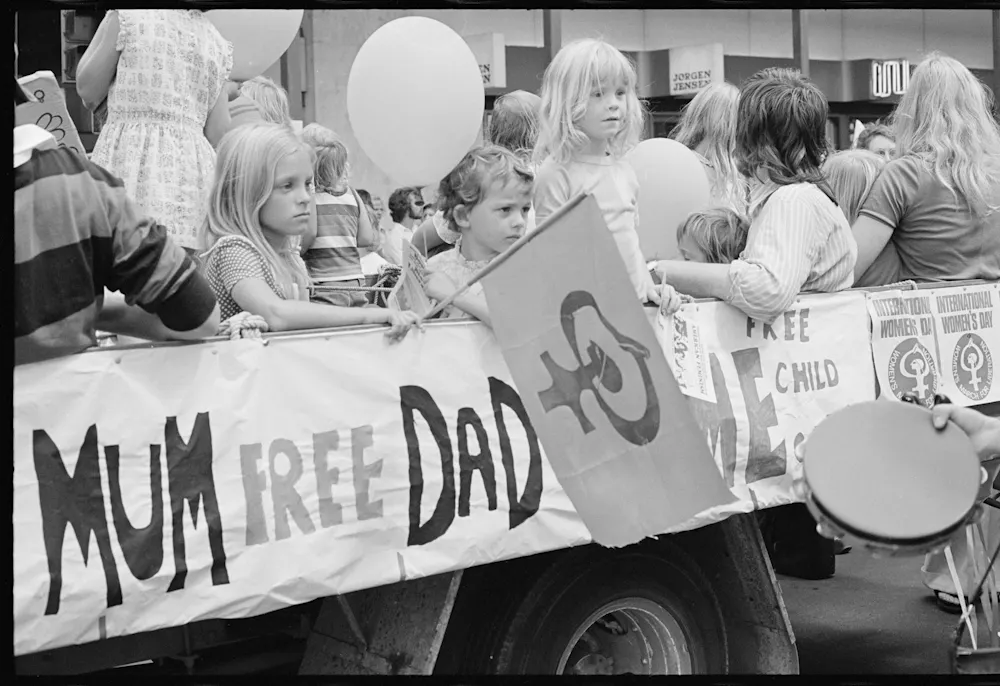 The rights of mothers, fathers and children were explicitly linked.
Mitchell Library, State Library of New South Wales and courtesy SEARCH Foundation, CC BY-NC-SA
Many feminist teachers and mothers were attracted to new approaches that emphasised children’s autonomy and self-direction. These principles also informed broader decisions about childrearing, such as mothers’ selections of books, toys and clothing, and their attempts to be more open and frank when addressing their children’s questions about sexuality.
When they could not find readily available alternatives, one Melbourne group even began producing their own resources. In 1974, they formed the Women’s Movement Children’s Literature Cooperative. Their first book, The Witch of Grange Grove, was typical in featuring characters who disregarded gender stereotypes and pursued their own interests.
By the mid-1970s, the issue of violence within the family home had become pressing. Children comprised more than half of the residents at women’s refuges, such as Elsie in Sydney. Along with physical and emotional abuse, child sexual abuse – particularly by male relatives – was one of the issues that refuge workers, along with activists at rape crisis services, frequently confronted.
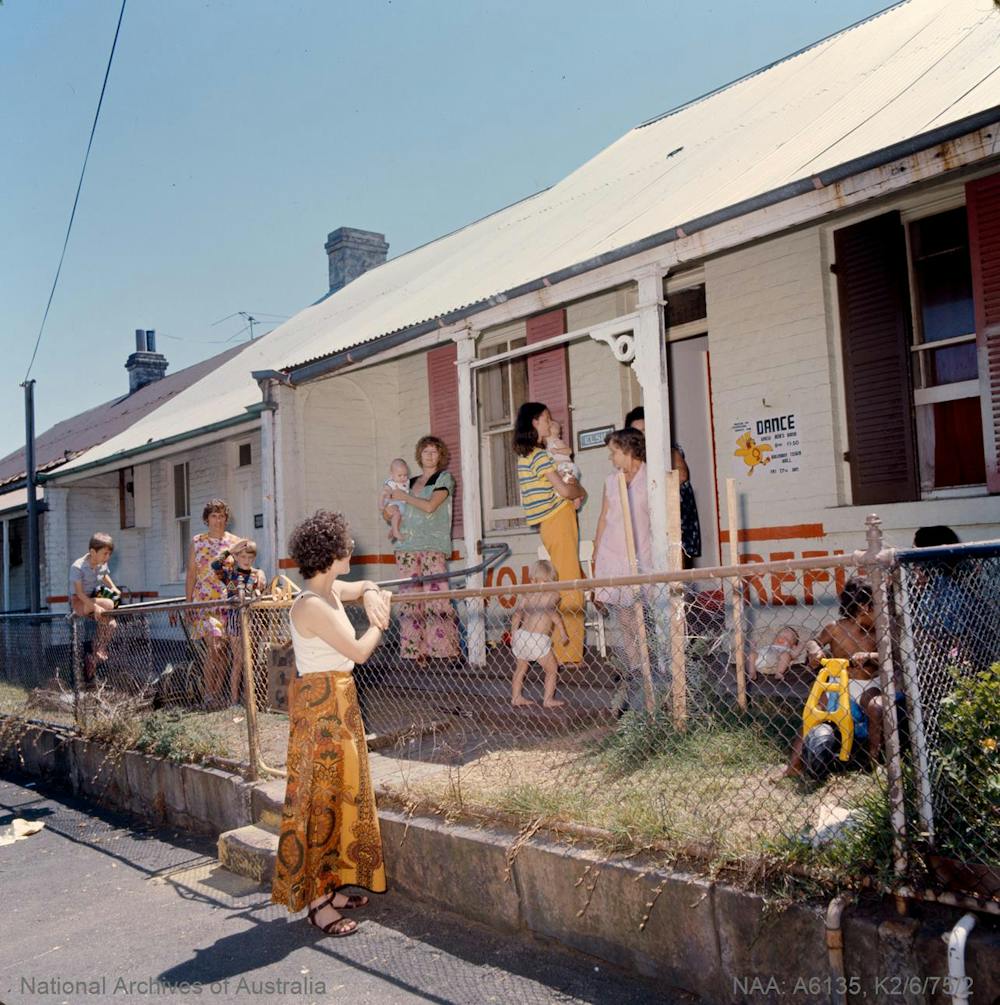 Elsie Women’s Refuge, Glebe, 1975 – half of the residents of refuges like this were children.
National Archives of Australia: A6135, K2/6/75/2
Read more: Damned Whores and God’s Police is still relevant to Australia 40 years on – more's the pity
The forgotten revolution
For many feminists of the era, women’s and children’s liberation were inseparable.
This was certainly true for the Adelaide activists protesting Mother’s Day in 1971. As their pamphlet had it, for both their own sake and so as not to “suffocate” their children, women must “renounce [their] martyrdom” and redefine themselves as “a human being […] not just ‘mum’”.
But this message was often lost on women’s liberation’s opponents, who were intent on casting the movement as “anti-mother” and “anti-child” – a stereotype of this era that has persevered.
Internal tensions within women’s liberation have also shaped feminist and popular memory of this period. While many involved in the movement worked hard to improve the conditions of mothers and their children, not everyone felt these efforts went far enough.
Some women were alienated by the staunch critiques of motherhood, or felt judged by those who did not have children. And although women’s liberation attracted participants from diverse backgrounds, many First Nations and migrant women chose to organise in groups outside it, in part due to a perception that their experiences of motherhood required different political remedies.
The relationship between 1970s feminism and maternity was at times a fraught one. But we should not forget that this ambivalence about motherhood could also be productive, creating space for new ways of thinking not just about women, but children too.
We continue to grapple with many of the same issues, from childcare and gender socialisation to child abuse and family violence.
In seeking lasting solutions to these problems, it is worth remembering there is a longer history of feminist activism that might inform our contemporary approaches – not least of all when it comes to responding to the predictable cliches that surface each year on Mother’s Day.


