

Hook-ups, pansexuals and holy connection: love in the time of millennials and Generation Z
- Written by The Conversation
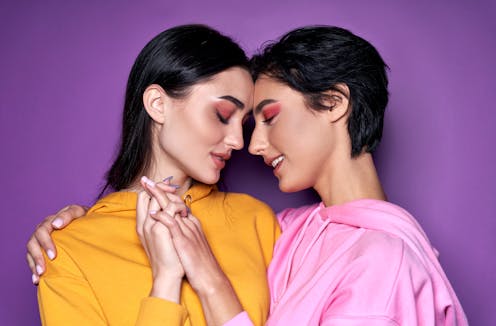
“That Love is all there is,” wrote Emily Dickinson,
Is all we know of Love;It is enough, the freight should beProportioned to the groove.
Does what we know of love still apply to Australian relationships today – particularly among millennials and Generation Z, whose partnerships and dating behaviours are charting new territories?
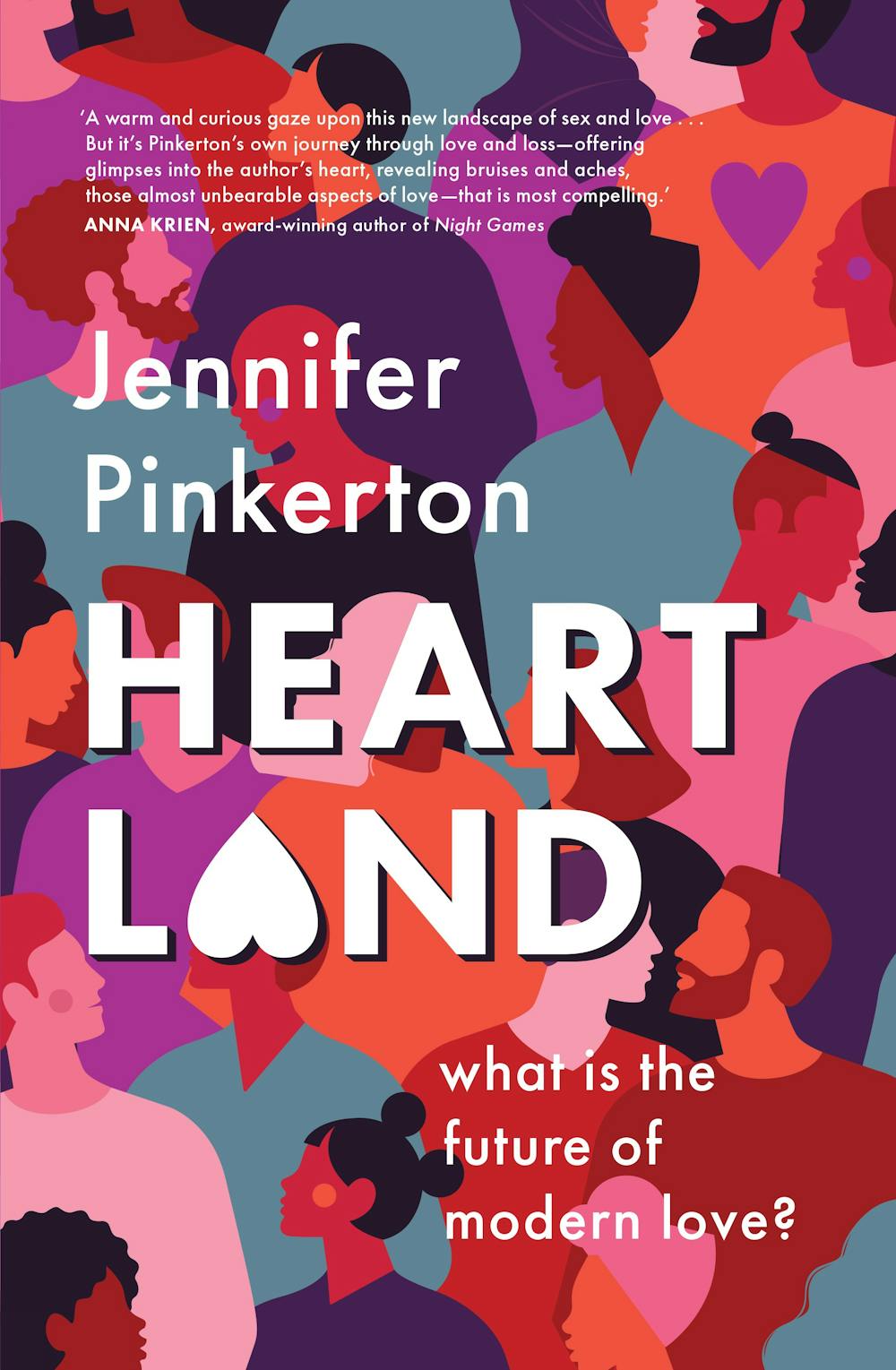
Review: Heartland: What is the future of modern love? by Jennifer Pinkerton (Allen & Unwin).
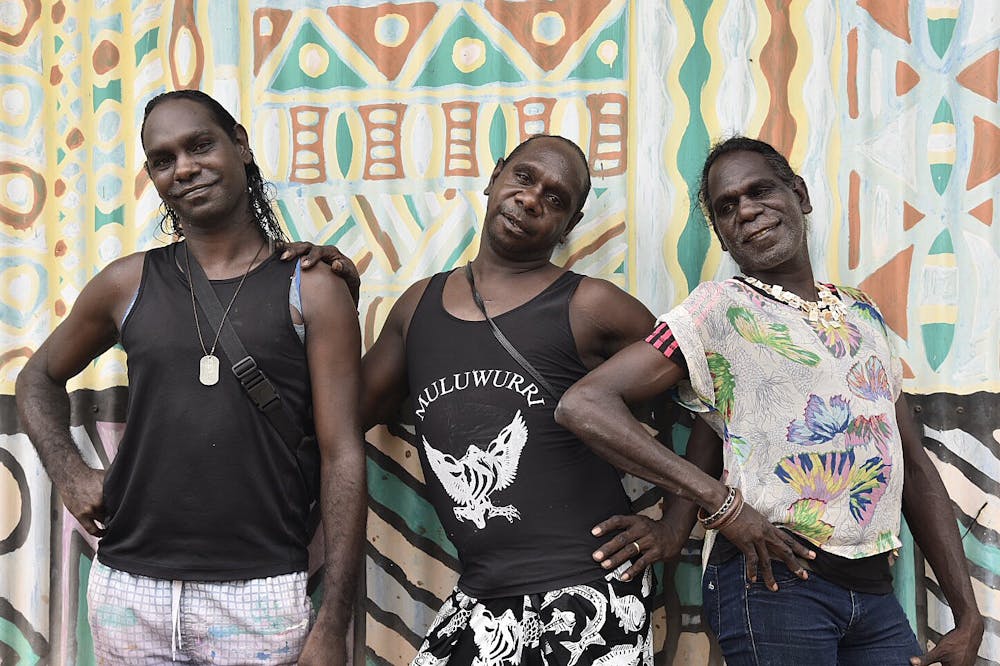 Aboriginal Transgender Sistagirls Buffy Warlapinni, Nicole Miller and Andrea Tipungwuti pose for a photograph at the Tiwi Islands Mardi Gras, 2017.
Lucy Hughes Jones/AAP
Of course, love’s essential passion and pain remains unchanged across millennia. And some aspects of sexuality that seem new have always existed, albeit with different labels or levels of social acceptance.
“I desire. I crave,” wrote the Ancient Greek poet Sappho, whose name is now immortalised in the description of female-only relationships. Shakespeare’s famous sonnet that begins “Shall I compare thee to a summer’s day?” was penned to another man.
Pinkerton shows the “who” is not what makes love complicated today. Millennial and Gen Z attitudes are inclusive to the point of being perplexed as to why a fuss was made (and for so long) about who can love whom.
It is the why, how, what, when and where that are currently making dating and relationships difficult – particularly post-pandemic – despite the ease of speedy internet access to potential partners.
Aboriginal Transgender Sistagirls Buffy Warlapinni, Nicole Miller and Andrea Tipungwuti pose for a photograph at the Tiwi Islands Mardi Gras, 2017.
Lucy Hughes Jones/AAP
Of course, love’s essential passion and pain remains unchanged across millennia. And some aspects of sexuality that seem new have always existed, albeit with different labels or levels of social acceptance.
“I desire. I crave,” wrote the Ancient Greek poet Sappho, whose name is now immortalised in the description of female-only relationships. Shakespeare’s famous sonnet that begins “Shall I compare thee to a summer’s day?” was penned to another man.
Pinkerton shows the “who” is not what makes love complicated today. Millennial and Gen Z attitudes are inclusive to the point of being perplexed as to why a fuss was made (and for so long) about who can love whom.
It is the why, how, what, when and where that are currently making dating and relationships difficult – particularly post-pandemic – despite the ease of speedy internet access to potential partners.
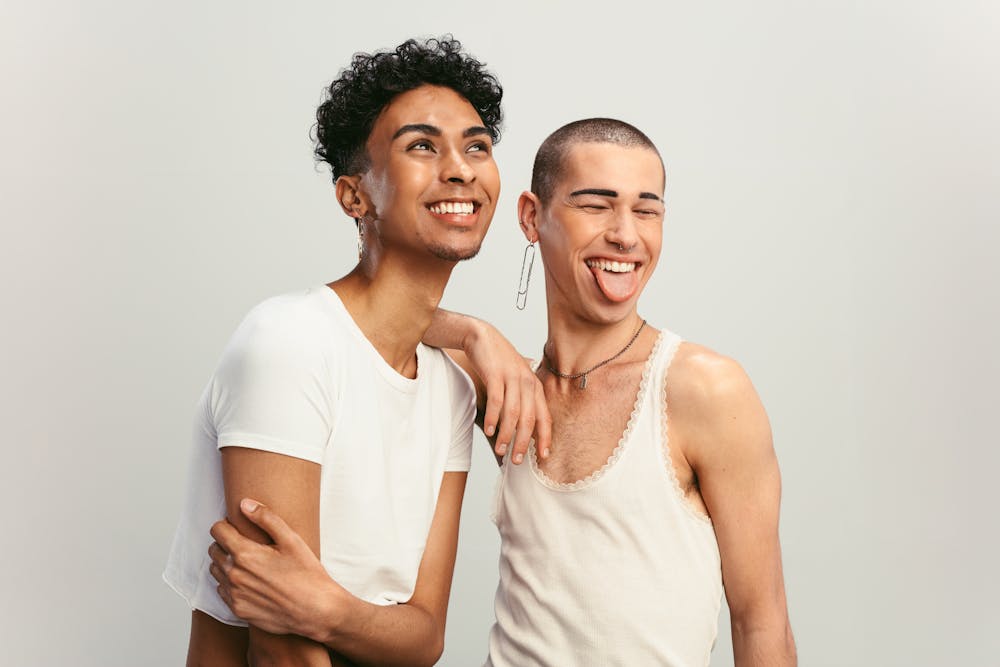 There are ‘lots (and lots) of labels’.
There are also lots (and lots) of labels. They go beyond LGBTQ+. There’s sistagirl (an Aboriginal transgender person). Vanilla (people who don’t do kink). There’s pansexual (someone who is attracted to all gender types: male, female, trans, non-binary); demipansexual (someone who seeks a deep connection); polyamory (multiple lovers) and more. Much more.
Without such labels, explains demipansexual Aggie (29), she couldn’t explore sexuality, her gender, or even polyamory itself. “These words describe things to other people and describe things you haven’t experienced before.”
The labels also function as an age dividing line. It’s a “generation thing”, says Aggie. There’s even a 14-year-old who identifies as “non-binary goth, demiromantic pansexual” who asks her Gen X aunt how she identifies. “I love who I love,” her bemused aunt replies.
Read more:
From ghosting to 'backburner' relationships: the reasons people behave so badly on dating apps
Love, romance and liberation
Yet as the interviews in Heartland reveal, it is impossible to generalise within (or about) any age group. While some find labels liberating, others shun them. And some shun dating altogether.
According to Pinkerton, many young people have stopped dating – and some never start. Some look askance at apps and some have tired of them. Others are simply tired of it all: Pinkerton describes them as an “army of disappointeds”.
One “disappointed” is Saxon (23, straight), who has spent hours chatting with potential matches, yet never met up with any of them – almost as if Tinder were a computer game.
There are ‘lots (and lots) of labels’.
There are also lots (and lots) of labels. They go beyond LGBTQ+. There’s sistagirl (an Aboriginal transgender person). Vanilla (people who don’t do kink). There’s pansexual (someone who is attracted to all gender types: male, female, trans, non-binary); demipansexual (someone who seeks a deep connection); polyamory (multiple lovers) and more. Much more.
Without such labels, explains demipansexual Aggie (29), she couldn’t explore sexuality, her gender, or even polyamory itself. “These words describe things to other people and describe things you haven’t experienced before.”
The labels also function as an age dividing line. It’s a “generation thing”, says Aggie. There’s even a 14-year-old who identifies as “non-binary goth, demiromantic pansexual” who asks her Gen X aunt how she identifies. “I love who I love,” her bemused aunt replies.
Read more:
From ghosting to 'backburner' relationships: the reasons people behave so badly on dating apps
Love, romance and liberation
Yet as the interviews in Heartland reveal, it is impossible to generalise within (or about) any age group. While some find labels liberating, others shun them. And some shun dating altogether.
According to Pinkerton, many young people have stopped dating – and some never start. Some look askance at apps and some have tired of them. Others are simply tired of it all: Pinkerton describes them as an “army of disappointeds”.
One “disappointed” is Saxon (23, straight), who has spent hours chatting with potential matches, yet never met up with any of them – almost as if Tinder were a computer game.
 Some young people don’t like using dating apps; others are tired of them.
For Charlotte (22), there are hook-ups and there are dates. “There’s a big difference between dating and hook-ups for me. I agonise and stress over dates.”
By contrast, art student Stump (30) wants friendship with extras. “To be friends and fuck and be able to talk about shit and have that cordial thing going on.”
“I don’t care what they do, as long as they have a job,” says Lisa (27): “He needs to have life goals.” Her friend Kaylee (25) agrees. “If they can pay half the bills, I’m happy.”
Yet love and romance aren’t out of the equation. “I thought it would be more liberating to sleep with someone else than it was,” says 19-year-old law student Kami. “I suppose it didn’t feel great because there was no romantic connection.”
We meet Ryan (25), a shy security guard, who is reading Erich Fromm’s classic The Art of Loving. He is not alone in wanting to learn how to love. Pinkerton notes that many under-40s read love and sex texts, including Gary Chapman’s popular The Five Love Languages.
Read more:
Friday essay: 3 ways philosophy can help us understand love
Holy connection
Pinkerton sees the experiences and concerns of millennials and Gen-Z as shaping a new approach to modern love. Genuine love, she writes, demands courage, and extends beyond the narrow confines of the couple. It’s about much more than romance.
Pinkerton noted her surprise at how often, for example, millennials would end conversations to friends with “I love you”. At first, she thought it was a bit intense, but she soon discovered the importance young people place on their friendships is the key to what they consider holy: connection.
Some young people don’t like using dating apps; others are tired of them.
For Charlotte (22), there are hook-ups and there are dates. “There’s a big difference between dating and hook-ups for me. I agonise and stress over dates.”
By contrast, art student Stump (30) wants friendship with extras. “To be friends and fuck and be able to talk about shit and have that cordial thing going on.”
“I don’t care what they do, as long as they have a job,” says Lisa (27): “He needs to have life goals.” Her friend Kaylee (25) agrees. “If they can pay half the bills, I’m happy.”
Yet love and romance aren’t out of the equation. “I thought it would be more liberating to sleep with someone else than it was,” says 19-year-old law student Kami. “I suppose it didn’t feel great because there was no romantic connection.”
We meet Ryan (25), a shy security guard, who is reading Erich Fromm’s classic The Art of Loving. He is not alone in wanting to learn how to love. Pinkerton notes that many under-40s read love and sex texts, including Gary Chapman’s popular The Five Love Languages.
Read more:
Friday essay: 3 ways philosophy can help us understand love
Holy connection
Pinkerton sees the experiences and concerns of millennials and Gen-Z as shaping a new approach to modern love. Genuine love, she writes, demands courage, and extends beyond the narrow confines of the couple. It’s about much more than romance.
Pinkerton noted her surprise at how often, for example, millennials would end conversations to friends with “I love you”. At first, she thought it was a bit intense, but she soon discovered the importance young people place on their friendships is the key to what they consider holy: connection.
 Author and researcher Jennifer Pinkerton.
Pinkerton’s reflections on the complexities of committed relationships are embedded in the context of her own story, which she willingly shares. While from a different generation, Pinkerton has experienced the anxiety of online communication (she particularly regrets sending a rather embarrassing haiku).
But it is the heartbreak of her own relationship breakdown with the father of her newborn son, and the loss of her mother, interwoven with the interviews, that contextualises and humanises the book. Heartland is not cold case research: it’s a genuine search for understanding, of self and others.
There is also a sense of authentic place evoked in Heartland: the “thick Red Centre heat that lifts off the road in ribbons and sends chalky-pink galahs hurtling from the sky.” Pinkerton identifies generational trends in dating and relationships that are by no means unique to Australia, but imbues them with a uniquely Australian sensibility. You can feel the heat as she writes about the Top End, a landscape clearly in her heart.
Heat – or rather, too much of it - is also an anxiety-provoking and distressing concern for Pinkerton’s millennials and Gen Z interviewees.
Take the usual stressors of young life and add the thought, “Maybe the planet is going to burn, and we’ll have nowhere to live”, says Helen Berry, Honorary Professor of Climate Change and Mental Health at the University of Sydney. Add dating, love, romance […] it can become too difficult to contemplate connection, in the face of so much potential risk and loss.
Read more:
Love, Academically. Why scholarly hearts are beating for Love Studies
Heartland takes love seriously, as a subject worthy of research – at a time when interdisciplinary research about love is growing. In the School of Arts and Humanities at Edith Cowan University, the new Love Studies network includes academics from every discipline. Mapping the field, we have discovered a diversity of research about love with multidisciplinary connections that are often surprising, ranging from popular romance studies to criminology, sexology and peace studies.
There is also a new Australian cross-university initiative, The Heart of the Matter Health Humanities Project, which aims to
deepen our understanding of the heart and improve human well-being through fostering dialogue and innovation across the fields of health, medicine, engineering, philosophy, literary studies and the humanities.
The initiative brings together academics and scholarship from across the country to explore the intersections between medical understandings of the heart, the role of the humanities, and the heart as a symbol and vehicle of emotion, from research on artificial hearts to Shakespeare.
Heartland maps both the agonies and ecstasies of today’s relationships. “Among millennials and Gen Zs there’s a fluidity to life and love, and an openness to testing out alternative options,” Pinkerton concludes. “Sure, this can add to the anxiety load. Equally, it might just create more rewarding sex and love.” Labels may change, yet the search for love remains. A heavy weight, worth carrying.
Author and researcher Jennifer Pinkerton.
Pinkerton’s reflections on the complexities of committed relationships are embedded in the context of her own story, which she willingly shares. While from a different generation, Pinkerton has experienced the anxiety of online communication (she particularly regrets sending a rather embarrassing haiku).
But it is the heartbreak of her own relationship breakdown with the father of her newborn son, and the loss of her mother, interwoven with the interviews, that contextualises and humanises the book. Heartland is not cold case research: it’s a genuine search for understanding, of self and others.
There is also a sense of authentic place evoked in Heartland: the “thick Red Centre heat that lifts off the road in ribbons and sends chalky-pink galahs hurtling from the sky.” Pinkerton identifies generational trends in dating and relationships that are by no means unique to Australia, but imbues them with a uniquely Australian sensibility. You can feel the heat as she writes about the Top End, a landscape clearly in her heart.
Heat – or rather, too much of it - is also an anxiety-provoking and distressing concern for Pinkerton’s millennials and Gen Z interviewees.
Take the usual stressors of young life and add the thought, “Maybe the planet is going to burn, and we’ll have nowhere to live”, says Helen Berry, Honorary Professor of Climate Change and Mental Health at the University of Sydney. Add dating, love, romance […] it can become too difficult to contemplate connection, in the face of so much potential risk and loss.
Read more:
Love, Academically. Why scholarly hearts are beating for Love Studies
Heartland takes love seriously, as a subject worthy of research – at a time when interdisciplinary research about love is growing. In the School of Arts and Humanities at Edith Cowan University, the new Love Studies network includes academics from every discipline. Mapping the field, we have discovered a diversity of research about love with multidisciplinary connections that are often surprising, ranging from popular romance studies to criminology, sexology and peace studies.
There is also a new Australian cross-university initiative, The Heart of the Matter Health Humanities Project, which aims to
deepen our understanding of the heart and improve human well-being through fostering dialogue and innovation across the fields of health, medicine, engineering, philosophy, literary studies and the humanities.
The initiative brings together academics and scholarship from across the country to explore the intersections between medical understandings of the heart, the role of the humanities, and the heart as a symbol and vehicle of emotion, from research on artificial hearts to Shakespeare.
Heartland maps both the agonies and ecstasies of today’s relationships. “Among millennials and Gen Zs there’s a fluidity to life and love, and an openness to testing out alternative options,” Pinkerton concludes. “Sure, this can add to the anxiety load. Equally, it might just create more rewarding sex and love.” Labels may change, yet the search for love remains. A heavy weight, worth carrying.


