News Daily

The Times

Australia

  • Written by The Conversation
I have a stuffy nose, how can I tell if it’s hay fever, COVID or something else?

Hay fever (also called allergic rhinitis) affects 24% of Australians. Symptoms include sneezing, a runny nose (which may feel blocked or stuffy) and itchy eyes. People can also experience an itchy nose, throat or ears.

But COVID is still spreading, and other viruses can cause cold-like symptoms. So how do you know which one you’ve got?

Remind me, how does hay fever cause symptoms?

Hay fever happens when a person has become “sensitised” to an allergen trigger. This means a person’s body is always primed to react to this trigger.

Triggers can include allergens in the air (such as pollen from trees, grasses and flowers), mould spores, animals or house dust mites which mostly live in people’s mattresses and bedding, and feed on shed skin.

When the body is exposed to the trigger, it produces IgE (immunoglobulin E) antibodies. These cause the release of many of the body’s own chemicals, including histamine, which result in hay fever symptoms.

People who have asthma may find their asthma symptoms (cough, wheeze, tight chest or trouble breathing) worsen when exposed to airborne allergens. Spring and sometimes into summer can be the worst time for people with grass, tree or flower allergies.

However, animal and house dust mite symptoms usually happen year-round.

Ryegrass
Ryegrass pollen is a common culprit. bangku ceria/Shutterstock

What else might be causing my symptoms?

Hay fever does not cause a fever, sore throat, muscle aches and pains, weakness, loss of taste or smell, nor does it cause you to cough up mucus.

These symptoms are likely to be caused by a virus, such as COVID, influenza, respiratory syncytial virus (RSV) or a “cold” (often caused by rhinoviruses). These conditions can occur all year round, with some overlap of symptoms:
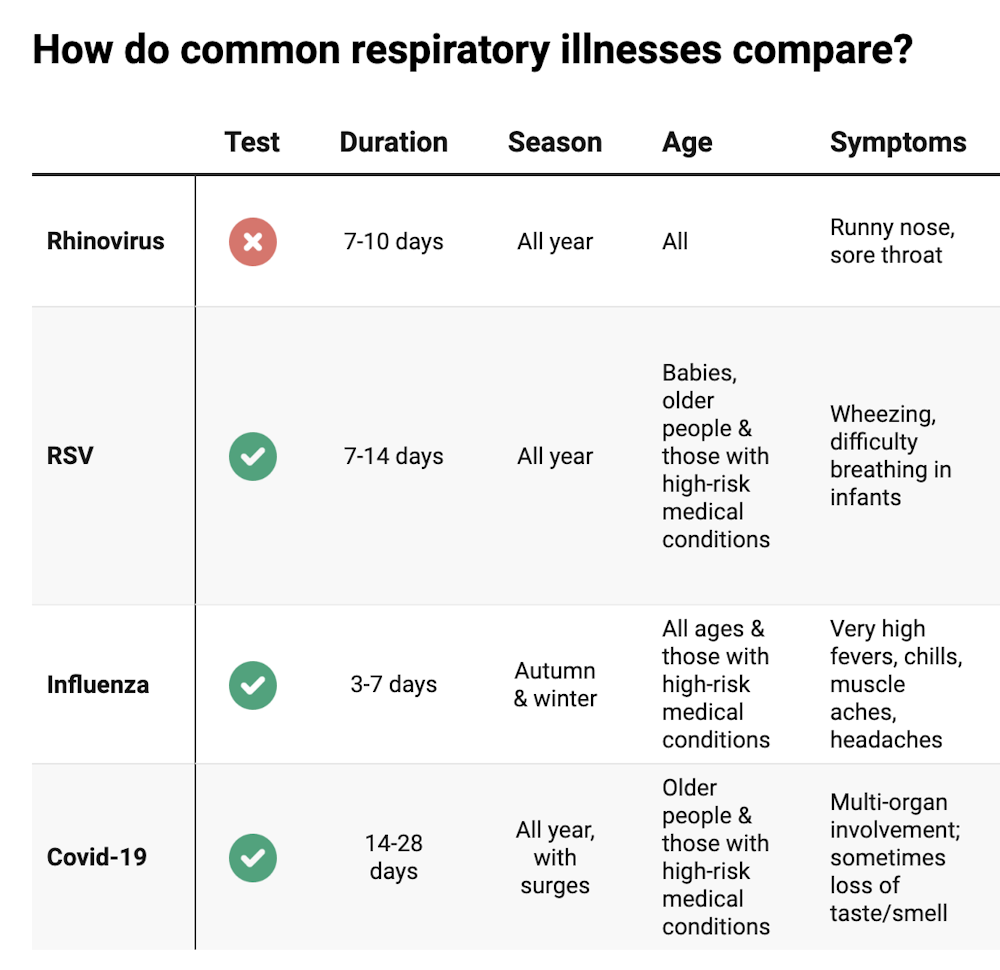
Natasha Yates/The Conversation COVID still surrounds us. RSV and influenza rates appear higher than before the COVID pandemic, but it may be due to more testing. So if you have a fever, sore throat, muscle aches/pains, weakness, fatigue, or are coughing up mucus, stay home and avoid mixing with others to limit transmission. People with COVID symptoms can take a rapid antigen test (RAT), ideally when symptoms start, then isolate until symptoms disappear. One negative RAT alone can’t rule out COVID if symptoms are still present, so test again 24–48 hours after your initial test if symptoms persist. You can now test yourself for COVID, RSV and influenza in a combined RAT. But again, a negative test doesn’t rule out the virus. If your symptoms continue, test again 24–48 hours after the previous test. If it’s hay fever, how do I treat it? Treatment involves blocking the body’s histamine release, by taking antihistamine medication which helps reduce the symptoms. Doctors, nurse practitioners and pharmacists can develop a hay fever care plan. This may include using a nasal spray containing a topical corticosteroid to help reduce the swelling inside the nose, which causes stuffiness or blockage. Nasal sprays need to delivered using correct technique and used over several weeks to work properly. Often these sprays can also help lessen the itchy eyes of hay fever. Drying bed linen and pyjamas inside during spring can lessen symptoms, as can putting a smear of Vaseline in the nostrils when going outside. Pollen sticks to the Vaseline, and gently blowing your nose later removes it. People with asthma should also have an asthma plan, created by their doctor or nurse practitioner, explaining how to adjust their asthma reliever and preventer medications in hay fever seasons or on allergen exposure. People with asthma also need to be alert for thunderstorms, where pollens can burst into tinier particles, be inhaled deeper in the lungs and cause a severe asthma attack, and even death. What if it’s COVID, RSV or the flu? Australians aged 70 and over and others with underlying health conditions who test positive for COVID are eligible for antivirals to reduce their chance of severe illness. Most other people with COVID, RSV and influenza will recover at home with rest, fluids and paracetamol to relieve symptoms. However some groups are at greater risk of serious illness and may require additional treatment or hospitalisation. For RSV, this includes premature infants, babies 12 months and younger, children under two who have other medical conditions, adults over 75, people with heart and lung conditions, or health conditions that lessens the immune system response. For influenza, people at higher risk of severe illness are pregnant women, Aboriginal people, people under five or over 65 years, or people with long-term medical conditions, such as kidney, heart, lung or liver disease, diabetes and decreased immunity. If you’re concerned about severe symptoms of COVID, RSV or influenza, consult your doctor or call 000 in an emergency. If your symptoms are mild but persist, and you’re not sure what’s causing them, book an appointment with your doctor or nurse practitioner. Although hay fever season is here, we need to avoid spreading other serious infectious. For more information, you can call the healthdirect helpline on 1800 022 222 (known as NURSE-ON-CALL in Victoria); use the online Symptom Checker; or visit healthdirect.gov.au or the Australian Society of Clinical Immunology and Allergy.

Read more https://theconversation.com/i-have-a-stuffy-nose-how-can-i-tell-if-its-hay-fever-covid-or-something-else-240453

Key Terms to Review Before Signing a Business Lease

A business lease can be a large financial commitment, and the terms buried in the fine print can affect your operation for years. It can be tempting to skim past the legal detail once you’ve found premises you like, but... Read more

When Should You Speak to Bankruptcy Lawyers About Debt Problems?

Debt problems rarely appear without warning, yet many people wait far longer than they should before seeking legal advice about their situation. By the time the decision is made to consult with bankruptcy lawyers, the available options are often more... Read more

Top Electrical Safety Tips from Inner West Sydney Electricians

While it may not be the most exciting subject to discuss, having an electrically safe home is definitely one of the most critical. Knowing the basics could help you avoid accidents and ensure your home remains in good condition, whether... Read more

When to Escalate a Debt Recovery Matter to Legal Action

Knowing when to transition from informal debt collection efforts to formal legal proceedings is a decision that many creditors find difficult to navigate. Acting too early can damage commercial relationships, while waiting too long can reduce the likelihood of recovery... Read more

Why Slurry Hose Systems Are Essential for Handling Abrasive Industrial Materials

Transporting abrasive mixtures is a common challenge in industries such as mining, dredging, and construction. These mixtures, known as slurry, consist of solid particles suspended in water or other liquids. Moving slurry through pipelines requires specialised equipment that can withstand... Read more

Why Choosing the Right Dental Clinic Matters for Long Term Oral Health

Maintaining good oral health requires regular checkups, preventive care, and professional treatment when needed. Visiting a trusted Dental Clinic plays a vital role in keeping teeth and gums healthy while preventing more serious dental problems in the future. Many people only... Read more