

The federal government has left Indigenous Treaties to the states. How are they progressing?
- Written by The Conversation
Since the Voice to Parliament referendum last year, there has been a lack of leadership on Indigenous policy from the Australian government.
With this absence, the states and territories now present greater opportunity for Indigenous groups in seeking rights recognition. This is the level where agreements are being made and Treaty proposed.
It is important to take stock of the progress that is being made in agreement-making and Treaty in Australian states and territories. While this is an area of Indigenous policy that has been set aside of late, it has great potential to deliver self-determination for First Nations people.
First Nations agreement-making in Australia
Agreement-making is relatively new in the context of First Nations relations with the Australian state.
The recognition of Indigenous land rights in law has enabled First Nations people and Australian governments to enter legally binding agreements across matters such as:
First Nations groups in Australia have made hundreds of these agreements with Australian governments at all levels.
However, there is a type of agreement that these parties are entering that is advancing the cause more generally. They are called settlement agreements.
What is a settlement agreement?
Victoria and Western Australia have been signing settlement agreements with First Nations groups since 2010.
These agreements are more comprehensive than other agreements, including terms that cover numerous matters like those listed above, and often include financial packages aimed at supporting First Nations governance institutions.
In Victoria, settlement agreements are made under state legislation. So far, four First Nations groups have entered these agreements with the Victorian government.
In Western Australia, three settlement agreements have been made between the WA government and First Nations under Commonwealth native title legislation. The largest of these, known as the Noongar Settlement, is worth $1.3 billion and has been characterised by legal scholars as “Australia’s first Treaty”.

Victoria and WA are the only jurisdictions that have these agreements and there are two main reasons why they were successfully signed. The first is the success of First Nations groups in mobilising political power to lobby the state. The second is the willingness of governments to enter negotiations because of economic and political motivations.
A crucial question is whether existing settlement agreements will form an important basis for developing Treaty in the states and territories.
How is Treaty different?
According to legal academics Harry Hobbs and George Williams, Treaty involves three elements:
recognition of First Nations as distinct polities
negotiation in good faith
a settlement that deals with claims and that enables Indigenous self-government.
Treaties are different from other agreements, as they provide scope to recognise Indigenous sovereignty, enable some limited forms of autonomy, and create a framework for Indigenous/government relations.
Australia has not signed treaties with Aboriginal and Torres Strait Islander peoples. Canada, New Zealand and the United States began signing treaties centuries ago, so why is Australia so far behind?
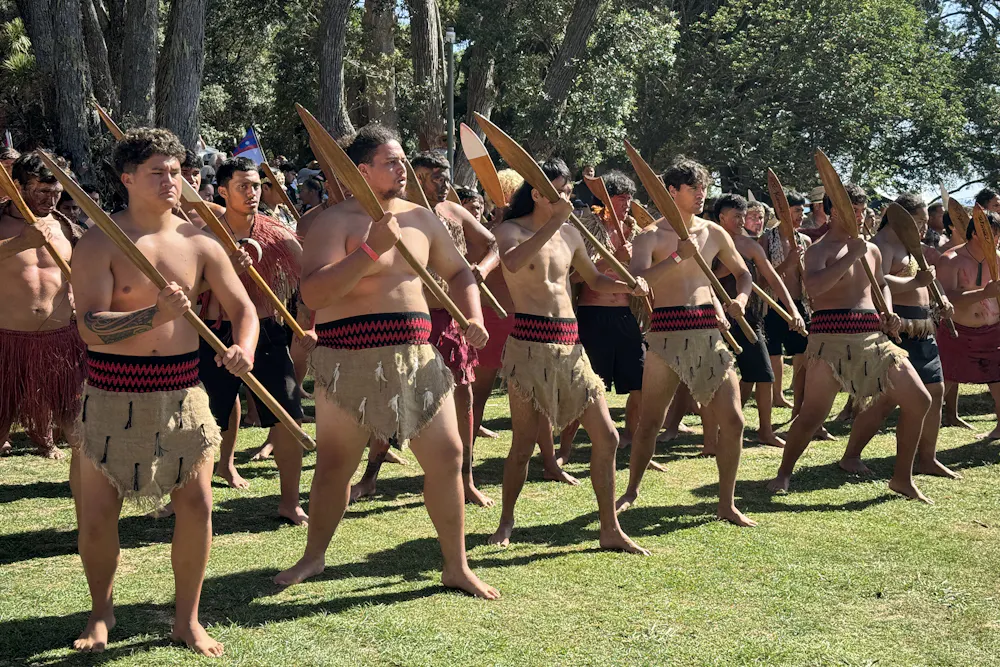 New Zealand marks Waitangi Day every year to celebrate the signing of the Treaty of Waitangi.
Ben McKay/AAP
There are several reasons why Indigenous treaties were never signed in Australia.
First, Australia was colonised in different circumstances, established as a penal colony and not initially a part of European expansionism.
In North America, numerous European powers were competing for control over the continent. The British, French, Spanish and others fought against each other and procured First Nations warriors for their military ranks through treaties.
Trade was also a motivating factor for Treaty-making in North America. Europeans coveted the animal pelts produced by First Nations people for sale in the European fashion markets.
Today, it is arguable that Australia stands out as uniquely opposed to Indigenous rights recognition relative to other British settler states. This idea is supported by our most recent referendum result.
So why are Australian governments engaging in Treaty discussions now?
What’s happening across the country?
There is currently a combination of Indigenous political action and leverage enabled through Indigenous land rights recognition. Some governments are also beginning to see value in Indigenous Knowledge, especially with regard to environmental management.
Treaty, however, is deeply political in Australia, and since the referendum last year it has come under increased political scrutiny and attack.
Days after the referendum result, the Queensland Liberal National party walked back support for a state-based Treaty.
If the LNP wins government at this month’s election (as polls are predicting), Treaty will likely be shelved.
This move would undo the years of work the state government has undertaken as part of its Tracks to Treaty initiative.
Victoria has made the most progress on Treaty of any Australian state or territory. This is due to the leadership of the First Peoples’ Assembly of Victoria, which has spearheaded Treaty in the state.
A Treaty negotiation framework has been developed by the assembly and Victorian government. This will guide negotiations towards a state-wide Treaty in the near future.
Other Australian jurisdictions have made far less progress. The referendum result seems to have stalled any momentum that existed prior.
In the Northern Territory, there’s been no progress since the NT Treaty Commission lodged a report with government in 2022. As the newly elected Country Liberal government doesn’t support a Treaty, it won’t happen anytime soon.
 First Peoples’ Assembly of Victoria has been leading the pathway to Treaty in that state.
Joel Carrett/AAP
In South Australia, the First Nations Voice to Parliament is expected to lead the development of Treaty. The first election was held in March of this year, and First Nations elected members had their first meeting in June 2024.
New South Wales recruited Treaty commissioners earlier this year. They’re now embarking on a 12-month consultation process before reporting back to government.
Governments in Tasmania and the ACT have committed to Treaty, but haven’t made any meaningful progress yet, while WA has made no formal commitment.
Where to from here?
Although there are notable setbacks emerging from the referendum result, it has not discouraged First Nations from working towards agreements and Treaty with Australian governments.
With the proliferation of native title determinations, there is grounds for agreement-making, whether that be through settlement agreements or Treaty.
There is also growing interest in how Indigenous Knowledge can inform our responses to climate change, food security and foreign relations. Accessing this knowledge will require governments to formalise relations with First Nations through agreements.


