

Tech can help kids connect with nature and go outdoors – here are tips to make it work
- Written by The Conversation
Young children’s lives are increasingly spent indoors. They have less access to green spaces, their parents are concerned about safety, and there’s also the draw of digital entertainment. This shift away from the natural world has been evocatively named “the extinction of experience”.
By being in green spaces, children benefit in many ways, including greater physical activity and improved concentration and self-control. The outdoors is also good for children’s learning. Benefits such as these have fuelled the rise of forest schools and the integration of nature play in early childhood education.
The things that play the biggest role in limiting children’s time in nature are urbanisation and parental attitudes. Despite this, digital devices are often blamed for keeping kids indoors.
Digital entertainment is widely perceived as addictive and detrimental. While the concept of screen time is contested, most Australian children are exceeding the current recommended guidelines.
Our research took a different approach, asking: could digital technologies be designed to foster nature connection? After looking at studies of digital technologies used by children aged eight years and under, we found a wide range of ways technology can help children find their way back into the great outdoors.
Being in nature
The ways children connect to nature go through several phases: “being in nature, being with nature, and being for nature”. Key experiences that boost this connection include free time in nature, seeing others like oneself in natural settings, recording nature experiences, and gaining confidence and a sense of agency outdoors.
We found technologies that help children to
- have social and playful experiences outdoors
- discover nature
- show their care for and learn about other species and the environment, and
- focus their creative and artistic abilities on the world around them.
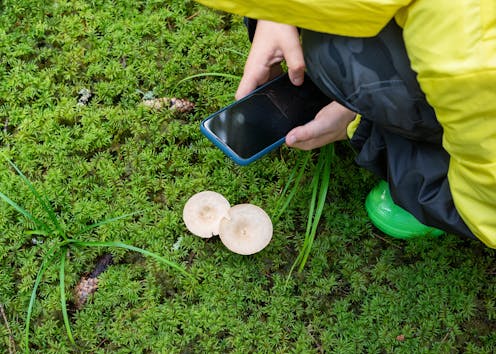
The most commonly used technology were digital cameras in various forms: handheld, GoPros, or built into smartphones or prototype devices.
Case studies from all around the world show how digital imagery opens doors into the natural world. In São Paulo, Brazil, photography helped children notice urban nature they had overlooked. In the United States, it allowed them to collect images of species to learn about.
In Australia, children took photos in parks for creative manipulation later, while in Finland, an augmented reality “forest elf” encouraged imaginative nature exploration that children could photograph. In Italy, the ABBOT prototype used a screenless camera device linked to a tablet application, enabling nature exploration without the distraction of screens.

Young citizen scientists
Nature photography is also a gateway to citizen science. Apps like QuestaGame, though not a subject of our research, bridge the appeal of photography and the game design of Pokémon Go. The goal of the game is to collect images of species for science.
Our study found one citizen science project with seven- and eight-year-old children text logging seashore species they found. While the youngest children needed parental support to do this, they were reportedly the most enthusiastic.
Sound technologies can also help connect kids with nature. The Ambient Birdhouse plays nature videos in the home so that children are sensitised to bird sounds when outside. Another tool, the Eko nature sound collector, pairs with an app to let children manipulate sounds they’ve collected outdoors.
Like photography, sound technologies are an entry point to noticing the natural world. And children can use these even if they can’t yet read.
How can we use tech to connect children with nature?
There are many ways to appropriate existing technologies and make new ones to help children connect with nature. Parents and educators can use accessible technologies like cameras, and applications such as QuestaGame, including their schools-oriented challenge.
To add mystery and excitement by having to look at the images later – much like with film cameras – parents can cover up the screen of a smartphone or digital camera. (A few inches of painter’s masking tape can do the trick.)
Going out to check an automatic nature camera can also be exciting. It can even turn into a daily ritual. These cameras are available both commercially and DIY. To find the best places to put them, children can engage in backyard experimentation, adding another dimension to this activity.
To further encourage their children’s creative and scientific learning, parents can help children make digital stories out of nature photos, or learn about species together.
Finally, tech developers can use all this evidence to design dedicated tech tools for children to use in nature. These designs should be easy for young children to use, engage more senses than sight, and encourage outdoor play, wonder and care for nature.
If such technologies are designed in collaboration with children, families and educators, they have the chance to be widely embraced, both at home and in the classroom.
Our work shows there are ways to use technology to build kids’ interest in the outdoors. By listening to parents’ concerns about addiction to smart devices and children’s safety, we can ensure a world where children play outdoors freely, without veering towards surveillance.


