

Is it possible to have a fair jury trial anymore?
- Written by The Conversation
The decades-long mystery about what happened to 19-year-old Amber Haigh made it to court in New South Wales earlier this year. Those accused of murdering Haigh were found not guilty.
Usually we don’t know precisely why someone was found guilty or not. But in this case, the reasons were given.
This is because the trial was “judge alone”: a trial without a jury. This means the judge decides on the factual questions as well as the legal ones. And as judges are required to give reasons for their decisions, we learned what was behind the verdict, something usually hidden by the “black box” of the jury room.
Judge alone trials are increasing in New South Wales. Moves are being made in some other Australian jurisdictions to increase access to judge alone trials.
While it’s only possible to hold a judge alone trial in certain circumstances, and there are small numbers of such trials relative to other trials, some lawyers and judges think these trials have advantages over those with a jury.
This is because jury trials face a lot of challenges. Some have pondered whether, in this media-saturated environment, there is such a thing as a fair jury trial. So what are these challenges, and where do they leave the time-honoured process?
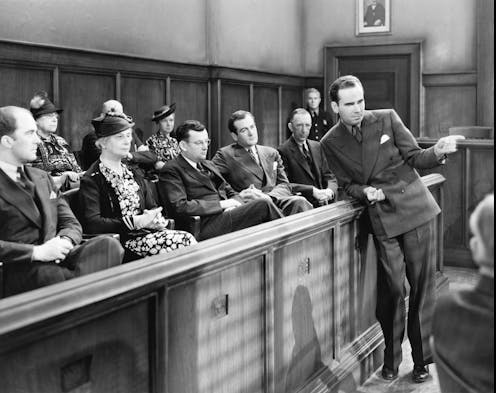
What happens in a jury trial?
The criminal trial brings together knowledge of the facts that underpin the criminal charge. The task of the jury is to independently assess that knowledge as presented in the trial, and reach a conclusion about guilt to the criminal standard of proof: beyond reasonable doubt.
Crucially, lay people provide legitimacy to this process, as individuals drawn from all walks of life are engaged in the decision-making around the guilt of the accused.
The jury is therefore a fundamental part of our democracy.
The changing trial
For its legitimacy, the criminal trial traditionally relies on open justice, independent prosecutors and the lay jury (the “black box”), all overseen by the impartial umpire, the judge, and backed up by the appeal system.
But these aspects of the criminal trial are being challenged by changes occurring inside and outside the courtroom.
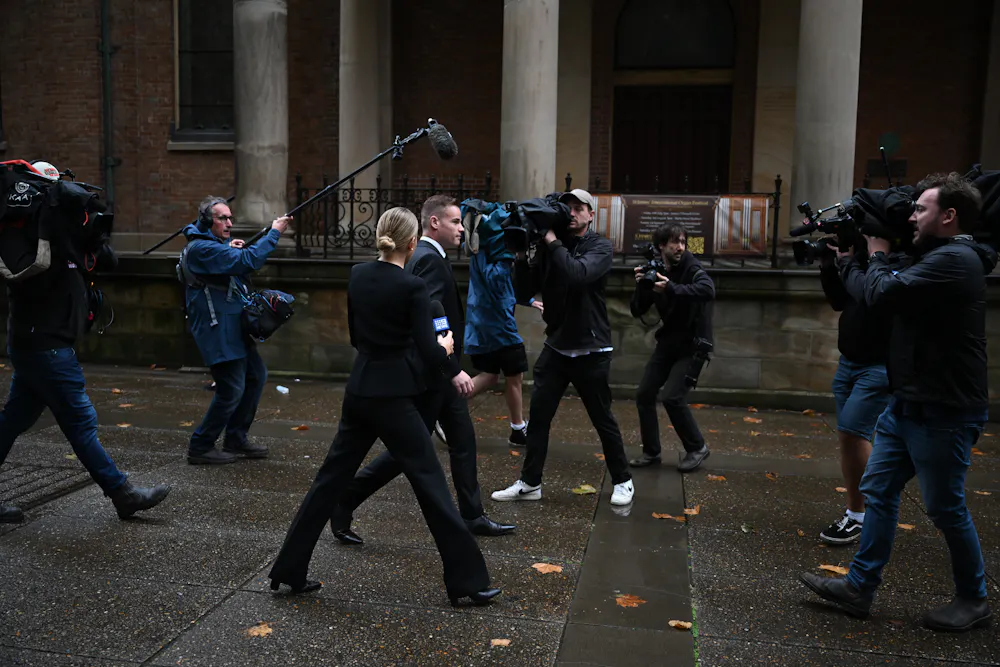
These challenges include high levels of media attention given to criminal justice matters.
Another is the questioning about the way public prosecutors are using their discretion in bringing charges against individuals. This is happening in NSW, ACT and Victoria.
There are also concerns about “junk science” being relied on Australian courtrooms. This is where unreliable or inaccurate expert evidence is introduced in trials.
Some legal bodies are also demanding a post-appeal criminal cases review commission to prevent wrongful convictions.
Added complexity
It is not just juries that must come to grips with complex evidence in criminal matters. Judges and lawyers are also required to grasp intricate scientific evidence, understand new areas of expertise, and get across changing practices of validating expert knowledge.
The difficulty of these tasks for judges and lawyers was on show in the two special inquiries into Kathleen Folbigg’s convictions for the murder of her children, held in 2019 and 2022–23. Rapid developments in genetic science, alongside other developments, came to cast doubt on the accuracy of Folbigg’s convictions. This was just a few years after the first inquiry concluded there was no reasonable doubt about her guilt.
 Kathleen Folbigg’s conviction was overturned due to advances in genetic science.
Dan Himbrechts/AAP
The challenges facing criminal trials are one dimension of much wider social and political dynamics. News and information is produced and consumed differently now. People have differing degrees of respect for scientific knowledge and expertise. Trust in authority and institutions is low.
These factors come together in a perfect storm and pose existential questions about what criminal justice should look like now.
What does the future look like?
The future of criminal law and its institutions depends on their legitimacy. It’s legitimacy that gives courts the social license and power to proscribe conduct, prosecute crimes and authorise punishment. Juries are a vital piece of this picture.
Amid the changing environment, there are things we can do to improve jury trials and in turn, safeguard and enhance their legitimacy.
One is providing extremely careful instructions to juries to make sure jurors understand their tasks, and do not feel frustrated.
Another is introducing higher and better standards for expert evidence. Experts testifying in court need firm guidance, especially on their use of industry jargon, to decrease chances of wrongful convictions.
These sorts of changes might be coupled with changes in criminal laws, like enhancing laws of self-defence so they are more accessible to women in domestic violence situations.
Together, this would help to future-proof criminal law, ready to meet the challenges of coming years and decades that we are yet to detect.
Read more https://theconversation.com/is-it-possible-to-have-a-fair-jury-trial-anymore-239401


