

You’ve heard of Asterix and Obelix, but who really were the Gauls? And why were they such a problem for Rome?
- Written by The Conversation

The year is 50 BC. Gaul is entirely occupied by the Romans. Well, not entirely. One small village of indomitable Gauls still holds out against the invaders.
So begins the Asterix comic series, which positions Julius Caesar as the power-lusting dictator of the mighty Roman Empire who conquered all of Gaul. All except, of course, for one heroic village, where Asterix, Obelix and Dogmatix are among the Gauls (or Gaul dogs) frustrating Rome’s hapless legions.
Well, that’s the comic book version.
But who really were the Gauls? And why were they such a problem for Rome?
The Gauls are the most famous group of Celtic peoples who occupied most of the lands west of the Rhine, thus causing this area to be known in antiquity as Gaul.
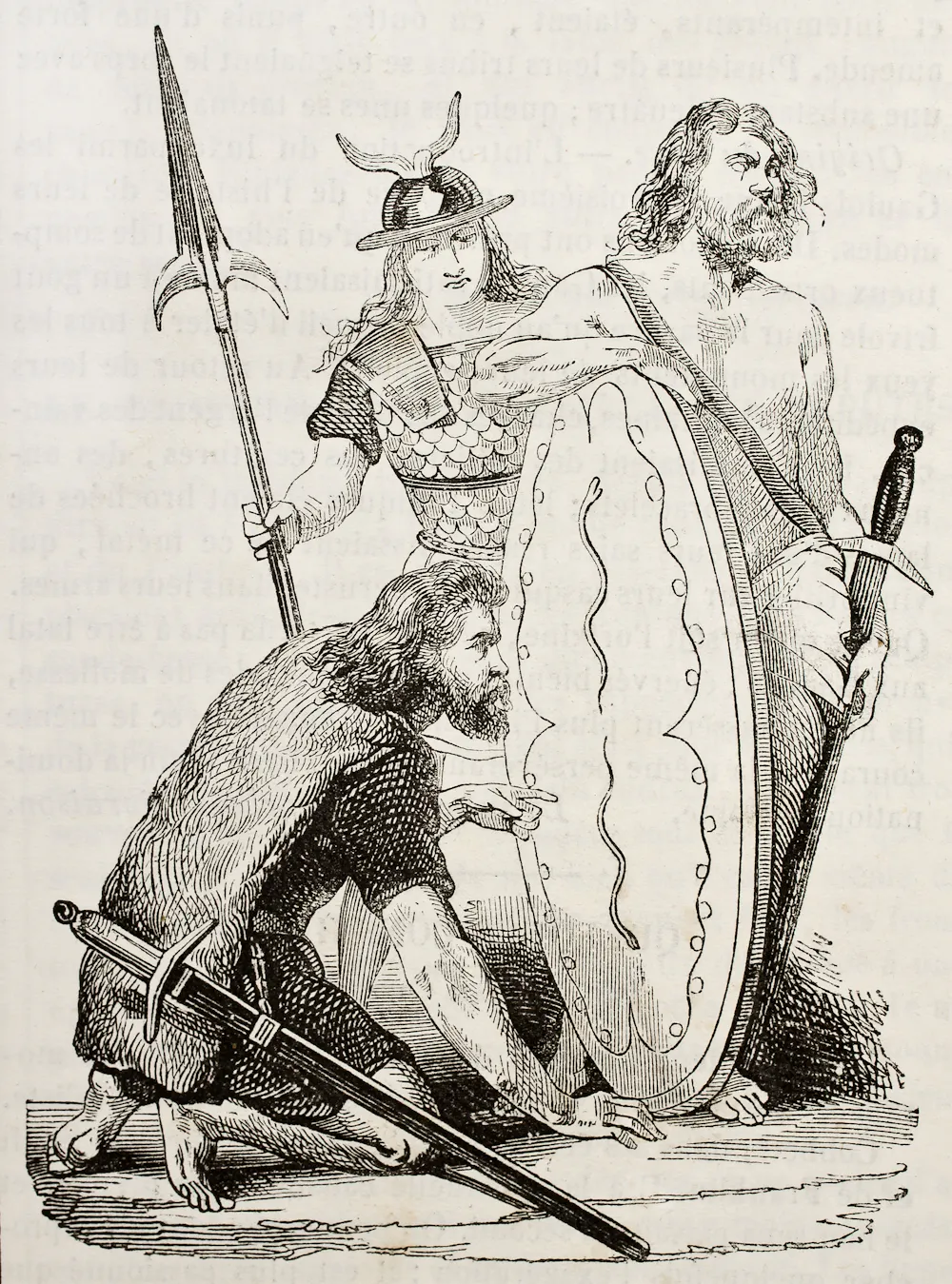
They sported long blonde or reddish dreadlocks (often washing their hair in lime-water and pulling it back to the nape of the neck), handlebar moustaches on the men, colourful shirts and striped coats. The ethnonym Galli is believed to derive from a Celtic root gal- meaning “power” or “ability”, and has been linked to the Irish word gal, meaning “bravery” or “courage”.
Fearsome warriors
From the fifth to third centuries BCE, the Celtic tribes of central Europe were among the continent’s most fearsome warriors.
From their heartlands around what is now the Czech Republic (Bohemia derives its name from the powerful Boii Gallic tribe), they conquered the British Isles, all of France and Belgium (Gaul proper) and parts of Spain. They also conquered the fertile alluvial plains of what became known to Romans as Cisalpine Gaul, meaning “Gaul this side of the Alps”.
The Gauls even conquered lands as far afield as in present-day Turkey. The descendants from these once mighty peoples still live in Ireland (Gaelic comes from the word Gaul), Wales and Brittany.
The Gauls had a very warlike reputation. They produced tall and muscular warriors who often wore helmets that, according to the Greek historian Diodorus Siculus, sometimes had horns attached or “images of the fore-parts of birds or four-footed animals”. He also wrote that:
The women of the Gauls are not only like the men in their great stature but they are a match for them in courage as well.
Gauls fought with long broad-swords, barbed spears, and chariots drawn by two horses. They fastened the severed heads of their enemies about the necks of their horses.
Possessing huge quantities of alluvial gold, Gallic nobles wore heavy necklaces (known as “torcs”) of solid gold and consumed untold amounts of imported wine, fabulously enriching Italian merchants.
Their acts of bravery were immortalised by lyric poets called bards, and they put great stock in their shamans, called druids, who also presided over regular human sacrifices.
In 387 BCE, Gallic raiders from Cisalpine Gaul sacked Rome. They only failed to take the Capitol because of a hostile incursion into their own homelands, forcing them to break camp and return – not before, however, exacting a crippling price in gold from the profoundly humiliated Romans.
The Romans were so impressed with Gallic military kit they resorted to wholesale plagiarism. The iconic armour of Roman republican legionaries was largely of Celtic origin.
 The Gauls had a very warlike reputation.
J. Photos/Shutterstock
Rome rallies against the Gauls
In 295 BCE, the Senones (a Gallic tribe) inhabiting the Adriatic coastline south of Cisalpine Gaul were part of an alliance soundly defeated by the Roman Republic in the battle of Sentinum.
This represented a watershed moment on the road to Roman hegemony in the Italian peninsula.
In 232, against the backdrop of renewed hostilities with the Cisalpine Gauls, leading Roman politician Gaius Flaminius passed legislation redistributing land won from the Senones (following their final defeat in 283) among Romans from the lower property classes.
To ease Roman colonisation, the same Flaminius in 220 commissioned the construction of the Via Flaminia, a paved speedway from Rome all the way to Rimini, at the doorstep of Cisalpine Gaul.
Fearing the same fate as the Senones, the Cisalpine Gauls united against Rome, aided by some Transalpine Gauls.
By 225, this alliance became strong enough to invade peninsular Italy, ravage Tuscany, and threaten Rome itself.
This famously triggered the Romans to muster all Roman and Italian manpower at their disposal (about 800,000 draftable men, according to ancient the historian Pliny).
Being now superior in every respect, the Romans and their Italian allies decisively defeated the Cisalpine Gauls in 223 and 222. The Roman general Marcus Claudius Marcellus even managed to kill a Gallic king in single combat.
The vanquished Cisalpine Gauls then joined the feared Carthaginian general Hannibal, who at the time posed a great risk to Rome and defeated its forces in many battles. They joined Hannibal en masse after he crossed the Alps to invade Italy in 218.
But Hannibal failed to vanquish Rome and was later defeated. The Roman conquest of Cisalpine Gaul continued after Roman forces defeated Hannibal’s brother Hasdrubal at the Metaurus River in 207.
To secure their rich holdings in Cisalpine Gaul and the land corridor to their Spanish provinces, the Romans subsequently conquered first Liguria and next southern Gaul, incorporated as the Province of Transalpine Gaul. The area was so thoroughly colonised it is still known today as La Provence (“the province”).
Caesar’s self-interested war on the Gauls
Julius Caesar, eager to amass glory and wealth, subjugated all of Gaul in less than a decade (from 58 to 50 BCE).
He sold this outright aggression to the Senate and people in Rome as a war waged in defence of tribes allied with Rome, a necessary pre-emptive strike of sorts.
In addition to enslaving perhaps up to one million Gauls, Caesar proudly claimed to have killed well over another million, a staggering casualty rate considered by Pliny the Elder “a prodigious even if unavoidable wrong inflicted on the human race”.
 Julius Caesar subjugated all of Gaul in less than a decade.
Paolo Gallo/Shutterstock
Caesar got away with mass murder because he shamelessly played into lingering feelings of metus Gallicus, or “Gallic fear”.
The Roman fear of Gauls was heightened by the so-called Cimbric War that took place in earlier years, when a formidable confederacy of Germanic and Gallic tribes inflicted a series of costly defeats upon Rome, threatening Italy itself.
But Rome would triumph in the end. Under the leadership of Gaius Marius, the Romans destroyed these tribes in 102/101 BCE in Transalpine and Cisalpine Gaul.
Turned into a Roman province in final stages of this war, Cisalpine Gaul eventually became so heavily Romanised it was incorporated into Roman Italy proper in 42 BCE.


