Playing games with your pelvic floor could be a useful exercise for urinary incontinence
- Written by The Conversation
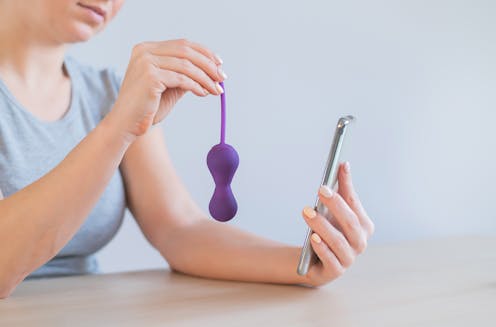
Many of us have heard of “Kegels” or pelvic floor exercises, and probably have a vague sense we should be doing more of them. For many women, our social media news feeds are full of ads for the latest gizmos and gadgets for exercising our pelvic floors. There are brands with game-like apps including Perifit and Elvie, and there are Kegel balls for sale too.
As technology advances and the need for pelvic floor rehabilitation after pregnancy, childbirth and menopause continues, the demand for innovation in these devices has increased. Then there is the global pandemic that has restricted access to face-to-face medical treatment – prompting many of us to take our health into our own hands.
But what exactly are these devices used for, and do they actually work? The short answer: pelvic floor strengthening; and, it depends.
4 things the pelvic floor does and why it often fails
The pelvic floor is a group of muscles that run from our pubic bone to tailbone, and between our sit-bones, lining the base of our pelvis. Contrary to popular belief, you don’t have to lie on the floor to exercise your pelvic floor.
The role of the pelvic floor muscles is to:
- keep all our organs (bladder, uterus, bowel) inside the pelvis
- keep the sphincters to our bladder and bowel closed (until we’re ready to relax them on the toilet)
- provide sexual sensation
- work together with other deep core muscles to help with trunk stability.
The pelvic floor doesn’t always work the way it’s meant to. Bladder leakage (also known as urinary incontinence) and pelvic organ prolapse are common pelvic floor complaints for women of all ages.
About one in three women will experience urinary incontinence at some point in our lives, especially if we’ve had a baby. Other risk factors include repetitive heavy lifting, straining due to constipation, carrying extra weight, pelvic surgery, and hormonal changes.

Read more: 'Are Kegel exercises actually good for you?'
Getting the pelvic floor into shape
Pelvic floor muscle training is recommended as the first line of treatment for incontinence and prolapse, along with lifestyle changes such as healthy bladder and bowel habits, good general fitness, and weight management.
Pelvic floor physiotherapists are health professionals specially trained to give you individualised advice for your pelvic floor symptoms based on an assessment and your circumstances. They will likely recommend daily exercises that may include rapid contractions of the pelvic floor muscles, coordination tasks and longer holds.
Those who have trouble sticking to the prescribed exercises, or who don’t have access to a suitable physio for geographical or financial reasons, may be interested in trying biofeedback devices. These devices and their associated apps are designed to give you more information on how and when to do your exercises, remind you to do them, and help you to stick with the program.
Maintaining motivation can be tough. Research shows it usually takes at least 6–12 weeks of regular pelvic floor training to see results (just like visiting the gym, we can’t build muscle overnight).
 There are many types of pelvic floor trainers on the market.
Shutterstock
There are many types of pelvic floor trainers on the market.
Shutterstock
Read more: Urinary incontinence can be a problem for women of all ages, but there is a cure
Do pelvic floor biofeedback devices work?
There’s some evidence to suggest pelvic floor reminder apps and biofeedback devices can be helpful for improving pelvic floor function and bladder control. This might be superior to pelvic floor exercises alone. Then again, it might not make a difference.
Some women do not find the use of technology helpful for pelvic floor training. Barriers can include connectivity or set-up issues, need for privacy, tech being distracting, and price. Insertable devices also require caution for use, as most are not appropriate during pregnancy, within the first six weeks after having a baby or pelvic surgery, or when there is unexplained bleeding, pain or active infection. If in doubt, it’s always best to consult your medical provider.
The benefits of pelvic floor trainers with game-like apps that sync with an inserted device include:
- giving real-time feedback on the screen for pelvic floor performance and correct technique
- allowing women to work with their physio remotely
- measuring and tracking strength, endurance and coordination improvements over time
- providing reminder prompts via phone notifications to complete workouts
- adjusting the workout difficulty of each session based on how the body is responding (this accounts for time-of-day fluctuations and fatigue)
- entertaining the user with a variety of games and tasks, making them more likely to stick with their pelvic floor program!
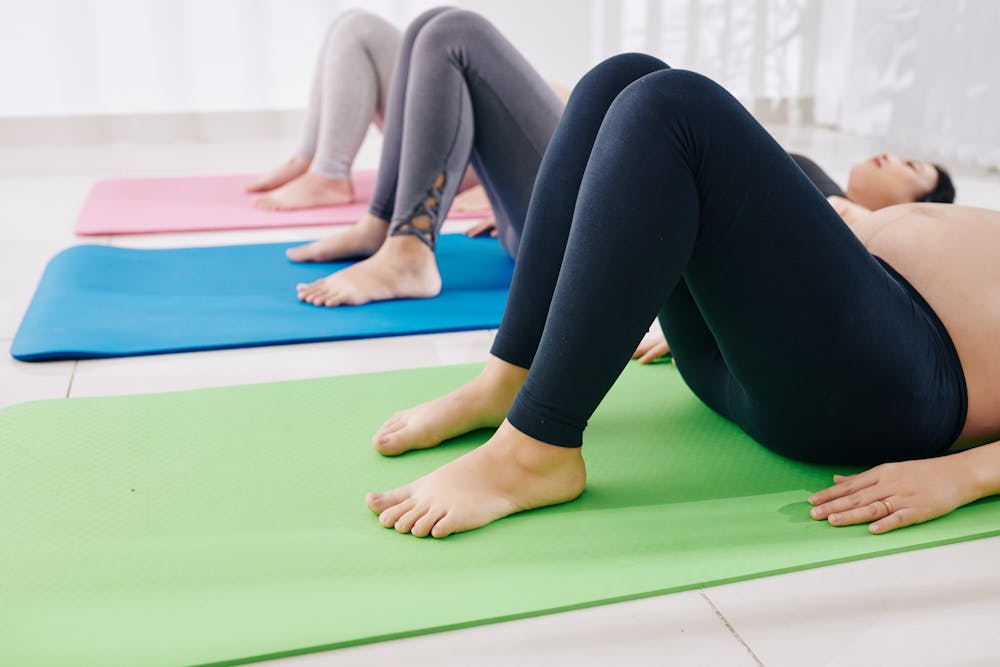 You do not have to do pelvic floor exercises lying down – or with special equipment.
Shutterstock
You do not have to do pelvic floor exercises lying down – or with special equipment.
Shutterstock
Read more: Why you shouldn't make a habit of doing a 'just in case' wee — and don't tell your kids to either
The bottom line
The evidence definitively supports pelvic floor exercises for incontinence and prolapse, and this is best done with the support of a suitably trained professional such as a pelvic floor physiotherapist.
While early research looks promising, the evidence for commercially marketed pelvic floor feedback devices has not yet caught up to their hype. But if you are keen to try a pelvic floor biofeedback device or app to improve pelvic floor tone for better bladder control, prolapse symptoms, or sexual function – then go for it (especially if your specialist physio agrees).
After all, the best kind of pelvic floor exercise regime is the one you’ll stick with.