

We found a new wasp! Students are discovering insect species through citizen science
- Written by The Conversation
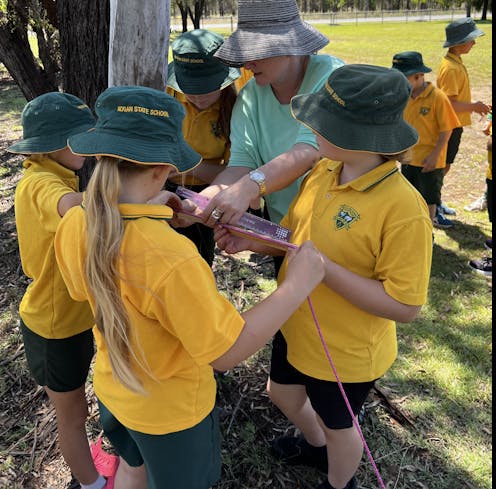
Playgrounds can host a variety of natural wonders – and, of course, kids! Now some students are not just learning about insects and spiders at school — they are putting them on the map and even discovering and naming new species.
Studies indicate insect populations are declining, and species are going extinct every week in Australia. But scientists have only described about a third of Australia’s estimated total of insect species.
This means around 150,000 of our insect species do not have formal scientific names. We know little about where they are and what they do in ecosystems — vital information for stopping biodiversity loss.
So, our team developed the citizen science project Insect Investigators.
We took scientists to 50 regional schools across three states to learn about insects and other arthropods such as spiders. Students of all ages got to survey insect diversity, search for new species, and engage with entomologists and taxonomists throughout the school year.
Students helped name new species, including several species of parasitoid wasp.
Some of the scientific names include Apanteles darthvaderi (Back Plains State School students thought the wasp had gone to the “dark side” because of the way the wasp “sucks the life out of caterpillars”), Mirax supremus (named after the pinnacle science class at Beerwah State High School), and Coccygidium mellosiheroine, which means “honey-coloured hero” (named by students collaborating from several Queensland schools, who considered the wasp a hero as it attacks a crop pest).
Our latest paper on the project is now published. We learned hands-on citizen science increased students’ interests in insects, nature and science.

How many insects?
Around 1,800 students and more than 70 teachers collected insects in or near their schools.
Teachers sent samples to the project team, which sorted and sent a selection of specimens to be DNA barcoded. This method involves sequencing a small section of the genome to tell different species apart.
The specimens were then sent to experts around Australia, who are working to describe any new species collected.
The students collected more than 12,000 insect specimens, including 5,465 different species – many of which are probably not described.
It will take years to identify all the species and work out how many are new to science, but we already know 3,000 had not been recorded in the Barcode of Life DNA database (BOLD).
Good for insects, good for learning
Getting to know insects as part of this citizen science project was great for kids’ active learning and developing an appreciation of the natural world.
Students said they felt more interested in insects, nature and science, and it inspired them to spend more time outdoors.
“I learnt there are many insect and plant species… that I haven’t seen before and how in different ecosystems you can find different insects,” said a student from South Australia.
When students are engaged, it’s no surprise teachers enjoy their jobs more too — and this is exactly what we found. The more enthusiastic the students were about nature and science experiences through the project, the more interested the teachers were in teaching these topics.
One teacher reported “students gained an understanding of the work of scientists, how to participate in research, protocols to follow, and gained a huge interest in insects!”
Insect Investigators won the 2024 Eureka Prize for Innovation in Citizen Science (Australian Museum)What did students get out of it?
After the insect survey was completed, we asked 118 students and 22 teachers in nine of the schools about what they experienced, and how they see insects and nature now.
Students said the chance to find a new species, as well as discovering and catching insects they had not seen before, were highlights of Insect Investigators.
Experiencing a hands-on learning style, outside in nature, was also mentioned as a benefit of the program.
Many students said they now wanted to spend more time outdoors, act and encourage others to protect nature, and pay more attention to insect conservation and science classes. This implies the experience and discovery associated with hands-on citizen science has motivated greater engagement with nature and science.

The potential of school-based citizen science
Insect surveys offer an accessible way for students to actively learn about science and nature. Insects are virtually everywhere and by photographing them, students can observe natural insect behaviour – without the need to collect them.
The iNaturalist App and Atlas of Living Australia facilitate citizen scientists to explore nature around them. We’ve also created resources for teachers who want to introduce lessons on insects into their school homepage.
It’s never too early to develop science literacy skills and give children the chance to develop their curiosity, critical thinking and problem solving.
Connecting schools and scientists is a great way to engage young learners and foster connections to nature. It has the added bonus of inventorying our natural world which is vital to conserving Australia’s biodiversity.


