

Every 3 years, we play the election date waiting game. Are fixed terms the solution?
- Written by The Conversation
With another election campaign unofficially underway, voters may feel it hasn’t been long since they were last at the voting booth.
Australia’s Constitution dictates:
every House of Representatives shall continue for three years from the first meeting of the House, and no longer, but may be sooner dissolved by the Governor-General.
This allows the sitting government to call an election sooner than three years after taking office, but recent norms are for governments to use the full term length available to them.
But how do politicians and the public feel about this format, and could this change anytime soon?
Early elections
In 1998, the John Howard Liberal government called an early election seeking voters’ support for its ambitious plans to introduce a goods and service tax. It came very close to defeat, but clawed its way to victory and nine more years of power.
In 2016, the Malcolm Turnbull Liberal government took a similar punt, calling an early double dissolution election ostensibly on the issue of union corruption. Again, it came very close to defeat but clawed its way to victory (and six more years of power).
Despite their reasons for calling early elections, both Howard and Turnbull faced declining global economic conditions and arguably moved tactically to avoid campaigning in the worst of the headwinds.
Most governments have less appetite for capitalising on external events – like interest rate cuts – when calling an election. Voters already largely distrust politicians, and cynical early elections will only confirm their beliefs.
Fixed versus non-fixed parliamentary terms
The ability of a government to unilaterally decide the election date is unusual.
The political systems most similar to Australia – New Zealand, Canada, the United Kingdom, the United States – all have fixed election dates. Australian states and territories have also increasingly moved to fixed dates, where the government of the day has no discretion over election timing.

As prime minister, Julia Gillard effectively relinquished her right to manipulate the 2013 election date in her favour. She announced it more than seven months ahead of time. Her government lost the subsequent election.
Unsurprisingly, there is little political will to move to fixed dates for federal elections. Only current Special Minister of State Don Farrell has expressed even passing support for the idea (and then, only if voters were clearly in favour).
Fixed terms would undoubtedly benefit voters, who could plan their calendars well in advance. They would also benefit non-government parties and independent candidates, who could budget and plan campaigns around a known election date.
Who wants longer terms?
Prime Minister Anthony Albanese supports four-year terms, reflecting long-term Labor Party policy.
The Liberal Party has generally been more ambivalent. Howard was supportive but “not mad keen” in 2005 and supportive, but resigned to failure in 2024.
Current leader Peter Dutton also backs longer terms, but observes that, among voters, “generally, there is a reluctance to do anything that makes the life of a politician easier”.
Beyond voters’ reluctance to grant a one-year extension to politicians’ tenure, the issue of senate term lengths is an obstacle to reform.
Current tradition sets senate terms twice the length of House of Representatives terms, however, Penny Wong has argued that eight-year terms are too long.
Both New South Wales and South Australia have experience with eight-year terms in their upper houses, but no other states have yet followed.
How could (and will) terms be changed?
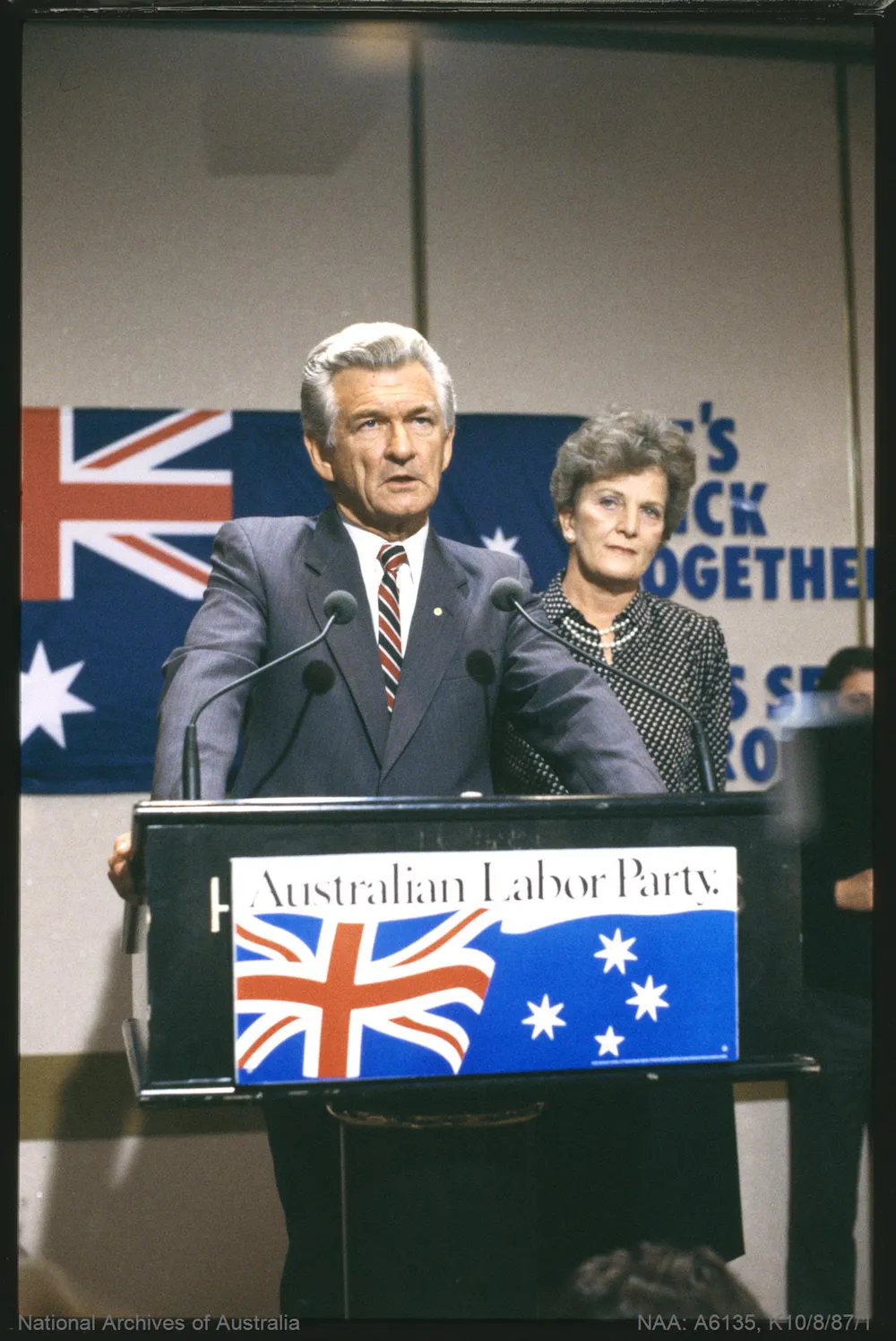
Any change to federal parliamentary terms would require a successful referendum. The question has been put to Australians once before, in 1988. Only 33% of voters supported the proposal, and no state achieved majority support.
Polling from April 2024 finds only 38% support, with 18% unsure. Independent and minor party voters – the fastest growing group in Australian politics – were also the most strongly opposed to longer terms.
As Dutton noted, voters have been reluctant to support “politician-friendly” referendums in the past. There seems almost no chance the 48th parliament would consider a referendum on the issue.
Would 4-year terms make politics better?
David Coleman, recently promoted to the Liberal Party’s frontbench, has confidently declared “businesses and consumers tend to hold off on investment during election periods and the phoney war that precedes them”, and so longer terms would improve the domestic economy.
The business sector seems to agree.
Are they right? And what about non-economic outcomes?
Academic research backs up the assumption governments are less likely to announce major tax reforms in the months leading into an election. Shorter terms might also make governments less likely to introduce austerity (strict cost-cutting) measures.
The weight of academic evidence suggests that whichever party is in power matters far more than the length of the electoral cycle.
Researchers have struggled to find differences in how politicians with longer terms (usually four years) behave from those with shorter terms (usually two years). Activity levels for the shorter-term politicians appear slightly more frenetic – more fundraising and expenditure, more campaigning – but the outcomes are similar.
Longer terms do not seem destined to fix Australia’s political malaise.


