

Global warming of more than 3°C this century may wipe 40% off the world’s economy, new analysis reveals
- Written by The Conversation
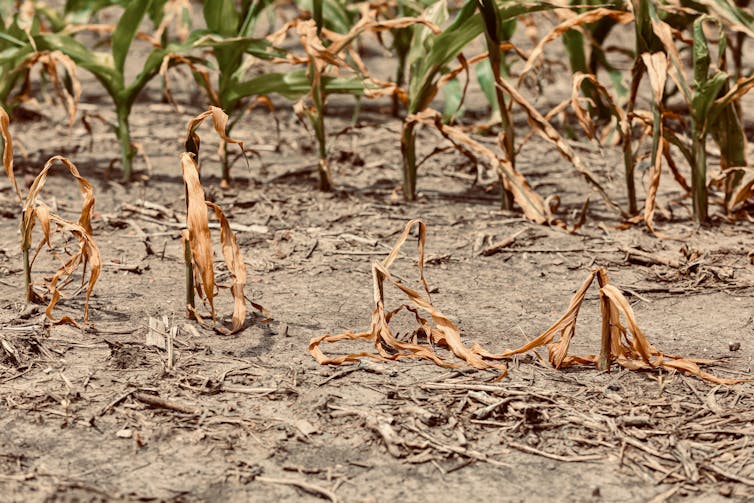
The damage climate change will inflict on the world’s economy is likely to have been massively underestimated, according to new research by my colleagues and I which accounts for the full global reach of extreme weather and its aftermath.
To date, projections of how climate change will affect global gross domestic product (GDP) have broadly suggested mild to moderate harm. This in part has led to a lack of urgency in national efforts to reduce greenhouse gas emissions.
However, these models often contain a fundamental flaw – they assume a national economy is affected only by weather in that country. Any impacts from weather events elsewhere, such as how flooding in one country affects the food supply to another, are not incorporated into the models.
Our new research sought to fix this. After including the global repercussions of extreme weather into our models, the predicted harm to global GDP became far worse than previously thought – affecting the lives of people in every country on Earth.

Weather shocks everywhere, all at once
Global warming affects economies in many ways.
The most obvious is damage from extreme weather. Droughts can cause poor harvests, while storms and floods can cause widespread destruction and disrupt the supply of goods. Recent research has also shown heatwaves, aggravated by climate change, have contributed to food inflation.
Heat also makes workers less productive. It affects human health, and disease transmission, and can cause mass migration and conflict.
Most prior research predicts that even extreme warming of 4°C will have only mild negative impacts on the global economy by the end of the century – between 7% and 23%.
Such modelling is usually based on the effects of weather shocks in the past. However, these shocks have typically been confined to a local or regional scale, and balanced out by conditions elsewhere.
For example, in the past, South America might have been in drought, but other parts of the world were getting good rainfall. So, South America could rely on imports of agricultural products from other countries to fill domestic shortfalls and prevent spikes in food prices.
But future climate change will increase the risk of weather shocks occurring simultaneously across countries and more persistently over time. This will disrupt the networks producing and delivering goods, compromise trade and limit the extent to which countries can help each other.
International trade is fundamental to the global economic production. So, our research examined how a country’s future economic growth would be influenced by weather conditions everywhere else in the world.
What did we find?
One thing was immediately clear: a warm year across the planet causes lower global growth.
We corrected three leading models to account for the effects of global weather on national economies, then averaged out their results. Our analysis focused on global GDP per capita – in other words, the world’s economic output divided by its population.
We found if the Earth warms by more than 3°C by the end of the century, the estimated harm to the global economy jumped from an average of 11% (under previous modelling assumptions) to 40% (under our modelling assumptions). This level of damage could devastate livelihoods in large parts of the world.
Previous models have asserted economies in cold parts of the world, such as Russia and Northern Europe, will benefit from warmer global temperatures. However, we found the impact on the global economy was so large, all countries will be badly affected.
Costs vs benefits
Reducing emissions leads to short-term economic costs. These must be balanced against the long-term benefits of avoiding dangerous climate change.
Recent economic modelling has suggested this balance would be struck by reducing emissions at a rate that allows Earth to heat by 2.7°C.
This is close to Earth’s current warming trajectory. But it is far higher than the goals of the Paris Agreement, and global warming limits recommended by climate scientists. It is also based on the flawed assumptions discussed above.
Under our new research, the optimal amount of global warming, balancing short-term costs with long-term benefits, is 1.7°C – a figure broadly consistent with the Paris Agreement’s most ambitious target.
Changing course
Our new research shows previous forecasts of how such warming will affect the global economy have been far too optimistic. It adds to other recent evidence suggesting the economic impacts of climate change has been badly underestimated.
Clearly, Earth’s current emissions trajectory risks our future and that of our children. The sooner humanity grasps the calamities in store under severe climate change, the sooner we can change course to avoid it.


