

These complementary therapies may soon be eligible for private health insurance rebates
- Written by The Conversation
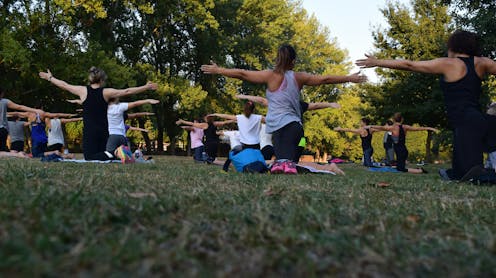
Private health insurers may soon be able to offer rebates for seven complementary therapies previously prohibited.
This includes some movement therapies – Pilates, yoga, tai chi and Alexander technique, which teaches body awareness and posture – as well as naturopathy, shiatsu (Japanese massage) and Western herbal medicine.
These are the recommendations from a government-commissioned review chaired by former Chief Medical Officer Michael Kidd. I was part of a committee supporting the review.
The review assessed 16 natural therapies that are currently prohibited from private health insurance cover.
It recommended nine therapies stay on the prohibited list because the evidence doesn’t support their use:
- aromatherapy (which uses essential oils for treatment)
- Bowen therapy (where pressure is applied in small movements on parts of the body)
- the Buteyko method (breath training)
- Feldenkrais (movement therapy)
- homeopathy (where practitioners give patients diluted substances)
- iridology (studying patterns in the eye)
- kinesiology (studying body movement)
- reflexology (where pressure is applied to the feet)
- Rolfing (hands-on manipulation of the body).
Therapies were recommended for re-inclusion where there was “moderate certainty evidence of their clinical effectiveness for at least one health outcome in one health condition”.
In other words, therapies recommended for inclusion “probably” or “are likely to” work for at least one condition, compared to not using any treatment.
But they weren’t included on the list for re-inclusion if they “might” work in some conditions.
Why the reassessment?
The 16 therapies were originally prohibited from private health insurance coverage in 2019. This followed a 2015 government review which found the therapies didn’t have significant evidence showing they were clinically effective.
However, a number of commentators, including me, had identified a number of concerns that the methods used may not have accurately captured the relevant evidence. Much research on shiatsu, for example, is labelled as acupressure or massage. And there were many other inconsistencies across the reviews.
Read more: Going to the naturopath or a yoga class? Your private health won't cover it
To ensure a robust and rigorous review, then-health minister Greg Hunt asked the National Health and Medical Research Council to convene a panel of research experts to help coordinate and compile review. An advisory panel was also set up, which included experts in natural therapies, consumer perspectives and research.
To improve transparency and inform future decisions, all parts of the review process are available online.
What happens next?
This doesn’t necessarily mean your private health insurer will start covering previously excluded natural therapies.
For one thing, the minister still needs to sign off on recommendations before they can be implemented in practice.
Lifting of the prohibition will only allow your insurer to cover the therapy, not require it. The decision on whether your insurer will start to cover naturopathy, Pilates, yoga or the other therapies on the list will be up to individual insurers.
When will the decision be reviewed?
It’s unclear how, or if, ongoing evaluations will consider whether natural therapies are included in private health insurance. This will depend on how the government implements these recommendations.
However, the panel chair recommended the review should form a foundation for better understanding the role of natural therapies.
There may be a future role for some therapies but only in specific circumstances.
The 2015 review, for example, spoke relatively positively about the potential for the Buteyko method in reducing reliance on medication use in asthmatics. But this alone did not meet the criteria for re-inclusion in either the previous or current review.
Improving research and practice
The review also identified several quality and reporting issues across natural therapies research that require further work to address.
Researchers conducting natural therapy trials aren’t always required to provide detailed descriptions of therapies. This can impact evaluation.
It’s difficult to answer, for example, whether an Alexander technique trial used a trained or untrained practitioner. Or whether a myofascial release study was delivered in Rolfing or physiotherapy practice. Or whether a herbal medicine study was really a study of naturopathic practice.
Making all the work and documents of the review publicly available (even the data considered out of scope) will help strengthen future research and practice. It can also help researchers and policymakers identify the role these therapies have outside private health insurance – or whether they should have any role at all.
Even for those therapies that may be reintroduced, work will be needed to continue to improve practice, educational accreditation, registration for some therapists, and better accountability of standards.
With more than half of Australians using some form of natural therapy, we need an evidence-based approach.


