

Why the Mormon church is on an expansion project, with two secretive new temples planned for Australia
- Written by The Conversation

The Church of Jesus Christ of Latter-day Saints has announced it will build 15 new temples in countries across the world, including one in Liverpool, New South Wales.
This follows a similar announcement last year of plans to build a second temple for Queensland, in South Brisbane.
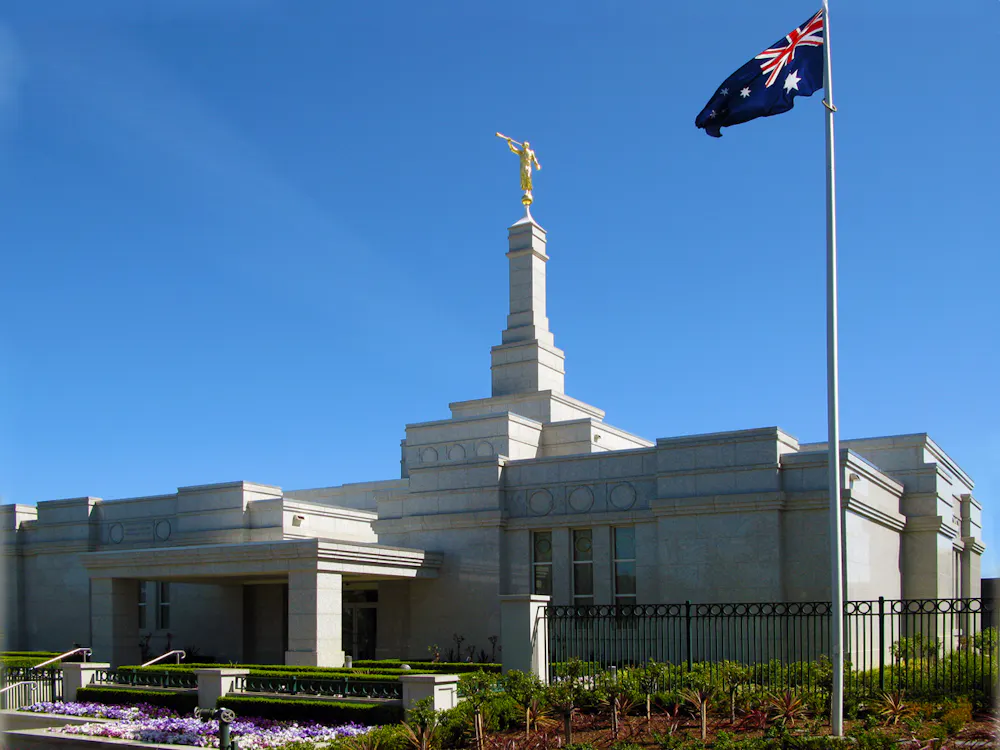
The two new structures – together with existing temples in Sydney (1984), Adelaide (2000), Melbourne (2000), Perth (2001) and Brisbane (2003) – will bring the total number of Australian temples to seven.
In a nation with fewer than 160,000 practising Mormons, these new buildings seek to increase the legitimacy and visibility of the church.
The significance of temples
There are currently at least 200 completed Mormon temples around the globe, with an additional 182 under construction or announced.
Temples have a different purpose and scope to Mormon chapels, which are far more common: Australia has about 190 Mormon chapels.
Chapels are used for weekly sacrament (or communion) and weekly sermons. They are open to visitors, and often hold cultural events, extra church activities and family history centres.
Temples, on the other hand, represent the blending of the divine and temporal. According to the Mormon worldview and doctrines, they are the world’s most sacred structures.
Each temple is emblazoned with the phrase “The House of the Lord, Holiness to the Lord”. This isn’t just symbolic. Mormons believe each temple is literally the house of God, in which his presence may be felt.
Given the gravity of this belief, these spaces are reserved for those who have been deemed worthy to enter by Mormon leaders.
Inside the House of the Lord
The church itself maintains that temples are “sacred, not secret”. It has long worked to dispel speculation over what happens within temple bounds.
One way it does this is through “open houses”, in which a newly-built temple may be toured by anyone for a brief period. Once the open house has ended and the temple has been “dedicated” by a church leader – a process that includes blessing the building and those who will use it – it becomes entirely closed to the public.
Within the temples, the most sacred rituals and knowledge of “the gospel” are imparted upon faithful members. Rituals can be performed for both living people and deceased ancestors. They must never be conducted – or even discussed – outside the sacred temple space.
One of these rituals is baptism and confirmation for the dead by proxy (baptisms for the living are conducted in chapels or other spaces). This provides the deceased individuals “ordinances” that are necessary for salvation, which they did not receive during life.
These baptisms have been controversial at times, with ordinances performed on individuals who were not direct ancestors of Latter-day Saints, including Holocaust victims and historical figures such as Joseph Stalin and Adolf Hitler. Even prominent Australians such as Ned Kelly, Malcolm Fraser, Neville Bonner and Truganini have allegedly appeared as “baptised” in Mormon records.
Other temple ceremonies, conducted for both the dead and living, include washing and anointing with oil, “endowment” and “sealing”.
The rituals are accompanied by various stages of knowledge progression for attendees. As with the rituals, temple knowledge is not to be discussed outside.
Local opposition
The air of secrecy and exclusivity surrounding Mormon temples has resulted in a flood of negative attention from Australian media, other religious institutions and society at large. News reports from as far back as the early 20th century sought to expose “Mormon temple secrets”.
The first temple, built in Sydney in 1984, was widely protested by community groups and organisations. The building had to be modified by the church before it was eventually approved. A similar situation transpired in Brisbane in the early 2000s.
In other cities, such as Adelaide and Melbourne, temples were not directly protested, but were still critiqued for their lavishness, with the average Australian temple costing around A$8 million in the late 1990s/early 2000s.
Given the cost of living crisis, and contention over the place of religion in contemporary Australia, the two proposed temples will likely also face criticism.
Reputational management
The church’s reputation in Australia has become ever more complicated over the past 20 years, not least due to several controversies.
In 2022 and 2023, The Age and The Sydney Morning Herald reported the church was allegedly abusing tax laws, to the amount of hundreds of millions of dollars. This was addressed, but not confirmed or denied, in the November 2022 Senate Estimates by Australian Tax Office Assistant Commissioner Jeremy Hirschhorn, after questioning by Greens Senator David Shoebridge. Accusations of tax evasion have also been made in New Zealand and the United States.
Other controversies relate to LGBTQIA+ discrimination, the church’s influence in Australian and global politics, and allegations resulting from the Royal Commission into child sexual abuse.
The new Australian temples will be completed under a pall of critiques and accusations around church finances and other controversies. And while they might be briefly open to the public, their doors will just as quickly shut – adding more fuel to the speculation.


