

Could you accidentally sign a contract by texting an emoji? Here’s what the law says
- Written by The Conversation
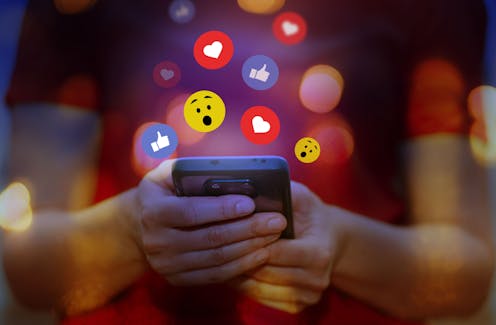
Could someone take you to court over an agreement you made – or at least appeared to make – by sending a “👍”?
Emojis can have more legal weight than many people realise. A search of the Australasian Legal Information Institute database reveals emojis have been part of evidence in at least 240 cases in the past few years.
Their use in texts and emails has been considered in unfair dismissals, wills, family law and criminal cases.
Australian law does not explicitly address the use of emojis in contracts. And although emojis have been accepted in evidence, the context in which they are used is always a crucial part of the picture.
Here’s what you need to know about what makes a contract under the law – and why you might want to be especially cautious with the “🤝” button.
Is it a casual agreement or a contract?
Contracts don’t have to be printed on paper and signed in a lawyer’s office.
In Australia, a contract is generally considered legally binding if it meets certain requirements. There has to be:
- an intention to create legal relations
- a clear unequivocal offer
- certainty and completeness of terms
- “consideration” – the price exchanged for the promise made
- clearly communicated acceptance
- no “vitiating factors” – things that could spoil the contract such as unconscionable conduct or duress.
Indeed, case law supports the notion that contracts can be partly oral and partly written. But the oral terms cannot contradict the terms of the written agreement.
Contracts can also incorporate graphics. The former chief justice of the High Court of Australia, Robert French AC, said in December 2017:
There is no reason in principle why pictorial contracts explained orally or supplemented textually or contextually could not be enforceable in the same way as any other contract.
‘I hereby accept’
In contract cases, courts often use what’s called an objective test to consider whether a reasonable person would conclude the parties intended to create a binding contract.
In Australian law, parties to a contract must clearly communicate that they accept its terms.
Social and domestic agreements are presumed not to create legal intent, unless proven otherwise. But with extensive use of texts and emails with emojis now, there is less clarity about what is a social and domestic agreement.
Commercial and business contracts are presumed to have contractual intent. However, even in business contracts, emojis may be deemed to amount to acceptance, depending on the past behaviour of the parties.
That’s because many emojis are ambiguous.
In one situation, a thumbs up (👍) might mean “I have something”, but in another it could mean “I agree to it”. A smiley face is the same so context is crucial. The least ambiguous is arguably the handshake emoji – 🤝.
The experience overseas
A number of cases from overseas show how emojis sent in response to an offer can lead to unintended contracting.
They can induce what the law calls “reasonable reliance” of one party on the other, more than “bare hope” an agreement can be relied upon. This can subject the sender to liability if that reliance is misplaced.
One 2023 case in Canada centred on a thumbs-up emoji sent in response to a proposal for the purchase of flax.
Here, the court ruled that the emoji did signify agreement to the terms, similar to a written signature. It had been habitually used between the buyer and seller in a longstanding business relationship.
Because of this repeated use, the court ruled, a reasonable bystander would conclude the emoji response created a binding agreement.
Borrowing a big boat
A subsequent case, in the United Kingdom, centred on an alleged four-year “charterparty” agreement to hire a large crude oil tanker called the “Aquafreedom” between Southeaster, its owners and the logistics company Trafigura.
Trafigura claimed a binding agreement to charter the ship had been reached, following a period of offers and counteroffers. But the vessel’s owner Southeaster disagreed. Trafigura claimed it had suffered about US$15 million in lost business as a result.
The evidence in this case was principally a bundle of written communications between the parties, including email, telephone and WhatsApp communications.
While the court ultimately ruled no contract had been entered into, it found that more informal communications used in evidence, including WhatsApp messages containing emojis, shouldn’t be given less weight than email communications.
What can you do?
Here are some helpful hints for navigating the use of emojis, especially when buying or selling anything, running your own business or sending messages at work:
- be careful when discussing services or purchase of goods over text
- when acknowledging receipt of a contract, it’s safest to clearly state that you will review the terms and get back to the sender
- do not use an emoji on its own
- do not use the handshake emoji
- keep business-like arrangements on a more formal footing.
Remember, context remains important and past behaviour is critical.
The author would like to acknowledge the contribution of Mark Giancaspro, senior lecturer in law at the University of Adelaide, for assistance in the preparation of this article.


