

Why do dogs eat poo? A canine scientist explains
- Written by The Conversation
When miniature dachshund Valerie was captured after 529 days alone in the wilds of Australia’s Kangaroo Island, experts speculated she survived partly by eating other animals’ poo.
While this survival tactic may have saved the resilient sausage dog, it highlights a behaviour that makes many dog owners cringe.
This type of “recycling” is surprisingly common in our canine companions. But why would dogs, even those with full food bowls, choose to indulge in such a revolting habit?
Here’s why some dogs can’t resist a faecal feast, known more technically as coprophagia.
What is coprophagia?
Coprophagia or coprophagy is the scientific term for eating faecal matter (poo). It’s a behaviour displayed across a number of animal species.
Around half of all dogs try eating poo at some stage – either their own, another dog’s, or other animals’. Research suggests about one in four dogs have made it a regular habit.
In wild canids like foxes and wolves, mothers will eat their puppies’ stools to keep dens clean and reduce scents that might attract predators.
It’s also thought that eating fresh faeces could reduce the likelihood of intestinal parasites being spread, offering an evolutionary benefit to our dogs’ wild counterparts.
Modern dogs still actively clean their puppies’ poo away in the first few weeks of life, a behaviour that puppies observe and can learn.

Nutritional factors
As unpalatable as it might seem to us, poo still contains considerable nutrients that offer valuable compounds as a food source when times are tough.
Dogs do have different preferences to us in terms of texture, taste and odour of their food, so we should not be hasty to dismiss what might appeal to them.
Medical reasons
The links between diet, gut flora and diseases that might influence behaviours like coprophagia are still emerging. At this stage, there seems to be no apparent link with age or diet.
There could be underlying health reasons for your dog seeking out a sneaky snack, so do mention it to your vet and get a health check if your dog is known to frequent the kitty litter box, for example.
Punishment in toilet training, living conditions that don’t provide enough to do or room to explore (like kennel facilities), and psychological distress have all been linked to dogs eating their own poo.

A strain on relationships
Our typical response to seeing dogs eat any kind of poo ranges from disgust to concern. At best it makes us less likely to want a lick to the face, at worst it can really strain our human-animal bonds.
One study from the United Kingdom showed that dogs eating their own poo after rehoming was in the top ten reasons for the adoption failing in the first four weeks when dogs were returned to the shelter.
Dogs can potentially transmit parasites and bacteria to humans through licking, regardless of whether they eat poo. This serves as a good reminder to ensure your dog receives appropriate parasite control and encourage all household members to follow good hygiene practices, like washing hands before eating.
Read more: Is it okay to kiss your pet? The risk of animal-borne diseases is small, but real
Help, my dog keeps eating poo
While Valerie’s tale of survival shows us coprophagia may be life-saving in extreme situations, most of our doggo companions aren’t facing wilderness survival challenges.
Thankfully, coprophagia is often manageable.
Understanding why our dogs might eat poo – whether based on evolutionary instinct, medical issues or psychological triggers – can help us address this canine behaviour with compassion rather than just disgust.
If your dog indulges often, providing appropriate stimulation through regular exercise, social connection with people and other dogs, offering toys and safe chews can help. Sometimes, a trip to the vet might be needed to rule out any underlying health issues.
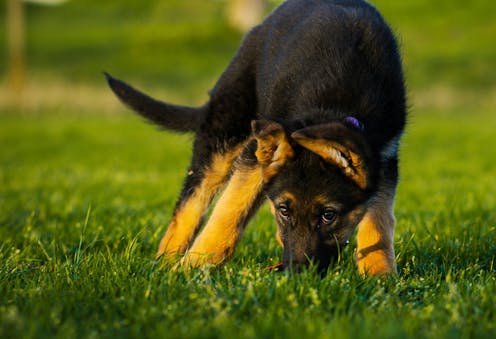
 Offering fun activities is one way to reduce the chance of your dog eating poo.
Kojirou Sasaki/Unsplash
Offering fun activities is one way to reduce the chance of your dog eating poo.
Kojirou Sasaki/Unsplash
Dogs reprimanded for toileting accidents might eat the evidence to avoid future punishment, creating a new problem behaviour. Instead, rewarding your puppy or dog for toileting in the right location (and giving them frequent opportunities to do so) is likely to establish toileting routines you will approve of, making coprophagia less likely.
By the same token, dogs can’t eat what isn’t left lying around. Regular poo-pickups in your yard, dog park, kitty litter box and other likely locations will remove temptation and help set your dog up for success.
If Valerie has taught us anything, it’s that what might be considered our dogs’ most revolting habits are actually remarkable adaptations that deserve our understanding and empathy, even if we can’t rally enthusiastic support.
Read more https://theconversation.com/why-do-dogs-eat-poo-a-canine-scientist-explains-234361


