

Can cats drink milk? Despite the stereotypes, it’s actually a bad idea
- Written by The Conversation
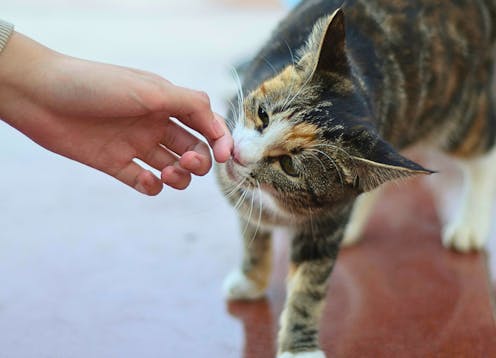
Cats have a long history with humans, going back more than 9,000 years. Attracted to human settlements by the rodents that plagued (sometimes literally) our ancestors, cats ingratiated themselves as useful mousers and slowly domesticated themselves.
Farmers began to employ them as pest controllers. It was through this arrangement that cats and milk first became acquainted.
Before the commercialisation of pet food, cats were mostly fed scraps from the family table. Not much was known about their nutritional needs. In his 1877 book on cats, Scottish doctor Gordon Stables insisted cats need two bowls – “one for water and the other for milk” – and suggested porridge and milk as an excellent feline breakfast.
From these origins, cats and milk became further embedded in the collective zeitgeist through depictions of milk-loving cats in art, books, movies and cartoons. There’s even the classic trope of the scruffy street cat being rescued from the rain to enjoy a saucer of milk from a kindly stranger.
While it’s not surprising that cats and milk have persisted as an unquestioned combination, research now tells us cats shouldn’t be drinking milk at all.

The vast majority of cats are lactose intolerant
Like all mammals, cats begin life drinking milk from their mother. But past kittenhood, milk is a completely unnecessary part of a cat’s diet.
After weaning (around 6–12 weeks of age), kittens stop producing the enzyme lactase, required to digest lactose in milk. For the vast majority of cats, this means they are lactose intolerant.
However, just like in humans, the level of intolerance varies for each individual based on how much of the enzyme their body naturally produces.
Don’t rush to give your kitten milk, though. Just because kittens can digest lactose doesn’t mean they should be drinking cow’s milk. Cats are much smaller animals than cows and, fittingly, the amount of lactose in the milk of mother cats is much lower than in cow’s milk. It’s best to let them drink from their mother or to get them a kitten-appropriate cat formula.
Lactose intolerance isn’t the only reason not to give your cats milk. Though rare, cats can also develop an allergy to milk or dairy.

What happens to cats who drink milk?
Lactose is a type of sugar. When it can’t be broken down to be absorbed into the bloodstream, lactose travels through the intestines to the colon where the bacteria inside the body ferment it.
This fermentation breaks lactose down into acids and gases which cause unpleasant symptoms, including the passing of excessive gas, bloating, constipation, abdominal pain and occasionally nausea and vomiting. In cats, the most common symptom observed is diarrhoea.
Chronic or persistent diarrhoea can cause further complications such as dehydration, electrolyte imbalance and malnutrition. In some cases, it can even be life threatening.
Cats who consume milk or dairy regularly as part of their diet are at increased risk of these health complications.
 When farm mousers are ‘paid’ in milk, their lactose intolerance can cause diarrhoea and even serious health complications.
Aleksandr Lupin/Shutterstock
If milk is so bad for cats, why do they love it?
We often like things that are bad for us. But to answer this question, we first have to remember cow’s milk is intended for feeding and growing a baby cow.
To achieve this feat, it contains an assortment of proteins and fats that are highly palatable, especially to cats. Cats need high levels of protein and fat for optimal health and daily functioning.
Cow’s milk, in particular, is also high in casein, a protein that is broken down by the body into alpha-casozepine. In some studies, it’s been associated with a calming effect in cats. While this wouldn’t initially make a cat want to drink milk, it may create a comforting association with milk over time.
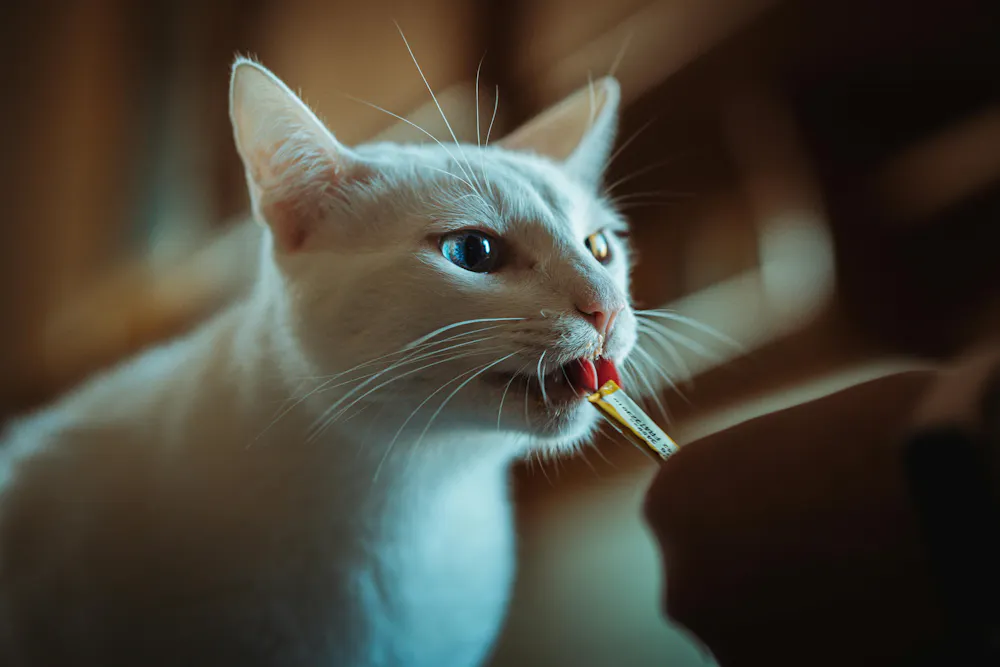 If you want to treat your cat, give them species appropriate foods, not cow’s milk or food meant for humans.
Hamza Yaich/Pexels
Can I give milk sometimes as a treat? What about milk alternatives?
The short answer is: no.
Dairy is not a natural part of cats’ diet. While they may like the taste, milk is likely to cause your furry friend discomfort and health issues, so it’s best to avoid entirely.
And if you’re thinking your cat is one of the lucky few that isn’t lactose intolerant, think again. Cats are very good at hiding discomfort because, in the wild, showing weakness would make them a target for predators.
If you absolutely must, opt for lactose-free milk or milk formulated specifically for cats, and keep it as a very occasional treat.
While it won’t upset their stomachs in the same way as regular cow’s milk, it still won’t offer your cat any nutritional benefit.
As for milk alternatives like oat, soy or almond milk? Any unusual additions to your cat’s diet are likely to cause digestive upset, so it’s best to avoid these as well.
The bottom line? Don’t give your cat milk. They don’t need it, they probably can’t digest it and it’s likely to cause more pain than it’s worth.


