

Labor’s second-term defence priorities – could they include a pact with Europe?
- Written by The Conversation
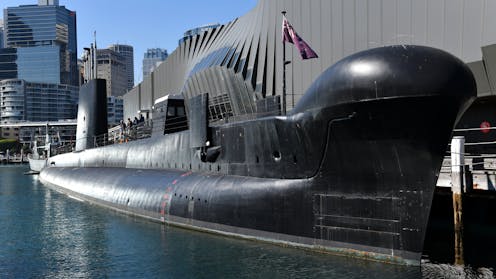
An apt metaphor for the Department of Defence in Labor’s second term might be the Titanic. The good ship “defence” has hit an iceberg: the senior officers are reassuring all is fine, the band is playing and the crew are busy. But the ship is gradually sinking.
The iceberg is the $A368 billion AUKUS nuclear submarine project. The scale of the program in terms of money, time and workforce is progressively damaging the rest of the defence portfolio. AUKUS is now so large it is seen as a fourth service, alongside the navy, army and air force.
Given the challenges facing Australia’s defence budget, what are we to make of the proposed defence pact with the European Union?
European defence partners
An ever-changing world always intrudes on defence planning.
The latest is the European Union (EU) suggesting a defence partnership with Australia. To some degree, this simply formalises existing arrangements and practices. Individual European nations, such as Germany and France, already have strategic partnerships with Australia, while Italy and Spain undertake defence training in Darwin.

A new partnership would elevate Australia’s European defence relationships to a different level, given the EU is a supra-national grouping of 27 countries with a GDP comparable to the United States. On the upside, EU defence spending is steadily being increased, creating new possibilities for Australian defence industry exports and the joint manufacture of selected equipment such as Germany’s Boxer vehicle in Brisbane.
But funding a deepening relationship with the EU while sustaining those in the Indo-Pacific would be challenging. And AUKUS means the government will need to carefully balance today’s demands with suddenly emerging pressures.
Treading water
If the Europeans do land a defence pact with Australia – will it be worth their while?
In this decade, Australia’s defence budget will simply be marking time. AUKUS has already begun crowding out other defence possibilities that might better fit today’s changed strategic circumstances.
The navy’s surface warship fleet will decline until well into the 2030s. Its ageing amphibious and submarine fleets have become unreliable and its two brand new replenishment oilers are both inexplicably unserviceable.
The army, unsure of itself, is crafting a new “theory of army” to update strategic and operational principles.
Billions are being spent buying new-build and refurbished armoured vehicles, and old-design helicopters. These projects commenced before Labor’s first term and are less suited to today’s needs.
The RAAF is better off, having finally received the last of its F-35 fighters even if they need updating as soon as possible. Ideally, the air force should be investing now in future new equipment for delivery in the 2030s, when some current in-service aircraft approach their end of life. But thanks to AUKUS, there is no money for this.
No time to waste
Both the Morrsion and the first Albanese government emphasised that this decade is particularly dangerous: a major war might break out unexpectedly.
Three areas stand out for Labor to get busy on:
1. The Trump Factor
The Trump factor is threatening the existing defence plans built around tight military integration with the US. US President Donald Trump’s policy volatility makes the US an unreliable ally. This uncertainty works against relying on defence plans that literally bet the future of the nation on US support in time of war.
The new National Defence Strategy due in early 2026, must address the Trump factor in a robust and comprehensive manner. The scale of the problem may mean a new grand strategy is needed.
2. Labor’s first term Strategic Defence Review
This review was fundamentally flawed. It failed to consider AUKUS – or indeed the navy’s surface war fleet – in its overall advice on the design of the future Australian Defence Force. Nor did it include defence funding needs in any detail beyond “should be increased”.
Consequently, the review provided an inadequate foundation on which to forecast a long term plan for the force. This plan is now being steadily distorted as factors not previously considered intrude. The flow on effect means the original planned growth in defence budgets is now seriously insufficient.
For better or worse, defence must be rebuilt around AUKUS. The attempt to keep the two separate has failed. AUKUS is no longer just a submarine project, but the core of the future defence force.
As a result, army modernisation and the navy’s large amphibious ships look vulnerable.
3. Future opportunities
There are opportunities for the Australian Defence Force, despite the challenges. For example, the very rapid rise of robots being demonstrated in Ukraine portends the future of warfare.

Defence is presently trapped in the old paradigm of buying a few large and very expensive crewed platforms like AUKUS, and is neglecting emerging uncrewed system models that are small and affordable.
The defence department lacks money to explore such new ideas but the government could use the mostly untapped A$15 billion reconstruction fund, which handily includes defence manufacturing as a priority.
Australian defence industry is potentially on the cusp of becoming a regional uncrewed system manufacturer, including the high-end Ghost Bats and Ghost Sharks, or the more affordable Speartooths, Fathoms, Bluebottles and Atlases. Australian made uncrewed systems have been combat proven in Ukraine.
The reconstruction fund could build this industry sector, moving defence into the future and ensuring defence industry survives the AUKUS iceberg.


