

9 myths about electric vehicles have taken hold. A new study shows how many people fall for them
- Written by The Conversation
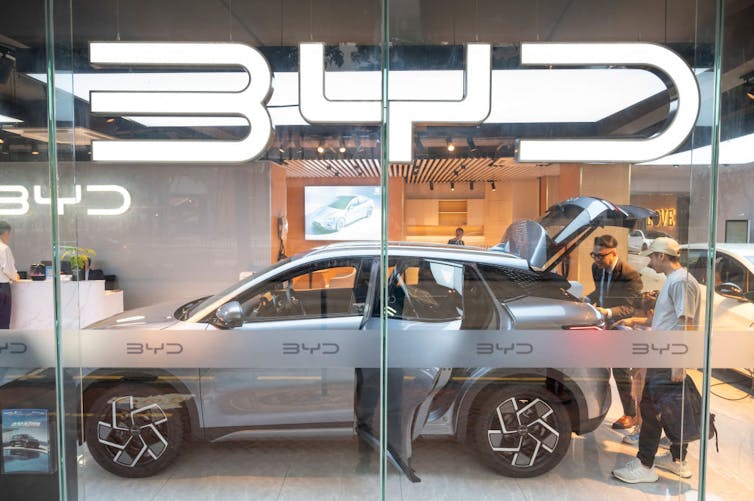
More people believe misinformation about electric vehicles than disagree with it and even EV owners tend to believe the myths, our new research shows.
We investigated the prevalence of misinformation about EVs in four countries – Australia, the United States, Germany and Austria. Unfortunately, we found substantial agreement with misinformation across all countries.
People who endorsed false claims about EVs were, not surprisingly, significantly less likely to consider buying one.
Electric vehicles are vital in the fight against climate change. But pervasive misinformation is a significant challenge to the technology’s uptake and has serious implications for the shift away from fossil fuels.
Widespread agreement with false EV claims
We conducted a survey of 4,200 people who did not own an electric vehicle across the four countries. We measured the extent to which they agreed with these nine misleading claims about electric vehicles:
What we found
To tally the results, we looked at participants’ responses for all nine misinformation statements – more than 36,000 responses in all. We then calculated how many of these responses indicated agreement or disagreement.
Of the 36,000 responses, 36% were in agreement with a statement and 23% were in disagreement. A further 24% were undecided and 17% did not know.
Misinformation agreement was highest in Germany and lowest in the US, but the differences between nations were small.
The most widely believed myth was that electric vehicles are more likely to catch fire than petrol cars. Some 43–56% of people agreed with the statement, depending on the country.
Agreement with misinformation was strongly correlated with a lack of support for electric vehicle policies and a lack of intention to buy an EV in future.
A separate part of the research involved 2,100 people in the US, about half of whom owned an electric vehicle. Surprisingly, EV owners did not significantly differ in their agreement with misinformation compared to non-owners. This underscores how embedded the problem has become.
It’s not about education
We also examined the factors that make individuals more susceptible to EV misinformation.
The strongest predictor was people who scored highly on a “conspiracy mentality” – in other words, they believed conspiracies were common in society, they saw the world through a lens of corruption and secret agendas, and distrusted institutions.
People with progressive political and environmental views were less likely to endorse misinformation about EVs.
A person’s scientific knowledge or level of education was not a predictor. This finding aligns with previous research, and suggests the pervasive endorsement of misinformation stems from distrust in institutions and expertise rather than from a lack of education.
Grounds for optimism
We tested whether misinformation could be reduced with two interventions among a different sample of US participants. One group was asked to converse with ChatGPT about their views on EV misinformation. The second was asked to read a traditional EV fact sheet from the US Department of Energy. On a third “control” group, no intervention was tested.
Participants who engaged with either ChatGPT or the fact sheet before we surveyed them showed significantly lower endorsement of EV misinformation compared to the control group. This persisted at a follow-up session ten days after the survey.
Notably, ChatGPT did not produce any misinformation about EVs. These results build upon existing research demonstrating ChatGPT’s potential to reduce endorsement of conspiracy theories.
How to tackle EV misinformation
Our findings show misinformation about electric vehicles has a substantial foothold in Western nations. Susceptibility is not a matter of education or knowledge, but rather stems from distrust of established institutions and expertise.
We also found people who engage with facts about electric vehicles are less likely to endorse misinformation.
This suggests a dual strategy is needed to reduce misinformation about EVs. First, those who deliberately spread misinformation should be held accountable. And second, evidence-based information, including accessible AI tools, can be used to build public resilience against false claims.


