

Cape York deserves World Heritage status – and Queensland may need it to become a global leader in tourism
- Written by The Conversation
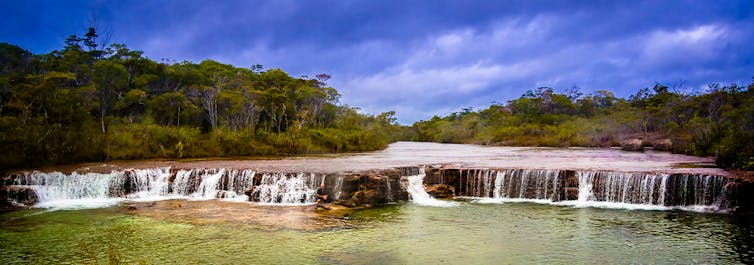
Last week, the Queensland government launched the ambitious Destination 2045 tourism plan, which aims to make the state a global leader in tourism. The plan highlights that one in six jobs in tropical north Queensland are supported by tourism.
However, earlier this year the same government tentatively withdrew support from a campaign to add Cape York to the UNESCO World Heritage List.
If the goal is to position Queensland as a leader in tourism, then linking Cape York’s landscapes to the World Heritage brand would certainly help achieve that.
Consultation is key
In June 2024, Steven Miles, Labor’s then-premier in Queensland, and Tanya Plibersek, the federal environment minister, announced they had placed seven of the cape’s national parks on Australia’s tentative World Heritage list.
In January, however, the newly elected Liberal-National government, under Premier David Crisafulli, ordered a review of the decision. The government cited concerns over a lack of sufficient consultation around the nomination.
If a lack of consultation is the main issue, there is an opportunity for the Crissafulli government to thoughtfully reopen negotiations.
Getting this step right could help conserve and encourage tourism to one of Australia’s most diverse landscapes – in line with the Destination 2045 plan.
How to get onto (and kicked off) UNESCO’s list
Cape York covers some 137,000 square kilometres. According to the 2021 census, it has a population of less than 8,000 people, including 3,678 Aboriginals and Torres Strait Islanders.

Inscription to the World Heritage list doesn’t mean the entire cape would be listed – just specific sites and landscapes within it.
It’s usually the responsibility of a country’s various governments to convince UNESCO, in a nomination bid, a certain place has the necessary “outstanding universal value” and meets at least one of UNESCO’s ten selection criteria.
Sites that are physically altered or damaged after receiving World Heritage status can be de-listed, either by a state party or by UNESCO. This has happened in Oman, Germany, the United Kingdom and Georgia.
We also recently saw the Murujuga Cultural Landscape in Western Australia, with its extraordinary record of rock engravings (petroglyphs), denied World Heritage inscription. This was mainly due to the threat of ongoing damage from industrial emissions from Woodside Energy’s nearby Karratha gas plant.
World Heritage status: a risk or benefit?
A carefully considered World Heritage inscription doesn’t necessarily block industries and tourism from the listed area.
Many of the archaeological sites of the Willandra Lakes World Heritage Area in New South Wales are located on sheep stations. These stations, established in the late 19th century, have individual property plans that ensure the sites are conserved while remaining viable for agricultural activity.
Another example is the tourism seen at the extraordinary eel trap system of Budj Bim in southwest Victoria. Budj Bim is one of Australia’s most recent additions to the World Heritage list. It is also the first site to be inscribed solely for its cultural value.
The Budj Bim eel traps were engineered some 6,600 years ago, and represent one of the world’s oldest aquaculture systems.
This cultural landscape is now home to a thriving tourism program that attracts thousands of visitors each year. The World Heritage listing ensures there are enough resources for the Gunditjmara Traditional Owners running the site to improve the health of Country through cultural and environmental management.
World Heritage often boosts international tourism, funding opportunities and local branding. The Lake District in the UK is a good example of this, although the site has faced some controversy recently.
While Queensland’s current government has cited concerns over planning restrictions, these types of concerns are typically based on perception rather than proven harm. In Queensland, they were also clearly addressed in government memos and communications.
Tasmania’s forestry sector resisted World Heritage expansion (there were four expansions between 1989–2013), yet tourism in the region remains economically valuable.
It’s unlikely the Cape York nominations would threaten the pastoral or mining industries, since most of the nominated sites are already protected as national parks.
What makes a World Heritage site?
The list of Cape York sites submitted for World Heritage consideration has some strong contenders. Quinkan Country is undoubtedly the most significant site on the list, distinguished by its diversity and richness of Aboriginal paintings and engravings.
But the list isn’t exhaustive. There are several other Aboriginal cultural landscapes in Cape York that also deserve to be considered by UNESCO. These include the giant shell mounds around Weipa, Jiigurru (Lizard Island), and the Flinders Island Group with its extraordinary rock art galleries.
Moving forward
World heritage listings in Cape York have great potential to allow Aboriginal people to care for the landscapes and create tourism infrastructure that centres Aboriginal perspectives.
Appointing Aboriginal rangers in the Flinders Island Group could help deliver a unique and sustainable cultural tourism experience, similar to that provided at the World Heritage-listed Kakadu National Park. Destination 2045 highlights the importance of developing Aboriginal ranger programs in such landscapes to boost cultural tourism and economic growth.
Inggal Odul (Denham Island part of Flinders Island Group). Source: Olivia Arnold (2023).The Crisafulli government now has the opportunity to meaningfully engage with the Traditional Custodians of the Cape York landscapes that have been put forth. We argue that the World Heritage listing outcome could help the cape’s economic development and support its communities.


