

Antarctic research is in decline, and the timing couldn’t be worse
- Written by The Conversation
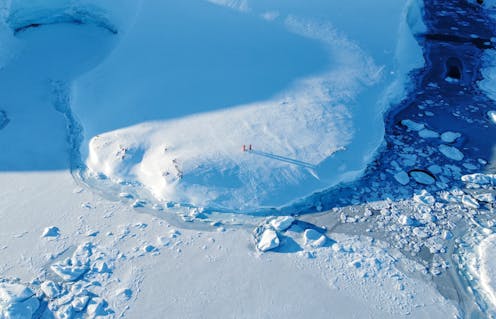
Ice loss in Antarctica and its impact on the planet – sea level rise, changes to ocean currents and disturbance of wildlife and food webs – has been in the news a lot lately. All of these threats were likely on the minds of the delegates to the annual Antarctic Treaty Consultative Meeting, which finishes up today in Milan, Italy.
This meeting is where decisions are made about the continent’s future. These decisions rely on evidence from scientific research. Moreover, only countries that produce significant Antarctic research – as well as being parties to the treaty – get to have a final say in these decisions.
Our new report – published as a preprint through the University of the Arctic – shows the rate of research on the Antarctic and Southern Ocean is falling at exactly the time when it should be increasing. Moreover, research leadership is changing, with China taking the lead for the first time.
This points to a dangerous disinvestment in Antarctic research just when it is needed, alongside a changing of the guard in national influence. Antarctica and the research done there are key to everyone’s future, so it’s vital to understand what this change might lead to.
Why is Antarctic research so important?
With the Antarctic region rapidly warming, its ice shelves destabilising and sea ice shrinking, understanding the South Polar environment is more crucial than ever.
Ice loss in Antarctica not only contributes to sea level rise, but impacts wildlife habitats and local food chains. It also changes the dynamics of ocean currents, which could interfere with global food webs, including international fisheries that supply a growing amount of food.
Research to understand these impacts is vital. First, knowing the impact of our actions – particularly carbon emissions – gives us an increased drive to make changes and lobby governments to do so.
Second, even when changes are already locked in, to prepare ourselves we need to know what these changes will look like.
And third, we need to understand the threats to the Antarctic and Southern Ocean environment to govern it properly. This is where the treaty comes in.
What is the Antarctic Treaty?
The region below 60 degrees south is governed by the 1959 Antarctic Treaty, along with subsequent agreements. Together they are known as the Antarctic Treaty System.
Fifty-eight countries are parties to the treaty, but only 29 of them – called consultative parties – can make binding decisions about the region. They comprise the 12 original signatories from 1959, along with 17 more recent signatory nations that produce substantial scientific research relating to Antarctica.
This makes research a key part of a nation’s influence over what happens in Antarctica.
For most of its history, the Antarctic Treaty System has functioned remarkably well. It maintained peace in the region during the Cold War, facilitated scientific cooperation, and put arguments about territorial claims on indefinite hold. It indefinitely forbade mining, and managed fisheries.
Lately, however, there has been growing dysfunction in the treaty system.
Environmental protections that might seem obvious – such as marine protected areas and special protections for threatened emperor penguins – have stalled.
Because decisions are made by consensus, any country can effectively block progress. Russia and China – both long-term actors in the system – have been at the centre of the impasse.
Read more: Antarctic summer sea ice is at record lows. Here's how it will harm the planet – and us
What did our report find?
Tracking the amount of Antarctic research being done tells us whether nations as a whole are investing enough in understanding the region and its global impact.
It also tells us which nations are investing the most and are therefore likely to have substantial influence.
Our new report examined the number of papers published on Antarctic and Southern Ocean topics from 2016 to 2024, using the Scopus database. We also looked at other factors, such as the countries affiliated with each paper.
The results show five significant changes are happening in the world of Antarctic research.
- The number of Antarctic and Southern Ocean publications peaked in 2021 and then fell slightly yearly through to 2024.
- While the United States has for decades been the leader in Antarctic research, China overtook them in 2022.
- If we look only at the high-quality publications (those published in the best 25% of journals) China still took over the US, in 2024.
- Of the top six countries in overall publications (China, the US, the United Kingdom, Australia, Germany and Russia) all except China have declined in publication numbers since 2016.
- Although collaboration in publications is higher for Antarctic research than in non-Antarctic fields, Russia, India and China have anomalously low rates of co-authorship compared with many other signatory countries.
Why is this research decline a problem?
A recent parliamentary inquiry in Australia emphasised the need for funding certainty. In the UK, a House of Commons committee report considered it “imperative for the UK to significantly expand its research efforts in Antarctica”, in particular in relation to sea level rise.
US commentators have pointed to the inadequacy of the country’s icebreaker infrastructure. The Trump administration’s recent cuts to Antarctic funding are only likely to exacerbate the situation. Meanwhile China has built a fifth station in Antarctica and announced plans for a sixth.
Given the nation’s population and global influence, China’s leadership in Antarctic research is not surprising. If China were to take a lead in Antarctic environmental protection that matched its scientific heft, its move to lead position in the research ranks could be positive. Stronger multi-country collaboration in research could also strengthen overall cooperation.
But the overall drop in global Antarctic research investment is a problem however you look at it. We ignore it at our peril.
Read more https://theconversation.com/antarctic-research-is-in-decline-and-the-timing-couldnt-be-worse-260197


