

Greek and Roman nymphs weren’t just sexy nature spirits. They had other important jobs too
- Written by The Conversation
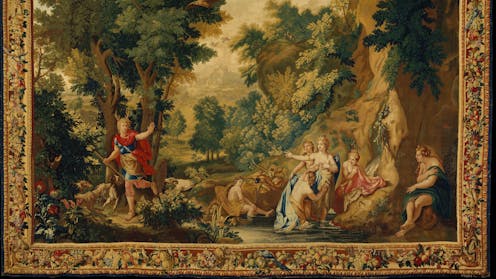
Could you ever be truly alone in the woods of ancient Greece or Rome? According to myth, the ancient world was filled with wild animals, terrifying monsters, and mischievous deities. Among them were nymphs: semi-divine female figures that personified elements of the natural world.
But nymphs offer us more than just stories of sexy nature spirits.
They can reveal how ancient people thought about their world and connected with their landscape through mythology.
Personifying elements of nature
Nymph was a broad category in myth. It encompassed almost every semi-divine woman and girl in myth, including a number of goddesses. The sea goddess Thetis and the underworld river Styx were both sea nymphs as well as goddesses.
Nymphs were typically portrayed as young, exceptionally beautiful women in art and literature. The word “nymph” in ancient Greek could even be used to mean “young girl” or “unmarried woman” when applied to mortal women.
Despite this etymological connection, many nymphs were married or mothers or gods. Amphitrite was the wife of Poseidon, and her sister Metis, the personification of wisdom, was Zeus’ first wife, according to Hesiod’s Theogony. Maia was the mother of Hermes, the messenger god.
What links all nymphs was their connection with the natural world. Nymphs typically personified elements of nature, like bodies of water, mountains, forests, the weather, or specific plants.

The nymph Daphne
One of the most quintessential nymphs was Daphne (or Laurel, in Latin). According to the Roman poet Ovid in his poem the Metamorphoses, Daphne was a stunningly beautiful nymph who lived in the forest.
Daphne had chosen to follow in the footsteps of Artemis (Diana), the goddess of the hunt, by being a huntress and abstaining from sex and marriage. But her beauty would be her downfall.
One day the god Apollo saw Daphne and immediately tried to pursue her. Daphne did not feel similarly and fled through the forest. Apollo chased and nearly caught her.
But Daphne’s father Peneus, a river god, saved his daughter by transforming her into the laurel tree.
Like many nymphs, Daphne’s myth was an origin story for her namesake tree and its significance to the god Apollo.
But her story also followed one of the most common tropes in nymph myths – the trope a nymph transformed into her namesake after running away from a male deity.
Different nymphs for trees, water, mountains, stars
There were even special names for different types of nymph.
Daphne was a dryad, or tree nymph. Oreads (mountain nymphs) are referenced in Homer’s Iliad. There were three different types of water nymph: the saltwater oceanids and nereids, and the freshwater naiads.
Nymphs lived in the wilderness. These untamed places could be dangerous but they also held precious natural resources that nymphs personified, such as special trees and springs.
Spring nymphs personified one of the most precious resources of all: freshwater.
It was hard to find freshwater in the ancient world, especially in places without human infrastructure. Cities were often built around springs.
The nymph Arethusa was the personification of the spring Arethusa in Sicily. Today, you can visit the Fountain of Arethusa in modern day Syracuse.
No matter where you looked in the ancient landscape, there were nymphs – even in the sky.
The Pleiades and Hyades were two sets of daughters of the god Atlas who eventually were transformed into stars.
Their myths gave an origin for two sets of constellations that were used for navigation and divination.
The Pleiades and Hyades constellations were visible to the naked eye, and can still be seen today.

The divine presence in nature
Although myths may feel like a fictional story told to kids, nymph myths show that ancient myth is inseparable from the ancient landscape and ancient people.
The natural world was imbued with a divine presence from the gods who physically made it – Gaia (Earth) was literally the soil underfoot. Nymphs were a part of this divine presence.
This divine presence brought with it a very special boon: the gift of inspiration.
Some writers (such as Plato) referred to this sort of natural inspiration as being “seized by the nymphs” (νυμφόληπτος or nympholeptus).
Being present in nature and present in places with nymphs could bring about divine inspiration for philosophers, poets and artists alike.
So, if you ever do find yourself alone in a Grecian wood, you may find yourself inspired and in good company – as long as you remain respectful.


