

CT scanners secretly waste more energy than used by a typical household – but there’s a fix
- Written by The Conversation
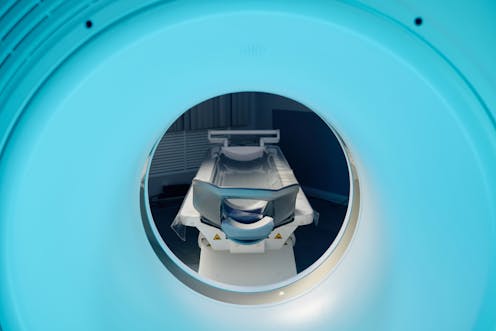
Medical imaging is one of the biggest contributors of a hospital’s energy use. Magnetic resonance imaging (MRI) and computed tomography (CT) are particularly carbon intensive, partly due to their need to be constantly cooled. Hospital staff typically leave these machines running 24/7 because they’re often needed for emergency scans.
But do all machines really need to be kept on all of the time? Switching off medical imaging equipment when it isn’t needed would be an obvious way to save energy, costs and reduce carbon emissions.
Our study, published today in the Journal of Medical Radiation Sciences, shows it’s possible to safely do so, and the energy savings are significant.
What did we do?
To investigate the potential for carbon savings in medical imaging, we partnered with the New South Wales Health Net Zero clinical lead for imaging – a practising radiographer.
Together, we came up with a method to test whether changing which CT scanners are left running at certain times could lead to energy savings without compromising care.
We tested this at a large public hospital with three CT scanners. One of these was largely used only during regular daytime hours, but left on to run continuously for potential emergencies if the other two scanners were in use.
The goal was to see the impact of switching this “surplus” CT scanner off when it wasn’t needed – after hours and on weekends. We compared the scanner’s power use with a control period when it was left running continuously.
With the simple intervention of switching off this CT scanner when not in use, we reduced its energy consumption by 32%. This saved 140 kWh of energy in a single week – slightly more power than it takes to run an average Australian household.
There appeared to be no downsides, either. The radiographers reported no impacts on their workflow and there were also some financial savings for the hospital.
Encouragingly, the staff kept it up after the study. Radiographers at the hospital now regularly switch off the scanner when not in use. And radiographers at two other hospitals in the same local health district are now also switching off scanners overnight when they’re not in use.
Towards more sustainable healthcare
There’s no doubt we all must urgently reduce greenhouse gas emissions to prevent further climate change impacts.
Health care is no exception – it currently contributes about 2 gigatonnes of global carbon emissions each year. Both the Australian Government and healthcare workers recognise that environmental sustainability is a priority.
This CT project was part of a larger program on sustainable healthcare.
Other projects in this program have found ways to reduce emissions from anaesthetic gases, optimise pharmaceutical waste, and reduce unnecessary use of pathology tests in emergency departments, non-sterile gloves in surgical inpatient wards, plastic in procedural packs, and single-use equipment in operating theatres.
In all of these projects we found opportunities to save money and carbon without negatively impacting patient care.
Frontline clinicians can see the unnecessary waste and environmental harm from current healthcare practices. They’re well placed to implement and sustain changes.
By partnering with researchers to generate the evidence base for others to use, we hope to achieve changes at scale. To date, our work has already proven we can move to net-zero health systems that still deliver high quality healthcare but take a smaller toll on the environment.


