

By delaying decision on using Russia’s frozen assets for Ukraine, Europe is quietly hedging its bets
- Written by The Conversation
As Russia continues its grinding offensive and Ukraine braces for another winter of war, the European Union remains paralysed over a seemingly straightforward decision: whether to use 140 billion euros (A$250 billion) in frozen Russian assets to support Kyiv.
Officially, the delay is about legal caution and financial liability.
But beneath the surface, a more uncomfortable truth is emerging: some EU leaders may no longer believe Ukraine can win.
This isn’t about public rhetoric. Most European heads of state still affirm their support for Ukraine’s sovereignty and territorial integrity.
But when we examine strategic behaviour – especially the hesitation to deploy high-risk financial tools, such as using Russia’s frozen assets in Europe – we see signs of realist recalibration.
The EU’s frozen assets debate has become a litmus test for Brussels’ confidence in Ukraine’s long-term viability.
What are the concerns over using the assets?
Belgium holds the bulk of Russia’s frozen assets, amounting to about 210 billion euros (A$374 billion) in a financial institution called Euroclear. European finance ministers have discussed using the assets as a loan to Ukraine, which would only be repaid if Russia provided reparations following the war.
Brussels is insisting on legal guarantees before releasing the funds. It is also demanding collective liability shielding from other EU states, citing concerns about lawsuits filed by Russia and financial exposure.
There’s a reputational risk, as well, if other countries such as China or India start to view European banks as an unreliable place to park their funds.
In parallel, Slovakian Prime Minister Robert Fico has suspended military aid to Ukraine and said his country’s goal is not Russia’s defeat, but to “end war as soon as possible”.
Hungarian Prime Minister Viktor Orbán has gone further, saying Ukraine “cannot win on the battlefield”.
Although Fico and Orbán are more pro-Russia than other EU leaders, they reflect a growing undercurrent of realist strategic thinking within the bloc.
Even among more supportive states, there is growing ambiguity about the war effort. France and Germany continue to support Kyiv, but with increasing emphasis on diplomacy and “realistic expectations.”
And while Poland and the Baltic states are the most vocal supporters of using Russia’s frozen assets, Germany, France and Italy have adopted a more cautious posture or demanded Ukraine commit to spending the assets on European weapons – a demand Kyiv resists.
Strategic posturing is happening, too
Unavoidably, these frozen assets are not merely financial – they are a geopolitical wager. To deploy them now is to bet on Ukraine’s victory. To delay is to preserve flexibility in case Russia prevails or the war ends in a frozen stalemate.
In 2022, supporting Ukraine was framed as a moral imperative. By late 2025, some now see it as a strategic liability.
As is invariably the case in international politics, moral aspirations give way to strategic imperatives when the geopolitical push comes to shove. As war fatigue is rising across Europe, many Ukrainians are wondering if Europe still cares.
These concerns are amplified by the shifting battlefield: the key transit city of Pokrovsk in eastern Ukraine is under siege and Russian forces are advancing in Huliaipole in the south. Ukraine’s energy infrastructure is being systematically dismantled by Russian drone strikes.
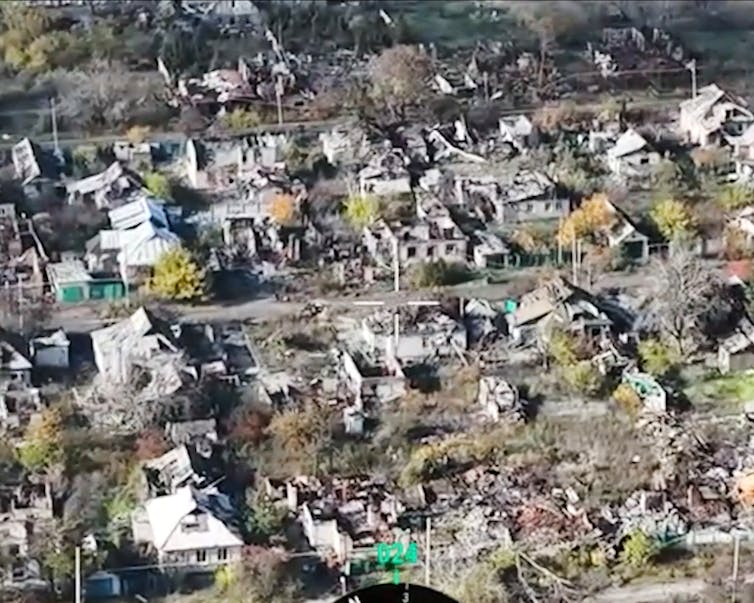
This also explains the hesitance of EU leaders about releasing Russian frozen assets. Aside from the legal concerns, questions are increasingly being asked about the trajectory of the war. Could the EU risk billions of euros on a failed cause, while forfeiting leverage in postwar negotiations?
From an international politics perspective, this classic realist logic and the widening gap between ethics and interstate relations are neither new nor surprising: states act in their interests, not in service of ideals.
The frozen assets are being treated not as aid, but as a bargaining chip – to be deployed only if Ukraine stabilises the situation on the battlefield or if Russia can be pressured into concession.
By delaying a decision on the frozen assets, the EU preserves optionality. If Ukraine regains ground, the assets can be deployed with stronger justification. If Russia ultimately prevails, the EU avoids being seen as the architect of a failed financial intervention.
This ambiguity is not indecision – it’s strategic posture. The EU is hedging its bets, quietly preparing for multiple outcomes. The longer the war drags on, the more likely unity fractures and realism overtake idealism.
No perfect outcomes
A final decision on the assets is expected in December. But even if approved, the funds may be disbursed in cautious tranches, tied to battlefield developments and political optics, locking Ukraine into the unforgiving calculus of great power rivalry between Russia and the West.
The EU is not abandoning Ukraine, but it is recalibrating its risk exposure. That recalibration is grounded in strategic doubt as EU leaders are no longer sure Ukraine can win – even if they won’t say so aloud.
In the end, whether or not the assets are deployed, Ukraine’s outlook remains bleak unless both Russia and the West find a way to de-escalate their zero-sum rivalry in the region.
Any future settlement is unlikely to be optimal and will likely disappoint Ukrainians. But the current challenge is not to pursue perfect outcomes, which no longer exist, but to choose the least damaging path to ending the war, among all the imperfect options.


