

Parents find Health Star Ratings confusing and unhelpful. We need a better food labelling system
- Written by The Conversation
Food labels are intended to support healthy choices. But not all labelling schemes are equal.
Australia currently uses a voluntary Health Star Rating system. Food manufacturers can choose to add a star label to their packaging to indicate how it compares to other similar products. Or they can choose not to show a star rating on a product at all.
The Australian government is now considering making it mandatory.
But our new research on parenting and food in Australia found the Health Star Ratings are often confusing, misunderstood and have little credibility among shoppers.
If Health Stars are mandated, the system will also need a major overhaul to be trusted and useful for shoppers.
How do Health Star Ratings work?
The government set up the front-of-pack Health Star Rating system in 2014 in collaboration with the food industry, public health and consumer groups.
Product ratings range from (bad) ½ to (good) 5 stars.
Calories, saturated fat, sugars and sodium decrease the rating. Fibre, protein, and the content of fruit, vegetables, nuts and legumes increase it.
The good and bad offset each other. This means companies can strategically formulate products to boost the rating and mask unhealthy ingredients.
Processing and additives – such as sweeteners, colouring, emulsifiers, preservatives and artificial flavourings – are not part of the calculation.
Previous research has found the ratings can incentivise ultra-processed foods over minimally and unprocessed foods, and misrepresent healthfulness. Some researchers have also suggested practical ways to modify the rating algorithm to account for processing.
The Health Star Rating’s own consumer research found 74% of consumers do not understand that the rating cannot be used to compare dissimilar products.
What parents told us
In our interviews with 34 parents in Australia, participants often described the Health Star Ratings as “misleading”, “not helpful” and “on the wrong product”. One participant called it the “fake health star rating”.
They gave many examples:
Like you might buy 100% orange juice or fruit juice and it might have only half a star health star rating, but then you can buy like a box of processed muesli bars and it will have five stars. – Mother of three high school aged children, urban WA
Coco Pops or Nutrigrain have three and a half star rating, and what exactly does that mean? – Mother of one primary school aged child, urban WA
Participants wondered if the Health Stars were something companies paid for, a “marketing thing”.
Positivity bias
Part of the problem with the Health Stars is the positivity bias of the symbol. As one participant put it, “All stars are good. Right?”
Another noted their children comment on the stars, saying “but look Mum, it’s five stars.”
However, parents were not convinced:
A lot of packaged stuff is rated as five stars. I’m like yeah, well, don’t know about that. It’s still packaged. – Mother of two primary school aged children, urban NSW
Participants thought discretionary foods should not have any stars. As one participant said:
The other day, we saw a mud cake and it has a two out of five star health rating. How can that be a two out of five star?… Like there should not even be a star available for this. – Mother of pre-school aged child, urban NSW
Burden on parents
Parents often disregarded the rating. For example:
This particular thing, you know, had all sorts of additives, had actually had a much higher rating than something that actually didn’t have any additives… what I ended up buying was rated slightly lower. – Mother of two primary school aged children, rural Victoria
Instead participants used ingredients lists, apps such as Yuka, and “hours of internet research” to guide healthier choices.
But there was a sense of frustration that the burden was on them. Participants said:
I feel like food labels are extremely deceptive and by producers, purposely confusing. – Mother of one primary school aged child, urban SA
It has to be government driven because companies won’t change unless they’re forced to by the government. – Father of two primary school aged children, urban Tasmania
We need a food labelling system that works
Still, the parents we spoke to think a front-of-pack system is valuable. As one participant explained:
I do think if I had a better system for that, that would get a lot of use. – Mother of two primary school aged children, urban NSW
Parents repeatedly stated a desire for transparency over food, for information they can trust and food policies that prioritise consumer health.
As one mother put it, the “multi-billion dollar” food industry will not do this on their own, and “that’s where the government needs to step in.”
If Health Stars are mandatory, how could labelling be overhauled?
Chile, Mexico, Brazil and other countries, including Canada from 2026, are now using “stop-sign” warnings to steer consumers away from the least healthy products. Large Black Octagons alert consumers to high sugar, sodium and saturated fats, and ultra-processing.
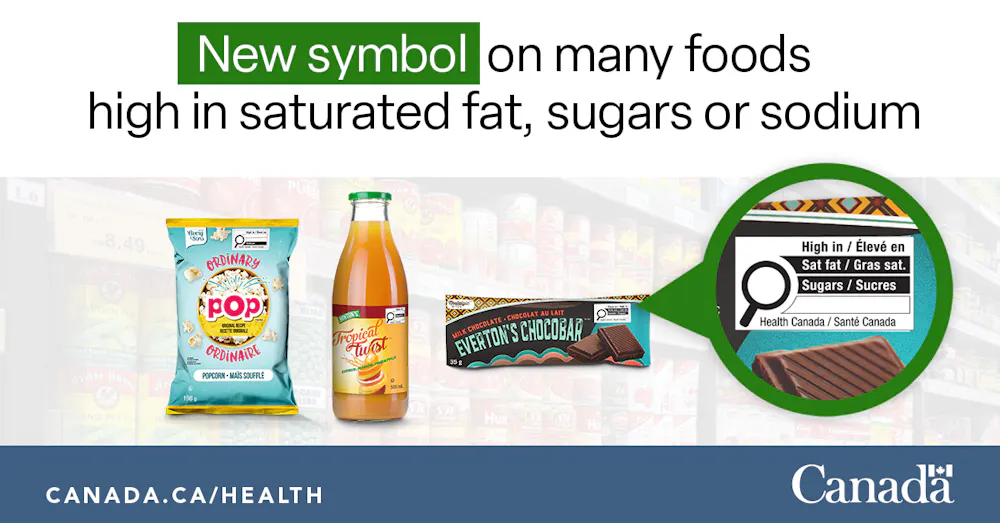
Evidence shows these warning labels have improved nutrition and public health in other countries and could be an option for Australia.
We need to mandate a fit-for-purpose food labelling system that supports healthy eating. Governments should centre the voices of consumers in these and other national food policies to ensure they work as intended.


