

Photos from the field: diving with Tasmania's rare and elusive red handfish, your new favourite animal
- Written by The Conversation
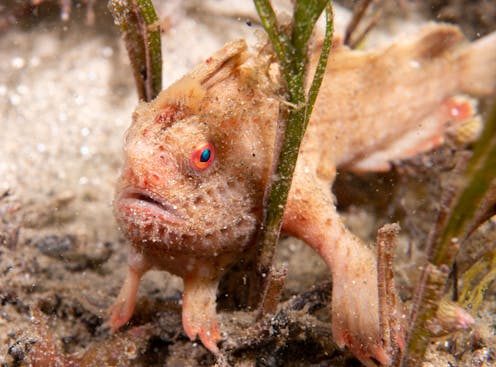
Environmental scientists see flora, fauna and phenomena the rest of us rarely do. In this series, we’ve invited them to share their unique photos from the field.
On the surface, it looks like any other bay near Hobart. But beneath the calm waters live a small population of one of the rarest and most endangered fish in the world: the red handfish.
I was diving in early 2020 with a small crew of some of the best handfish hunters on the planet, people who had monitored and nurtured knowledge of this tiny creature over recent years.
We laid out a series of “swim lanes” using survey tapes, which we would then search painstakingly in our wetsuits and SCUBA gear. We would take perhaps an hour to drift along each 50 metre lane, carefully moving seaweed and peering into each little nook for elusive handfish.
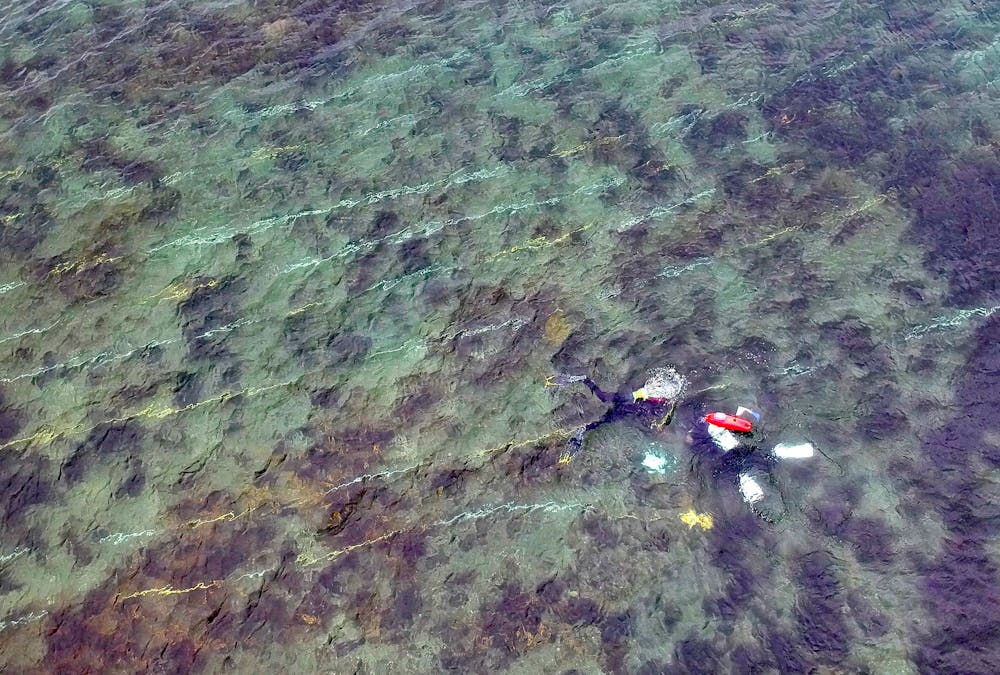
Towards the end of my first lane, I found one. Nestled between two seagrass plants, the little fish with its seemingly oversized hands stared up at me.
I marked it with a bright yellow flag so the research team could record the little critter in all its glory. This involved collecting essential scientific information, such as length and photographs of both sides of the fish, all the while avoiding disruption to it and its environment.
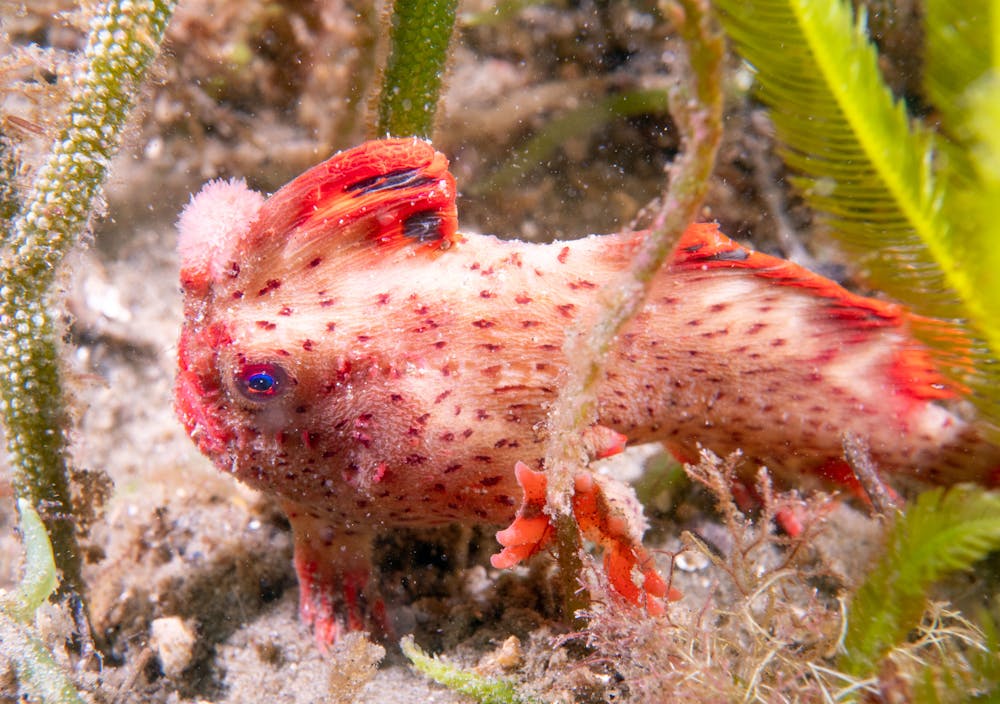 In this photo, you can clearly see the fluffy lure on the red handfish’s head.
John Turnbull, Author provided
In this photo, you can clearly see the fluffy lure on the red handfish’s head.
John Turnbull, Author provided
There are just two small areas near Hobart, and therefore in the world, where the red handfish is known to still live, amounting to a wild population of around 100 adults.
Earlier this year, the species was thankfully earmarked for federal conservation funding, but more must be done to stop this otherworldly creature from continuing to vanish.
Red handfish are cryptic and bizarre
Red handfish (Thymichthys politus) are a contradiction – this species is just several centimetres long, partly camouflaged yet trimmed by flashes of bright red. They are cryptic, and use their enlarged pectoral fins resembling human hands to walk across the seafloor, rather than swimming in the water column.
Handfish are a type of anglerfish. They are ambush predators, which means they prefer to sit and wait among seaweed, sponges and other cover for their prey to swim past, before they strike.
To help attract their prey – such as small fish and invertebrates – they have a fluffy lure on their forehead.
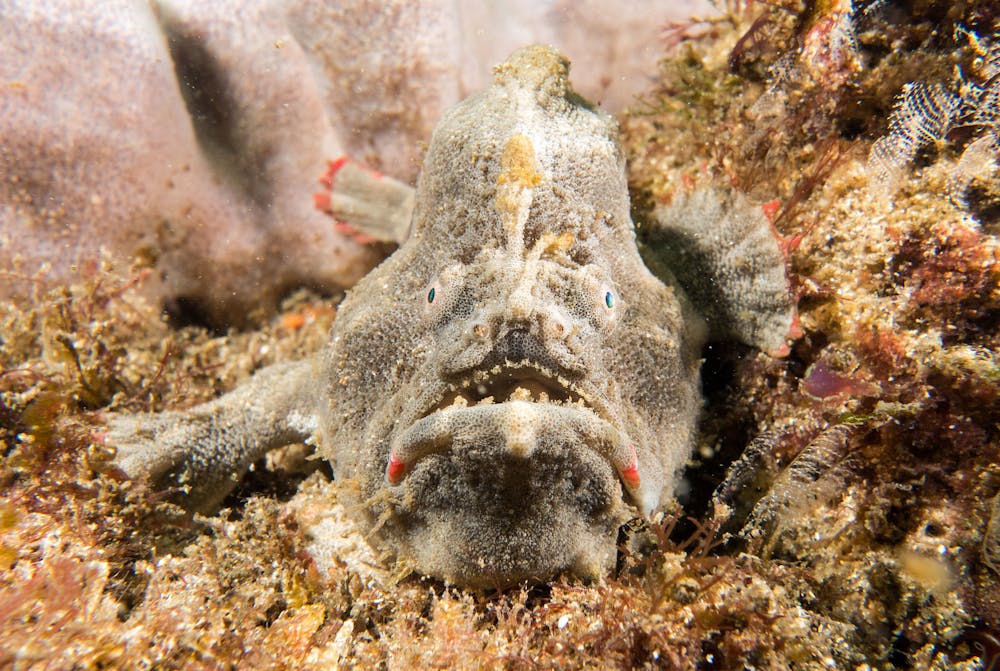 This is another species of anglerfish, called the Bare Island anglerfish (Porophryne erythrodactylus), which is endemic to a small region of NSW.
John Turnbull, Author provided
This is another species of anglerfish, called the Bare Island anglerfish (Porophryne erythrodactylus), which is endemic to a small region of NSW.
John Turnbull, Author provided
With so few left, the red handfish is extremely vulnerable to any pressures impacting the two areas it’s found in.
This includes habitat loss (driven largely by a boom in native urchins overgrazing seaweed), pollution and other urban impacts.
Direct disturbance by humans such as boating, anchoring and possibly diving are also potential threats, particularly during breeding season. And climate change impacts, such as warming waters, also play a big role in the decline of the species.
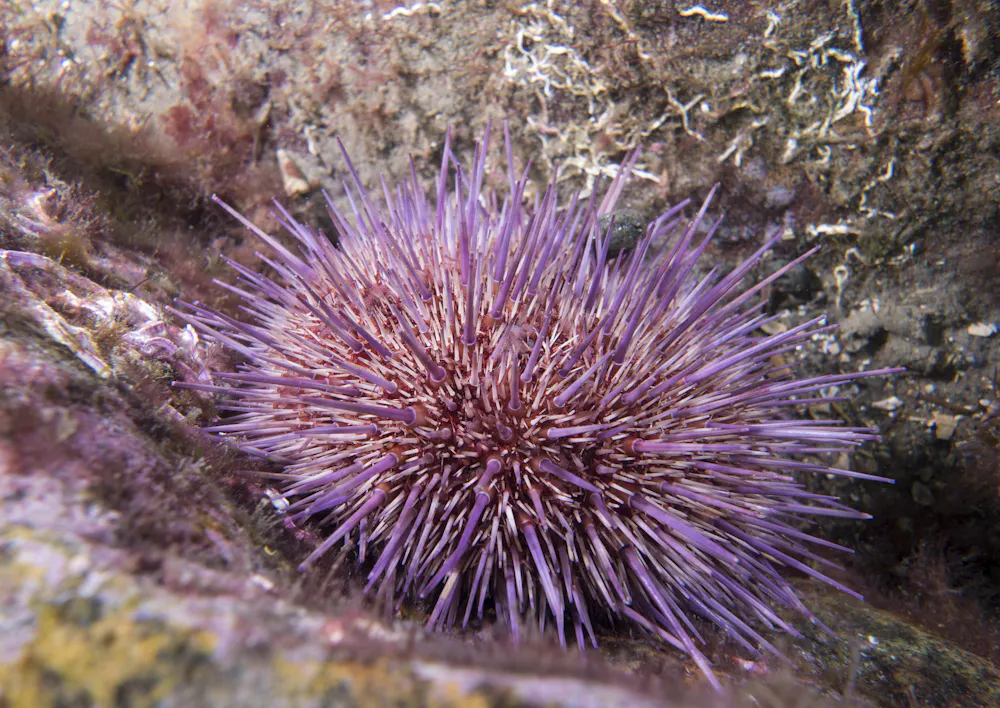 Increases in native urchin numbers are removing handfish habitat.
John Turnbull/flickr, Author provided
Increases in native urchin numbers are removing handfish habitat.
John Turnbull/flickr, Author provided
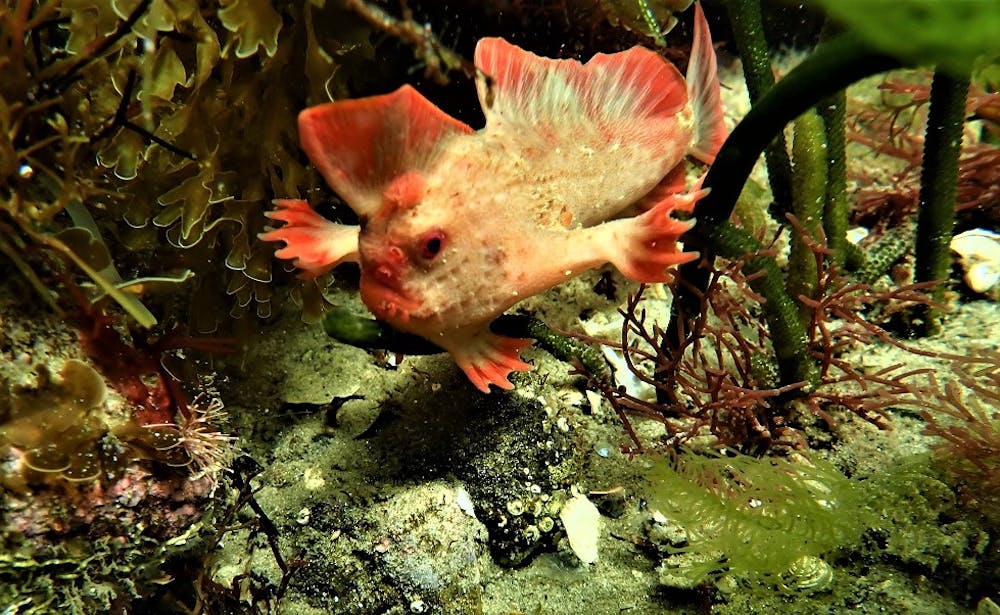 A red handfish manifesting warrior yoga pose as it navigates its complex reef habitat.
Jemina Stuart-Smith, Author provided
A red handfish manifesting warrior yoga pose as it navigates its complex reef habitat.
Jemina Stuart-Smith, Author provided
The red handfish aren’t Australia’s only handfish, with the southeast of the continent home to 14 different species.
One, the Ziebell’s handfish, lives deeper than the red handfish and we know even less about its conservation status. Another, the spotted handfish, lives in the Derwent estuary and nearby, with a population of fewer than 3,000 individuals.
Both of these species, along with the red handfish, are critically endangered.
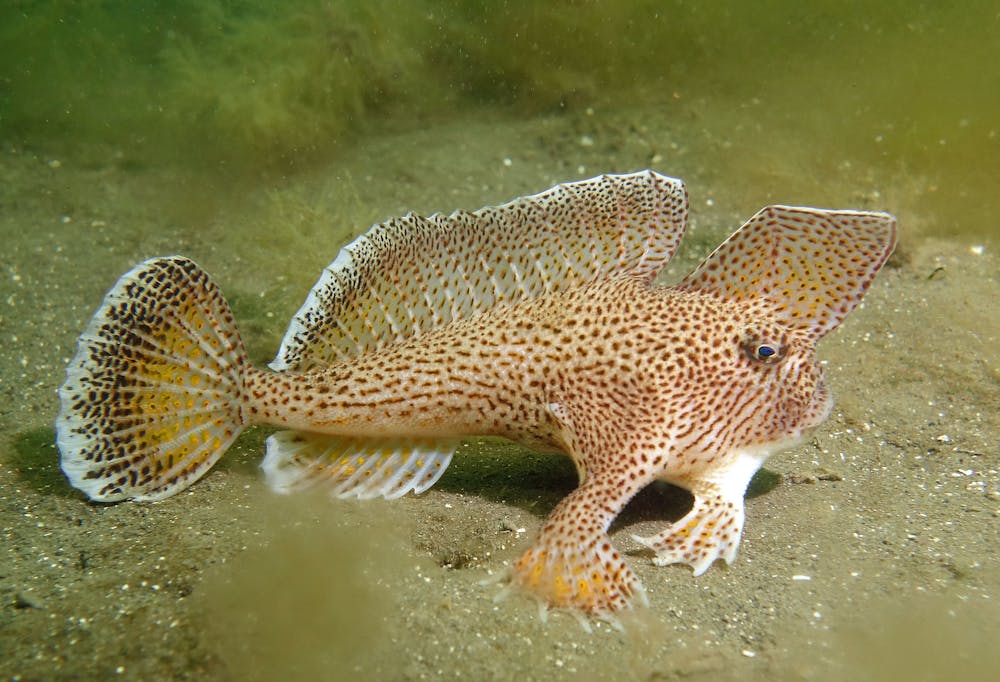 The decline of the spotted handfish has been in attributed to the invasive Northern Pacific seastar and heavy metal contamination.
John Turnbull, Author provided
The decline of the spotted handfish has been in attributed to the invasive Northern Pacific seastar and heavy metal contamination.
John Turnbull, Author provided
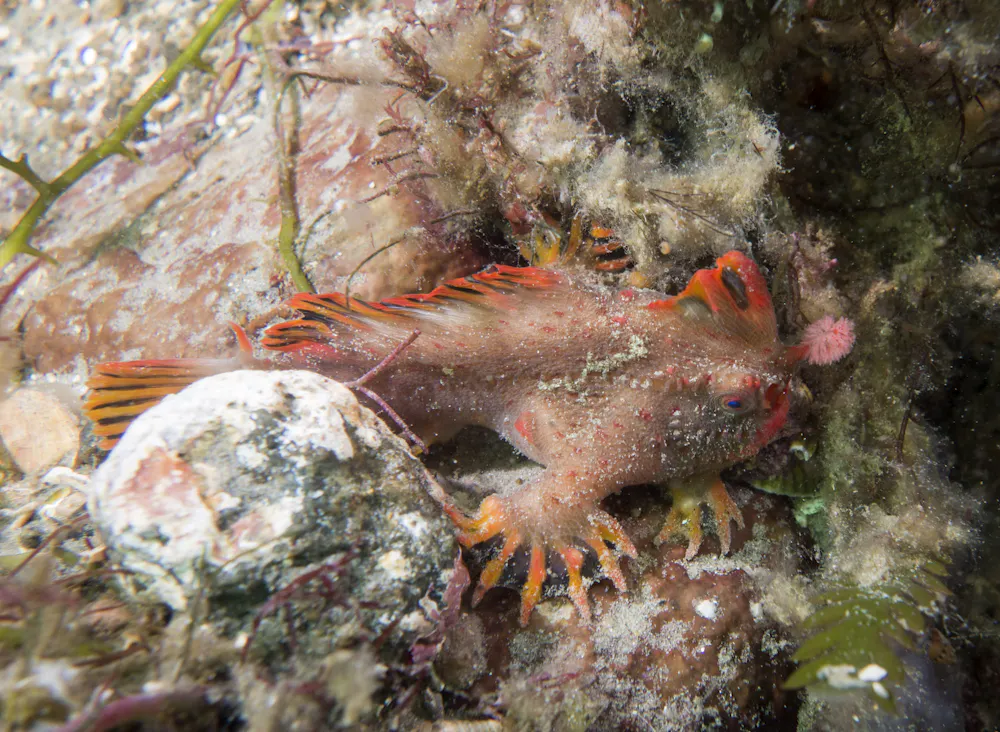 A red handfish tucked under algae.
John Turnbull/flickr, Author provided
A red handfish tucked under algae.
John Turnbull/flickr, Author provided
How we’re protecting them
Recent government funding will help build resilience against threats to wild red handfish populations. This conservation effort includes re-building wild populations through a captive-rearing and release program known as “head-starting”.
This strategy involves collecting eggs from the wild, and nurturing the young in captivity. There, they have unlimited food, and they’re protected from predators and harsh conditions.
 Only a few millimetres in size, this baby red handfish represents one of 71 juveniles that hatched successfully at the Institute for Marine and Antarctic Studies in 2020.
Jemina Stuart-Smith, Author provided
Only a few millimetres in size, this baby red handfish represents one of 71 juveniles that hatched successfully at the Institute for Marine and Antarctic Studies in 2020.
Jemina Stuart-Smith, Author provided
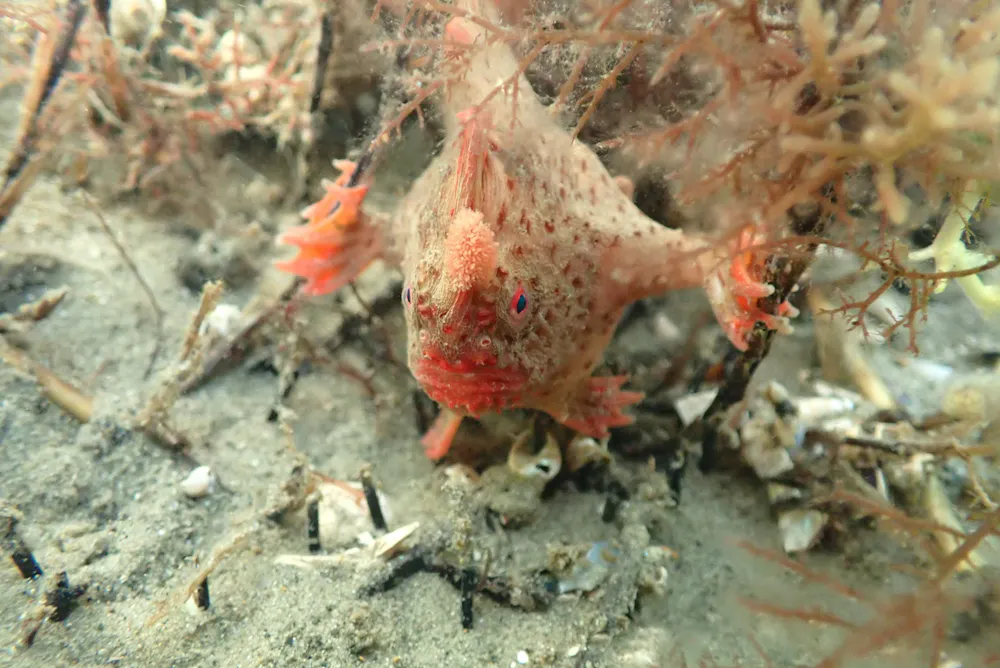 An adult red handfish we observed on survey stands, poised between seagrass blades.
Jemina Stuart-Smith, Author provided
An adult red handfish we observed on survey stands, poised between seagrass blades.
Jemina Stuart-Smith, Author provided
Once big enough, handfish are released back into the wild, and monitored through dive surveys which identify individual fish through their unique pattern of spots, similar to the way we use fingerprints.
As well as using this finger-printing technique, we’re also using ultra-sound to help us identify fish gender, which we’re otherwise unable to do by sight alone. This information will help us implement a captive-breeding program so we can continue our re-wilding program, and will also allow us to establish a captive insurance population.
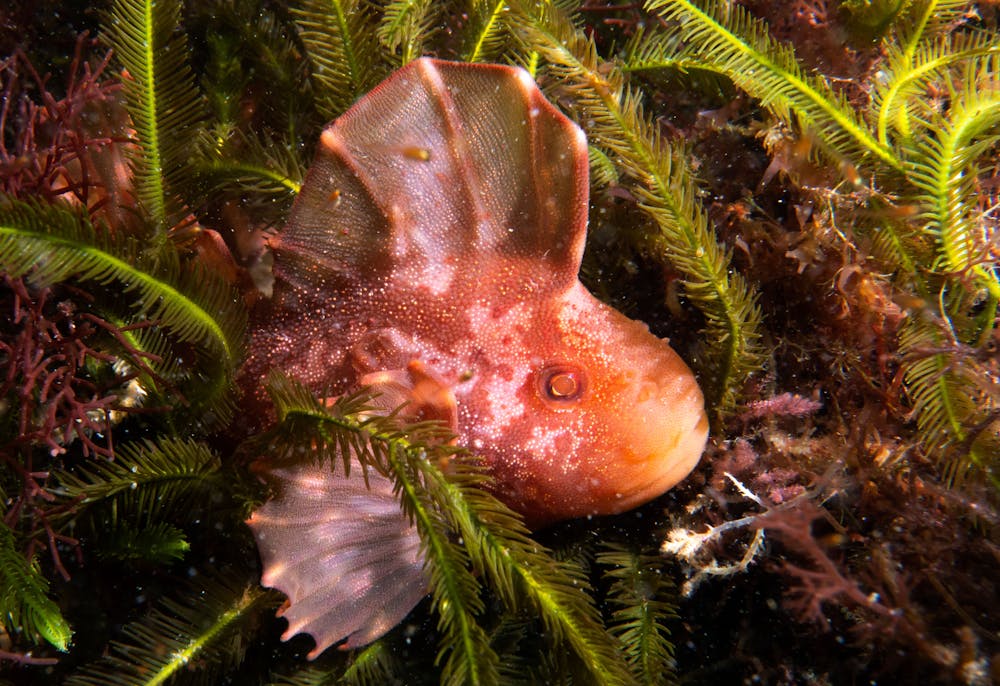 Surveys turn up other interesting finds, such as this rare red velvet fish sitting among green and red algae in red handfish habitat.
John Turnbull/flickr, Author provided
Surveys turn up other interesting finds, such as this rare red velvet fish sitting among green and red algae in red handfish habitat.
John Turnbull/flickr, Author provided
We’re also working on restoring the fish’s habitat and mitigating direct disturbances through a SCUBA diver/snorkeller education and awareness program, called Handfish Guardians.
Early habitat restoration efforts have included working with divers to remove urchins, but we now plan to couple this with seaweed restoration trials. Through these efforts, researchers hope to halt the decline of red handfish.
But to truly safeguard this species from extinction and increase their numbers, we need longer-term efforts. This includes ongoing mitigation of urban impacts and restoration of ecosystem balance that can only be achieved through improved habitat management.
Read more: Photos from the field: why losing these tiny, loyal fish to climate change spells disaster for coral


