

Can office culture survive the work-from-home revolution? Yes, but you can’t force the fun
- Written by The Conversation
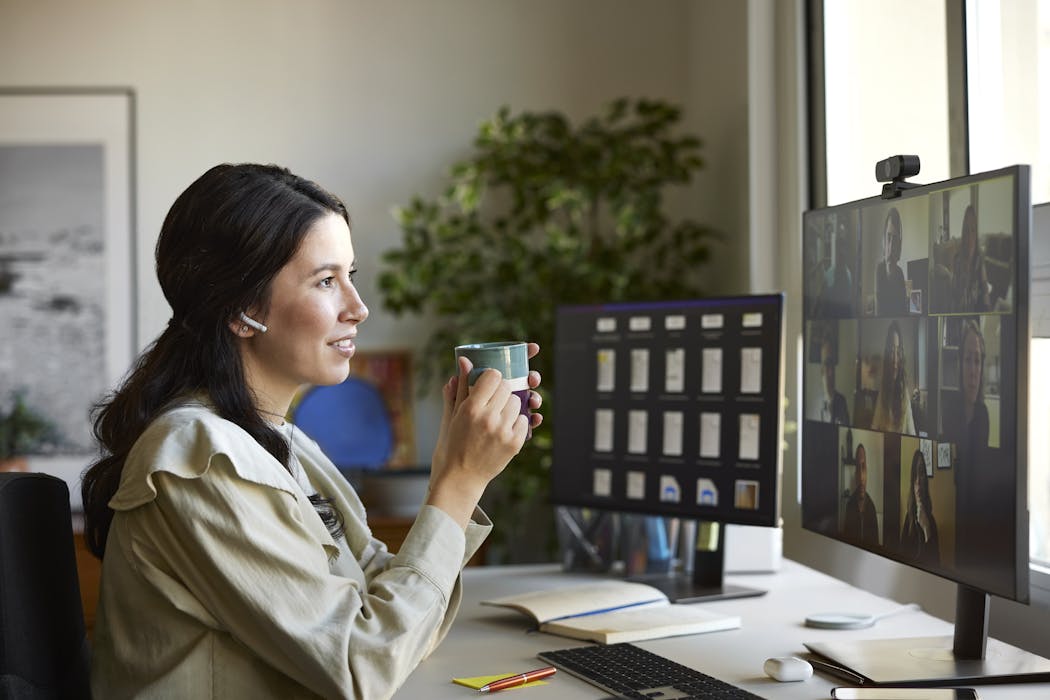
Groaning your way back into the new work year? It’s an occupational hazard after the holiday break, of course, but these days there is the consolation (for some) of hybrid working.
For jobs that allow it, hybrid work is the new normal, allowing employees to work both remotely, usually from home, and in the office.
But hybrid work is also creating cultural shifts, and workers and managers must navigate ways to keep people connected, social and happy in the blended workplace.
How to do that? Video calls can’t replicate real-world interactions, and the kinds of activities companies organise to build culture and morale can fall flat in a virtual format.
This is particularly relevant to me because my research interests cover the social aspects of work life, with a specific focus on workplace fun, humour and happiness.
So, to explore how we’re all adapting, I immersed myself in two local companies to experience how they maintained a fun culture when some workers were online and others worked in the office.
This allowed me to observe behaviour, talk to workers, interview people from all levels of the business and interact with people online. I also interviewed others from a variety of different workplaces. The research grew into my recently released book Hybrid Happiness: Fun and Freedom in Flexible Work.
What I found were fun, lively, vibrant cultures that the companies were proud of and keen to maintain and develop. But fun is subjective, too, and forcing it in a hybrid setting has its own pitfalls.
Hybrid happiness
Workers were unanimous in wanting to retain hybrid work. They claimed it made them happier due to the freedom, flexibility and autonomy it allowed – and, most importantly, the feeling they were trusted by their company.
They listed the now familiar benefits of hybrid working: saving time and money by not having to commute every day, being able to manage family and pet care needs, going for a walk in nature during the workday, or working online from a cafe.
At the same time, workers agreed that fun and sociability have changed. There is significantly less table tennis, and Friday drinks are not as well attended as they used to be.
Some teams had opted for Thursday “cheese and chat” sessions as more people are likely to be in the office in the three middle weekdays. Laughing around the water cooler has been partly replaced by online chat streams with emojis, messaging and memes.
Quizzes and online games are increasingly popular and can pepper the workday to offer relief from overload and stress.
“Anchor days” are important, too, when everyone is in the office in person, boosting social connection and collegiality (especially when the company provides bagels and coffee).
Getting the mix right
However, hybrid work is not all lightness and laughter. There are still frustrations and failures. Sometimes fun activities go wrong or fail to engage certain people, such as the self-described introverts.
One young worker described an in-person fashion catwalk event he felt forced to join, even though he was highly uncomfortable. An online “fun” quiz starting at the end of the day can feel like another task to endure before knocking off.
Emojis in online messages can be misinterpreted or annoying, especially when colleagues use too many. Overdoing fun activities can feel contrived and distract people from their deadlines.
In short, fun cannot be forced. A simple opt-out clause can be useful to avoid people having to play when they feel uncomfortable or are just not in the mood.
This is where hybrid work can actually be a game-changer for some people. It feels simpler not to click the link when you’re too busy or the activity does not appeal.
When you’re online it’s also easier to evade colleagues encouraging and pushing you into an activity, whereas this can be harder to avoid in the office and face to face.
Happiness works
Why does this matter? Because workers want choice and flexibility – the freedom to work at home but also the connection and stimulation of office time to connect in person and maintain relationships.
Some people work better when physically among their colleagues. Others are more effective away from the hubbub but still connected through technology. Hybrid work offers all of these benefits.
When people are working in a personally optimal way, they are more likely to be happy. Individual happiness transfers to and feeds workplace culture, creating a sparky, motivated group that interacts in multiple ways.
A thriving workplace culture is a collective ideal founded on worker buy-in and commitment. So, while there can be challenges making it work, overall it seems workplace culture may even improve in the new office environment.
Happy hybrid new year!


