

These voices are the loudest in Australia’s ‘climate wars’
- Written by The Conversation
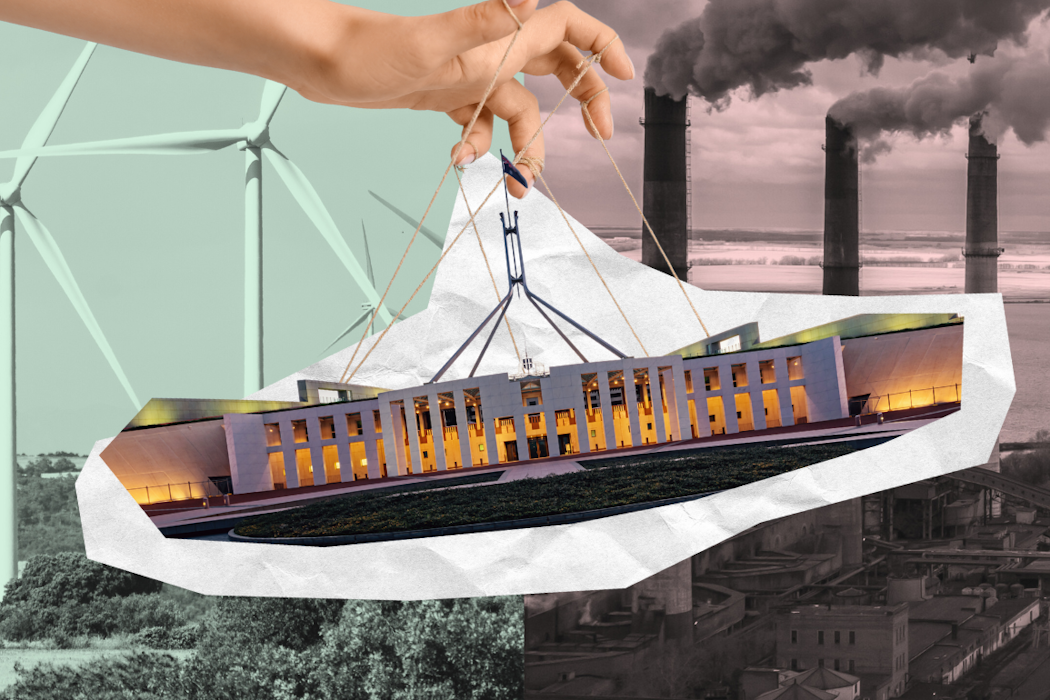
There’s a reason political commentators refer to Australia’s “climate wars”. Every time a climate policy is put on the table, supporters and opponents come out in force and duke it out.
Last year, debates over Australia’s greenhouse gas emissions target led to a heated contest between various groups such as the Climate Council — arguing for strong action — and others such as the Business Council of Australia, which commissioned modelling to highlight the economic costs of a strong target.
This was not a one-off. Since at least the 1990s, emissions-intensive industries such as coal and gas and their lobby groups have had an outsized influence on climate policy. This includes groups such as the Minerals Council of Australia, which represents BHP, Rio Tinto and Whitehaven Coal, and Australian Energy Producers, which lobbies on behalf of BP, Shell and Woodside, among others.
Until now, we did not have a good understanding of who mobilises on climate policy in Australia, what side of the issue they fall on, and in which arenas they mobilise. In our new research, we found a core set of only 20 groups dominating climate policy debate in Australia, including gas corporations, industry lobby groups, environmental NGOs, and think tanks.
Who are these groups?
To find out which groups are most influential, we collected data on all organisations active on climate policy in Australia between 2017 and 2022. This included examining the number of groups as well as their volume of activity in the executive branch of government (responsible for implementing and enforcing laws, managing day-to-day administration and setting policy), the parliament and the media.
For example, we identified 700,000 mentions of groups in articles about climate change from 13 media outlets, including The Australian and the Sydney Morning Herald.
As well as media records, we also built a database of organisations who actively consulted with government departments and provided evidence to parliamentary inquiries.
We found 20 groups accounted for more than half (52%) of all activity.
They included a mix of mining and energy firms, such as AGL, BHP and Rio Tinto and their lobby groups, such as the Minerals Council of Australia. It also included high-profile NGOs, such as the Climate Council, and think tanks active on climate policy, including the Australia Institute and the Grattan Institute.
It’s important to note we didn’t look at the content of the messages in the media, the parliament or in departmental consultations, just the number of organisations and the frequency of their activity.
Where do these groups stand on climate action? tweaked
Among the 20 groups, some are strong supporters of climate action, such as the Climate Council. By contrast, the Minerals Council of Australia has a long history of opposing climate policies dating back to the Kyoto Protocol in the 2000s and the short-lived carbon price in the 2010s.
Interestingly, there are more pro-climate groups than anti-climate groups. Most NGOs in our study tended to support action on climate change, including the Australian Conservation Foundation, Greenpeace and WWF.
Many of the business groups do not. But it’s not as black and white as this might suggest. Firms and business advocacy groups are not unified. A growing number of renewable energy companies now mobilise in support of climate policy, often through advocacy groups such as the Smart Energy Council.
Interestingly, many industries active on climate policy don’t have a hardwired position. Rather, they sometimes support and sometimes oppose climate policy. This is often because their commercial interests are only indirectly impacted by climate policies, such as firms in the technology or finance industries.
These somewhat “neutral” groups actually account for the majority of groups active on climate policy in Australia.
Does this vary by arena?
We also explored whether some groups dominate the media more than the parliament, or the parliament more than the executive. For example, are environmental NGOs more active in the media than in Senate hearings? Are business groups more active in consultations with the government departments that make up the executive branch of government?
Interestingly, we found the media is the only arena where fossil fuel interests dominate. For example, groups typically opposed to climate action represent 43% of all media mentions, compared to 20% in support and 36% neutral.
This begs the question – why does the media appear to have a strong bias for reporting pro-fossil fuel messages?
One explanation consistent with overseas studies is simply that messages from business coalitions and very large businesses are more likely to receive media coverage than other types of organisations, such as environmental NGOs.
These organisations are likely to have high standing in the media because they are viewed as key players in policy debates with inside knowledge. Certainly in Australia, the largest firms and lobby groups mobilised on climate change are tied to? fossil fuel industries.
Do these groups matter?
As we sweat through another of the hottest summers on record, the federal government will rightly remain under pressure to put in place further policies to cut carbon pollution. In fact, recent polling shows one in two Australians want action on climate change “even if this involves significant costs”.
Who mobilises to support or oppose climate policies will likely have a big influence on policy outcomes such as increasing renewable electricity in the grid, phasing out petrol and diesel vehicles or stopping new coal and gas projects
Our research shows a core set of groups, including firms in the coal and gas industries, that are likely to have an outsized voice in such policy debates.
While this does not always equate to influence, it is an important precondition. In the media in particular, it appears fossil fuel interests have the loudest voice.
Read more https://theconversation.com/these-voices-are-the-loudest-in-australias-climate-wars-272347


