

Is NZ defence and intelligence policy aligning with AUKUS in all but name?
- Written by The Conversation
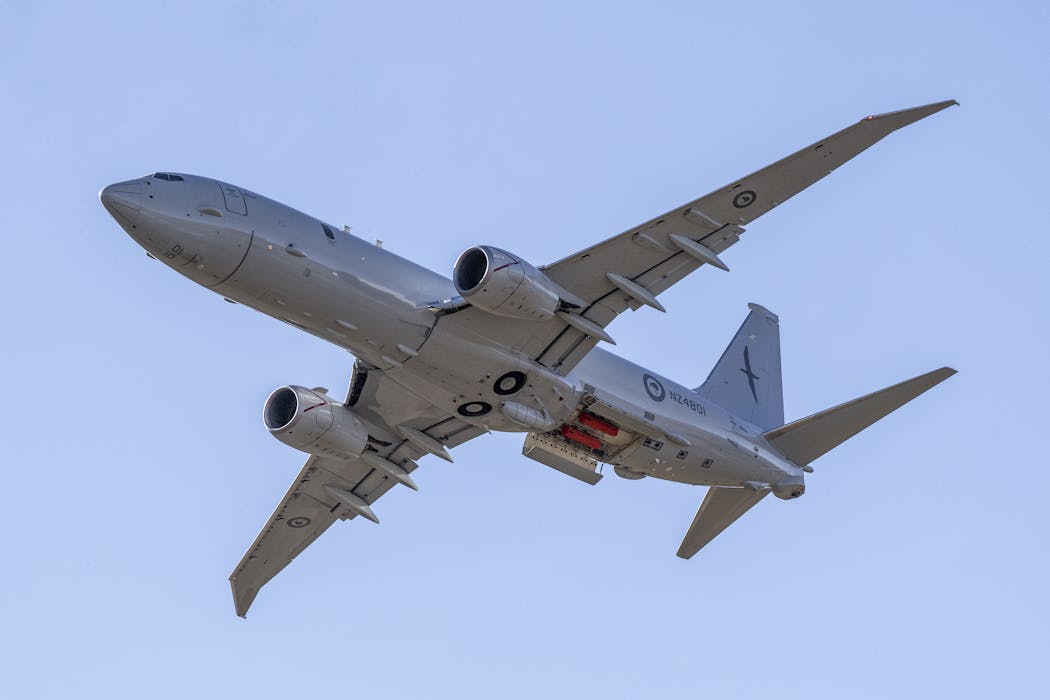
Across the Pacific and the Southern Ocean, New Zealand has been trying to strike a careful balance in its defence and surveillance approach.
While strengthening its security partnerships and expanding military capabilities, the government has so far said it is only assessing joining Pillar II of the AUKUS security pact between Australia, the United States and the United Kingdom.
Pillar I of AUKUS involves Australia acquiring nuclear-powered submarines, while Pillar II focuses on cooperation in advanced military technologies, including cyber systems, artificial intelligence, autonomous platforms, undersea capabilities and space-based surveillance.
Yet key documents, including the Defence Capability Plan 2025 and a government procurement process for long-duration aerial surveillance, suggest many of the practical steps Pillar II would involve are already underway.
These far-reaching strategic decisions are being made largely out of public view. And they raise an important question: is New Zealand effectively aligning itself with AUKUS in all but name?
From patrols to permanent surveillance
The Defence Capability Plan is the government’s long-term blueprint for upgrading New Zealand’s military. It proposes a NZ$100–300 million investment in long-range, uncrewed, remotely-piloted aircraft to provide intelligence, surveillance and reconnaissance across vast ocean areas.
As part of a broader $14 billion defence overhaul, a further $300–600 million is projected for space-based capabilities. This is aimed at integrating New Zealand within shared satellite networks and increasing operational cooperation with security allies.
In parallel, the Persistent Surveillance (Air) Project tender (which recently closed for submissions) invites industry and academia to help design a system for long-duration surveillance across the southwest Pacific and Southern Ocean, involving aircraft, spacecraft and data-management software.
Taken together, these initiatives signal a shift from periodic surveillance patrols to continuous, networked monitoring. This aligns closely with the concept of “multi-domain maritime awareness” under AUKUS Pillar II.
Mindful of public concern about joining AUKUS and any association with nuclear proliferation or deployment of autonomous weapons systems, successive NZ governments have approached the issue cautiously.
The current government appears to be maintaining this careful line. But the proposed New Zealand Defence Force investments and procurement plans suggest a more substantive shift.
The long-range drones, satellite surveillance, data integration and counter-drone technologies outlined in the Defence Capability Plan closely mirror AUKUS Pillar II priorities.
New Zealand may be avoiding formal alignment for now. But defence officials have already been holding talks with the US, UK and Australia about advanced military technologies and surveillance systems.
The risk of being locked in
These policy shifts undoubtedly have benefits for a small country like New Zealand. High-quality surveillance capabilities boost its strategic value to defence partners and give Wellington a stronger voice in maritime monitoring across the Pacific.
But there are also risks. Research suggests integrating surveillance systems with allied networks can create lasting technical and political dependencies.
In turn, this could narrow New Zealand’s capacity to make independent decisions in the Pacific region, or calibrate its engagement with other regional stakeholders, including China and Pacific Island governments.
Arrangements such as the Indo-Pacific Partnership for Maritime Domain Awareness – involving Australia, India, Japan and the US, known as the “Quad” – allow countries to merge surveillance data and build a “common operating picture” of activity across the region.
The same is true of the Pacific Fusion Centre’s information-sharing network, PacNet #28. The catch is that these surveillance arrangements tend to lock countries in, with one host controlling how data is gathered and filtered.
Embedding NZ in surveillance networks
New Zealanders are broadly supportive of contributing to regional security. But polling suggests they are uneasy about being drawn into distant conflicts or military spending that mainly serve the priorities of larger powers.
Autonomous weapons, AI-assisted targeting and militarised space systems are particularly contentious, raising legal and ethical questions about human control.
Defence officials frequently argue that drones and space-enabled surveillance reduce risks to personnel and enhance humanitarian and disaster-response missions. While this may be true, there remains a need for clearer public discussion about how such technologies are deployed and where limits are being set.
For decades, the New Zealand Defence Force has been valued for its nimbleness and principled diplomacy. But the emerging surveillance approach being shaped through procurement decisions, tenders, space-launch licences and software standards is steadily embedding New Zealand within allied security networks.
The government has assured New Zealanders would be kept informed “at every step” about any future partnership with AUKUS.
Such transparency needs to extend to defence policy and strategy in general, before foreign-designed, militarised surveillance systems become the norm across the region.


