

Gambling for children? Why Australia should consider regulating blind box toys like Labubu
- Written by The Conversation
If you walk through any major shopping mall in Australia, chances are you’ll encounter products and experiences that are uncomfortably similar to gambling – yet they are available to anyone, including children.
Our soon-to-be-published research has found claw machines, blind boxes and toy capsule machines have become pervasive in the spaces families frequent – from the shops, to the movies, to the pub.
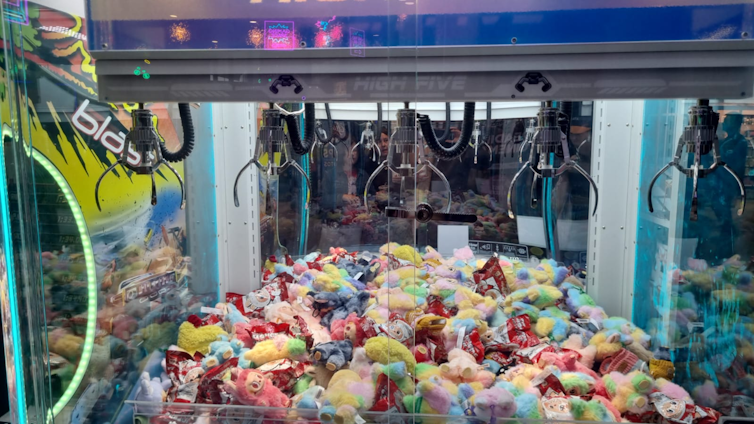
We call these products and experiences gamble-play media. They rely on and profit from risk-taking, and encourage intense, continuous playful consumption in the quest to “win” a desired item.
While claw machines have been a part of Australia’s consumer culture for a long time, blind boxes are the most recent gamble-play media to become mainstream.
In Singapore, lawmakers and consumer advocates are pushing to regulate blind boxes due to the gambling inducement risks they carry, according to a written address to parliament from Home Affairs Minister Kasiviswanathan Shanmugam.
It may be time for Australia to contemplate a similar move, given our nation’s insidious gambling culture and tendency towards problem gambling.
Indeed, gambling among children has become a national crisis, with a report from the Australia Institute highlighting 30% of 12–17 year-olds gamble at least once per year.
The blind box phenomenon
Blind boxes are products (usually toys) sealed in opaque packaging. The contents can’t be revealed until after a box is purchased. Most are sold as part of larger collections, many of which contain coveted “rare” items. Buyers are enticed to pay for the chance to obtain these “high-value” items.
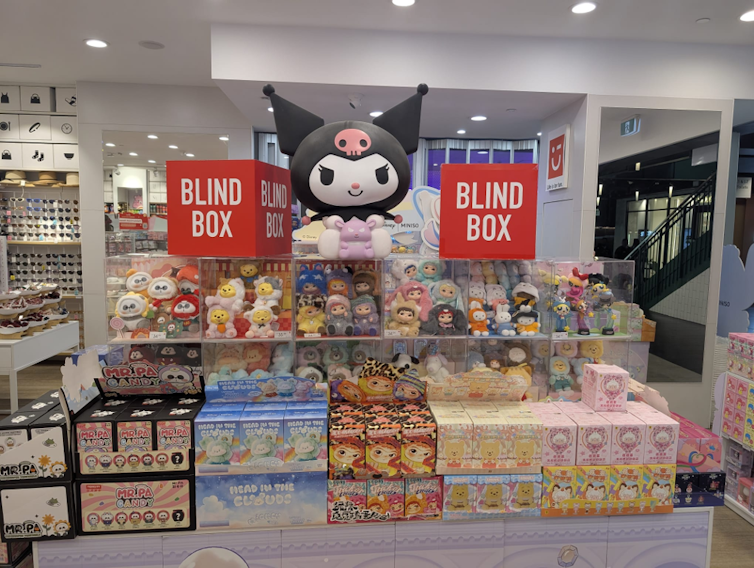
Globally, blind boxes are projected to reach annual profits of US$24.2 billion (about A$34 billion) by 2033.
Anyone who visits a major shopping precinct will likely see rows upon rows of boxes displaying Labubus (a multi billion-dollar obsession), Sanrio characters, and other collectibles from children’s or family franchises such as Sesame Street, Harry Potter, Toy Story and the Marvel Cinematic Universe.
Japanese characters such as Mofusand and Sonny Angels are particularly appealing to Gen Z and Gen Alpha buyers.
Online, content creators use these products in “toy unboxing” videos, which have long been popular on platforms such as YouTube and TikTok. This content focuses on the tactile pleasures of unwrapping toys, particularly “surprise” toys – the crinkling of paper, the tapping of nails on boxes, and the caressing of the treasured item once it’s finally unveiled.
There are hundreds of thousands of videos of influencers unboxing blind box toys across YouTube, TikTok and Instagram, many of which help to generate hype around new products or high-profile collaborations.
Apart from major retailers such as Pop Mart and Miniso, blind boxes are also available in vending machines, and pop-up and bargain variety stores (which may stock knock-off versions).
Gambling for children?
The emotional states triggered by blind boxes are not dissimilar to those experienced by people who gamble on slot machines or pokies: anticipation, randomness, occasional joy and frequent disappointment. These experiences can become addictive.
Blind boxes are designed to offer a rush over the possibility of an (unlikely) big win, and the subsequent chasing of this feeling. As our research highlights, these are the dynamics of gamble-play.
There are preliminary indications that using gamble-play devices such as claw machines and coin pushers in the formative years can lead to problems with gambling in adulthood.
However, more research is needed to understand how children experience risk, randomness, and loss and reward mechanisms in the context of seemingly innocuous gamble-play products. Our ongoing research explores if and how gamble-play can be a gateway to adult gambling.
Some manufacturers list the odds of winning and age guidelines in small print on the boxes. For instance, they may include a label suggesting the product is not for children under 8, or under 12. But these labelling practices are inconsistent, unclear and unregulated.
The reason some blind boxes are labelled this way is because of industry guidelines in China, from where many of these products are imported. Since 2023, China has restricted the sale of blind boxes to children under 8. Nonetheless, concerns around blind box addiction among China’s children persist.
Singapore sets an example
Singaporean legislators and consumer advocates are moving to regulate blind boxes, arguing they are too similar to gambling.
The proposed laws are still being devised. It’s unclear whether they will fall under existing gambling laws or require new legislation – but they could include mandating that manufacturers clearly disclose the odds of getting each product, and apply and enforce age restrictions.
Blind boxes have even started making small waves in Australian politics. In June of last year, Victorian Legislative Council member Aiv Puglielli said:
instead of buying one, maybe you buy two or three, increasing your chances of securing the design that you want. It kind of sounds like gambling, because it is gambling.
Randomised rewards are not exclusive to the blind box market: they are also used as incentives by fast food chains and supermarkets. In some cases, items such as rare Woolworths’ Disney Ooshies can be resold for thousands.
Australian legislators have already moved to regulate and classify gambling-like content in video games, such as loot boxes and simulated gambling.
Blind boxes and other gamble-play media rely on the same mechanisms of seduction – and therefore also demand scrutiny.


