

What is a ‘cancer gene’? How genetic mutations lead to cancer
- Written by The Conversation
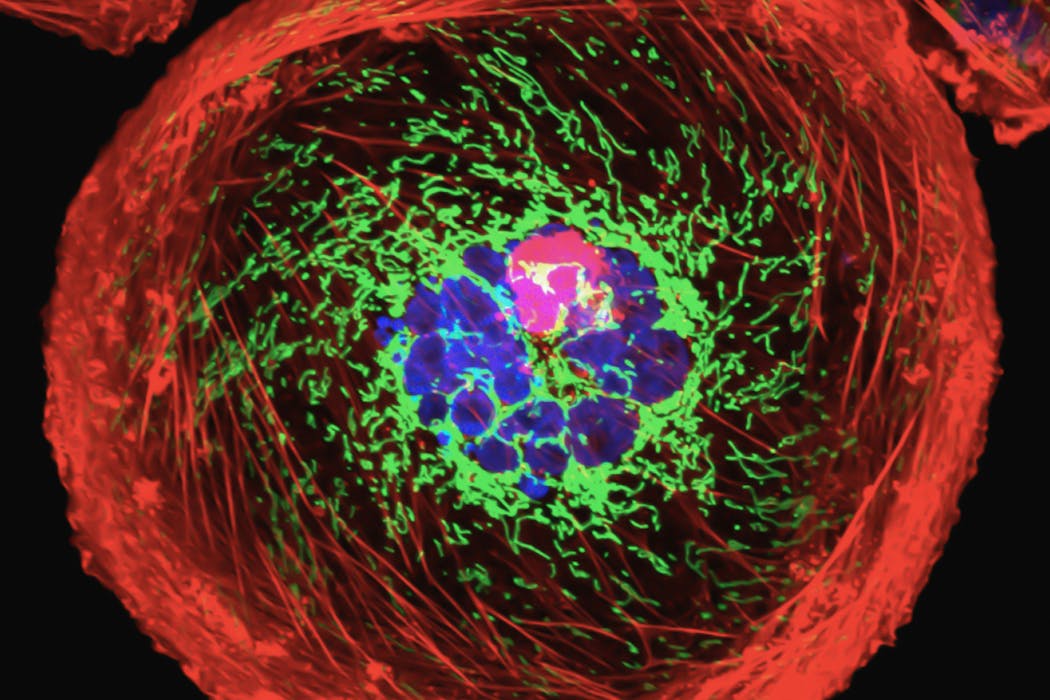
An estimated 170,000 Australians were diagnosed with cancer in 2025.
Many people know the causes of cancer are partly genetic. But how do your genes, which contribute so much of what makes you you, change what they do and cause a cancer?
Where do these “cancer genes” come from? And are they ticking time bombs?
Cancer is caused by DNA mutations
DNA is called the “instructions for life”, but what does it do? Your cells can read DNA like an instruction manual, and use those instructions to make proteins. The section of DNA with the instructions for a particular protein is called a “gene”.
A cell is like a tiny machine, and proteins are the cogs and gears that keep everything running smoothly – that is, keeping your cells healthy and functioning normally. There’s a protein for every job in a cell.
But what happens if there is a mistake in the instruction manual – a DNA mutation?
Incredibly, cells have proteins whose job it is to identify and fix DNA mutations. But if a DNA mutation can’t be repaired, a cell might make too much or too little of a certain protein, or maybe a protein that doesn’t actually work.
So, a common pathway to cancer is when a protein responsible for fixing DNA mutations is itself non-functional – its gene is mutated.
One of the most famous (or infamous) of these repair proteins is BRCA1. If you have a mutation in the BRCA1 gene, and your cells stop making BRCA1, other DNA mutations you get won’t be repaired properly. If you got another DNA mutation, you’d be stuck with it.
One mutation might be manageable, but maybe you get another. And another.
And then, one day, a cell that started with a BRCA1 mutation has ended up with a mutation in a gene that makes it divide faster than all your other cells, as well as a mutation in a gene that would normally kill the cell if it started being abnormal.
Now your cell can’t die, can’t stop dividing, and keeps getting more mutations – it’s a cancer.
While the genes involved can differ, this example illustrates how most cancers arise. Accumulated DNA mutations, acquired either over time (ageing naturally leads to some DNA mistakes) or from carcinogen exposure (such as UV radiation, dangerous chemicals, cigarettes and alcohol), push a cell over the edge.
There are two main kinds of DNA mutation: those in the cells that produce eggs and sperm (germline), and those in any other cell type (somatic). It’s an important distinction, because only germline mutations found in eggs and sperm will be inheritable – that is, able to be passed on to children.
Inheriting a gene mutation
If you have bad luck, and a BRCA1 mutation spontaneously occurs in a regular cell, that’s still only one cell with a BRCA1 mutation. But what if one of your parents had a germline BRCA1 mutation, and you inherited it?
In this scenario, every single cell in your body would have one copy of a busted BRCA1. (Your cells have two copies of every gene – one from each of your parents.)
Of course, every single cell will also have one copy of functional BRCA1, which can still repair proteins. But still, over the trillions of cells in your body, the odds of something going wrong will be much bigger.
For example, by the time a woman with an inherited mutation in BRCA1 reaches 70 years of age, there is a 65% chance she will have breast cancer and a 39% chance she will have ovarian cancer. In contrast, only 9%-12.5% of women with no family history of breast cancer will develop breast cancer by age 75.
Women with mutations in another DNA repair gene called BRCA2 face similarly poor odds.
Men with mutations in either gene also have higher cancer risks, particularly for breast cancer and prostate cancer.
Scientists have discovered dozens of “cancer genes” like BRCA1. Another example is a gene called TP53, which usually helps kill abnormal cells.
Inherited TP53 mutations are associated with perhaps the highest cancer risk. Inheritance of a TP53 mutation is the cause of Li-Fraumeni syndrome, which gives a person a 90% chance of developing some kind of cancer by age 60.
What can we do about these cancer genes?
You can’t change your genes. If you inherit or acquire a mutated form of a so-called cancer gene, you simply face a higher risk of developing certain cancers than someone who does not.
The best thing you can do is lead a healthy lifestyle. Don’t smoke, avoid alcohol, exercise regularly, eat a balanced diet, and stay safe in the sun.
If you have a family history of cancer, you should consult your doctor. They can direct you to genetic testing and counselling if necessary.
If you do have an inherited genetic mutation, you may be advised to participate in cancer screening programs at an earlier age than the general population or, in more extreme cases, undergo preventative surgeries. As with all cancers, catching them early, when treatment is most effective, is key.
Read more https://theconversation.com/what-is-a-cancer-gene-how-genetic-mutations-lead-to-cancer-276272


