

TikTokers are ‘becoming Chinese’ in a new trend that’s part parody and part politics
- Written by The Conversation
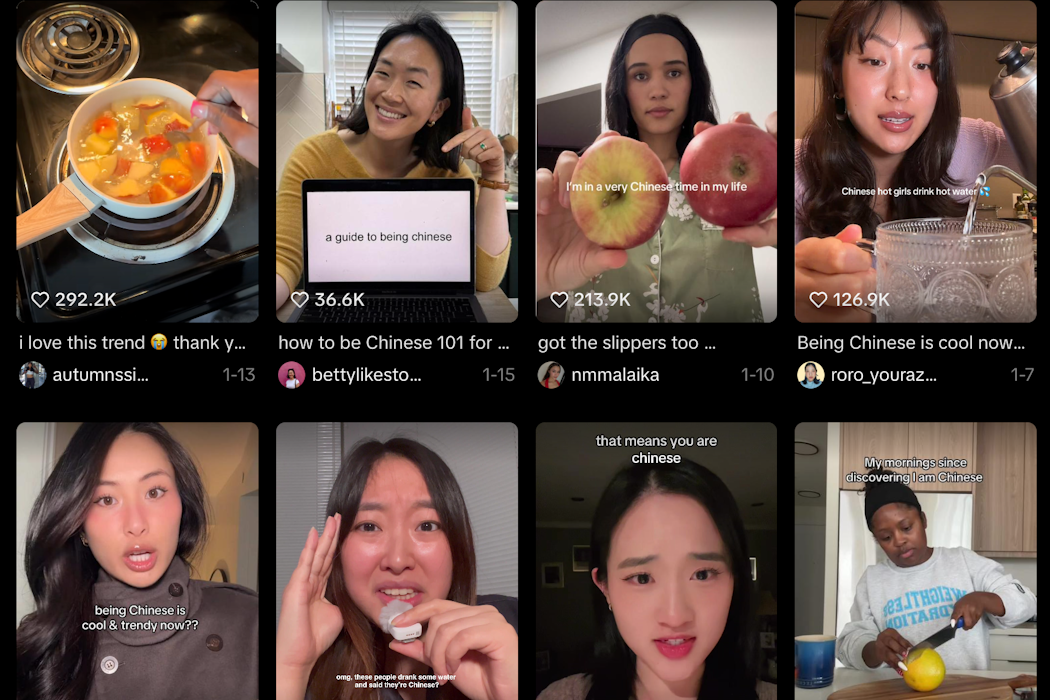
“Drink hot water” has become an unlikely life philosophy on TikTok, as countless users track their journey towards “being” or “becoming Chinese”.
All of this is part of a broader social media trend dubbed “Chinamaxxing”.
Out of context it may seem strange: thousands of Chinamaxxing videos – often with the caption “you’ve met me at a very Chinese time in my life” – show users of various backgrounds partaking in traditional Chinese practices and wellness rituals. This may look like going to bed early, wearing slippers indoors, eating congee, or doing traditional stretches to improve energy flow.
The Chinamaxxing trend is a unique example of digitally mediated cross-cultural admiration. It reflects the West’s general growing interest in traditional Chinese medicine and culture – and more broadly shows us how social media can reshape the way we think about and engage with other cultures.
Ideas of wellbeing in China
Digital spaces are increasingly shaping how cultures are understood and shared.
Recent articles have documented this shift. Journalist Zoey Zhang’s reporting on the “becoming Chinese” TikTok trend describes how non-Chinese are experimenting with wellness habits rooted in traditional Chinese medicine. This holistic framework, developed over centuries, is grounded in theories of qi (vital energy), yin and yang (complementary forces), and the five elements.
Some videos are tongue–in-cheek – akin to parody. But as Zhang and others note, many represent a genuine attempt to engage thoughtfully with Chinese culture. And in most cases, even the humorous videos aren’t making fun at the expense of Chinese people or culture.
Global Times reporter Xu Liuliu suggests the trend signals a move from a surface-level fascination to a more reflective form of engagement with Chinese culture. For instance, many users point out how Chinese practices associated with moderation, balance and longevity can function as antidotes to burnout culture.
Viral trends as soft power
Viral memes such as “you’ve met me at a very Chinese time in my life” aren’t just trivial; they can be viewed as cultural vehicles. Memes help condense complex cultural narratives and practices into an engaging and shareable format.
For example, a short TikTok video about refusing iced water stands in for a centuries-old medical philosophy tied to concepts of bodily balance and internal heat.
Through repetition, these kinds of visual narratives can become familiar, or even desirable, to audiences far removed from their original context.
It’s an example of “soft power”, which refers to a country’s ability to shape global perceptions of it through its portrayal of culture and values.
In the age of TikTok, Xiaohongsu (RedNote) and Instagram, soft power no longer flows only through film studios or state-sponsored media. It also moves through influencers’ kitchens, aesthetic vlogs and comment sections.
This latest wave of content promoting Chinese culture feels intimate, domestic and desirable.
Is it appropriation?
The Chinamaxxing trend has led many to ask an important question: are we seeing cultural appreciation, appropriation, or something in between?
Many users adapt and remix the practices to fit their own lives, and may lose important context or histories in doing so. On TikTok and Instagram, traditional Chinese medicine may be reduced to a checklist of habits: avoid cold drinks, boil ginger, prioritise rest. These kinds of oversimplifications risk detaching practices from the important philosophies underpinning them.
At the same time, it would be reductive to dismiss the entire trend as mere appropriation. Many creators credit their sources, share family stories and collaborate across cultures. And many are themselves members of the Chinese diaspora living in the West.
Rather, we might view the trend as a kind of trans-cultural renaissance, mediated by algorithms.
Why this moment matters
The Chinamaxxing trend has largely been driven by Gen Z users based in the United States. Although it’s hard to know for sure, some commentators think it may stem from this group’s growing disenchantment towards its own government.
The popularity of this content speaks to several contemporary Western anxieties. Burnout culture, climate uncertainty and economic precarity have made the West’s hyper-optimised self-care culture feel hollow.
This trend of celebrating Chinese culture comes at a time when some Western ideological structures are coming under intense scrutiny. Perhaps this is making Western audiences question whether the anti-Chinese sentiment they’ve been exposed to through their own institutions ought to be questioned.
The challenge is to remain reflective. Engagement can deepen cross-cultural understanding – but only if curiosity extends beyond memes. Drinking hot water may be simple, but understanding the worldview behind it requires more sustained inquiry.
As digital user-generated content continues to dissolve distances between cultures, it is in our collective interest to connect with one another beyond the algorithm.
Read more: Will drinking hot water help me lose weight, clear my skin or treat cramps?


