

How to whistle: the art and history of our shrillest skill
- Written by The Conversation
Whether you whistle or not, you can’t escape whistlers. They’re dog owners, construction workers, day dreamers, concertgoers and annoying sports fans whose shrill makes you wish for earplugs.
And there are tradies – Snow White’s pesky disciples who think whistling while you work makes chores fun. (Disclaimer: It didn’t work for my taxes.)
Admittedly, whistling can be useful for silencing noisy crowds and hailing taxis New York-style, but be mindful of the social rules. You can whistle admiringly at a flashy car, but you’ll be fined up to 750 euros for sexual harassment if you wolf whistle at women publicly in France.
Whistlers in history
Whistling is a common human skill. For centuries, shepherds and goat herders used whistling to summon livestock and direct dogs to steer the herds. The whistling sound can travel ten times further than shouting, which makes it ideal for long distance communication in rural areas.
Long ago, remote communities in Turkey and Mexico developed a whistled version of their spoken languages for communicating across the countryside. As linguist Julien Meyer explains, each syllable of a word translated to a whistled melody, allowing neighbours to talk across vast distances. Whistled languages are still in use today in places like La Gomera in the Canary Islands.
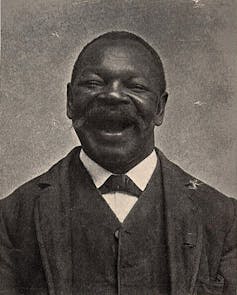
Whistling featured prominently in the development of the recording industry. Historian Tim Brooks recounts how Thomas Edison’s 1877 invention, the phonograph, drew public curiosity but the sound quality of recorded voice was too weak to show off the machine’s potential.
Shrill whistling, however, could be reproduced perfectly, which likely sustained public interest through the phonograph’s early modifications. Brooks traced the transformation of George W. Johnson from a whistling street performer at a ferry terminal to New York recording artist at the birth of the recording industry.
Decades later, whistling continued leaving musical marks in the industry. Notable examples include Roger Whittaker’s intricate The Mexican Whistler, Otis Redding’s layback ending to The Dock of the Bay, Bobby McFerrin’s cheerful Don’t Worry, Be Happy, and Maroon 5’s distinctive opening to Moves Like Jagger.
Today, there’s even a market for complete whistling albums like from Molly Lewis. But few recordings are as memorable as the 1966 Spaghetti Western theme song The Good, the Bad and the Ugly. It made whistling iconic for showdowns.
How whistling works
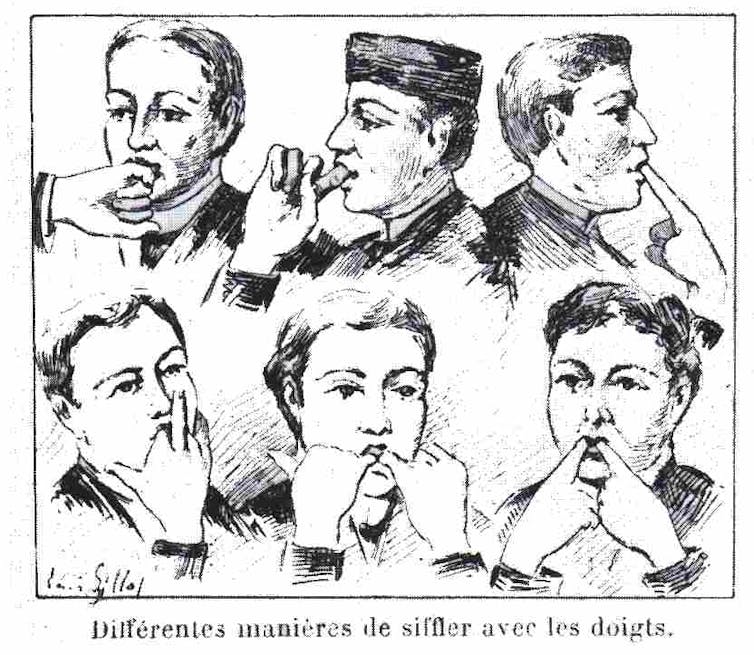
Whistling is produced when small pockets of air spinning at your lips interact with spaces in your mouth. Puckering your lips and whistling with fingers use the same principles.
Musical sound is produced when something, such as a guitar string, vibrates. Vibrations create pressure in the air which moves outwards in waves. When we whistle, the air itself becomes the vibrator. What happens next makes it audible.
Different spaces affect a sound wave’s energy as it passes through. Some cavities dampen the energy, while others excite it by swirling around making the cavern itself vibrate or resonate. That’s what makes whistling louder.
To experience the power of resonance, try singing in a bathroom with lots of towels, then remove the towels and sing again. The extra ring you’ll hear is the effect of resonance.
Whistling works by fine-tuning the speed of your breath with the size, shape and tension in your lips and tongue so the space rings.
Learning to whistle
Unfortunately, knowing the physics doesn’t make whistling easier. Learning requires coordinating your senses with how you move your body. You create a learning loop where your brain connects your mouth and breath movement with what you hear, feel and see when you whistle.
Simply put, you use trial and error to figure which actions help amplify the sound and which don’t.
Whistlers aren’t born. They’re made. If you find whistling hard, then you’ll need to practice isolating and moving all the parts in an epic Gollum-like quest for the precious ring.

Top tips for whistling pucker-style:
find a quiet room
wet your whistle – water on your lips helps
push your lips forward to make a small, firm hole; a mirror can help you see what you’re doing
breathe out with a steady air stream
listen to the sound and experiment with your tongue tip position (forward, backwards, higher, lower), lips shape (tightened, relaxed, wider, pushed forward, pulled sideways), and breath stream (faster, slower) – you should hear subtle changes, even if it just sounds like wind
play around until you find one position where the sound seems louder than others
make micro adjustments in the position to find which movements increase the ring
repeat all steps daily so your brain learns to find your whistle automatically and tune it.
Failing that, take up singing. It’s easier and you won’t look like you’re kissing a ghost.
Read more https://theconversation.com/how-to-whistle-the-art-and-history-of-our-shrillest-skill-275560


_1.jpg)