

News Daily

The Times

Australia

  • Written by The Conversation

When a local political commentator recently suggested (partly tongue-in-cheek) that New Zealand might respond to US President Donald Trump’s new world order by becoming the seventh state of Australia, it was dismissed by the prime minister and most political leaders.

But the fact their views were even sought shows how far the debate has moved since Trump began dismantling the old rules-based international order New Zealand has long considered the basis of its foreign policy.

At January’s World Economic Forum in Davos and more recently in his address to the Australian parliament, Canadian Prime Minister Mark Carney laid down a challenge for other “middle powers” to start finding practical solutions to the new global realities.

Carney’s clarion call matters also for smaller powers uneasy about the United States under Trump and rising great-power disorder. New Zealand, with its long-held preference for multiple alliances and foreign policy independence, is likely a keen ally in such a middle-power movement.

Yet the hard part remains: how can middle and smaller powers effectively work together when still mostly reliant on great powers for security, trade and technology?

The technological dimension, in particular, makes middle power cooperation harder today. Modern states are existentially dependent on semiconductors, AI systems, 5G infrastructure and cloud computing – technologies produced overwhelmingly by the two “technopoles” of the US and China.
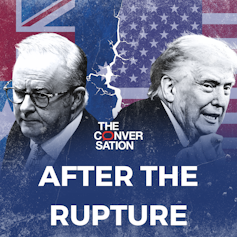
In Trump’s precarious world, NZ will need all the middle-sized friends it can get
The world order has “ruptured”, Canadian Prime Minister Mark Carney has warned – so it’s time for countries like Australia and New Zealand to forge a new, less US-reliant future. In this new series, we’ve asked top experts to explain what that future could look like – and the challenges that lie ahead. Finding a ‘workaround’ In a forthcoming collection of essays about how middle powers might cooperate on vital technology in this turbulent world, the concept of “workarounding” describes how countries can pursue strategic objectives collectively, without routing everything through Washington or Beijing. For New Zealand, technology is already an area of real foreign policy concern. Military interoperability with Australia – a key driver behind potentially joining AUKUS Pillar Two – is a sticking point. More broadly, New Zealand risks being left behind in the AI revolution. The Indo-Pacific region, however, offers promising workaround partners. Beyond Australia – New Zealand’s oldest friend and only formal ally – there is a growing cluster of tech middle powers with which Wellington has positive relationships: India, South Korea and several key ASEAN states. India produces the world’s highest number of IT graduates, runs ambitious semiconductor and quantum computing programs, and maintains multiple alliances that allow it to resist being absorbed into either great power orbit. New Zealand’s relationship with India is burgeoning with the announcement at the end of 2025 of a free trade agreement. New Zealand also has a trade agreement with South Korea, and both countries are part of the Indo-Pacific Four group (with Australia and Japan). Home to Samsung, Hyundai and LG, South Korea is often heralded as the most successful tech middle power and occupies an important position in critical international tech supply chains. The ASEAN bloc – driven by key member states – also has a deep institutional instinct for hedging between great powers, and contains five major tech economies: Singapore, Indonesia, Malaysia, Thailand and Vietnam. New Zealand has strong relationships with ASEAN, including a trade agreement and a Comprehensive Strategic Partnership. The problem is that Australia, India, South Korea and ASEAN all face their own tech dependency constraints, and the group lacks a technologically capable anchor outside the US-China duopoly. Europe as a way forward A third party may be able to fill that anchor role – the European Union (EU). While it remains an imperfect geopolitical actor, long derided for being a hobbled giant or a geopolitical sleepwalker, the EU is still a potential ally to middle powers. That’s because it is not a conventional state and does not have the military capabilities of great powers. This forces it to take a multilateral and multi-stakeholder approach to geopolitics. Importantly, the EU has significant and growing technological weight, most clearly expressed in its regulatory frameworks. Its General Data Privacy Regulation has established a global data governance template that neither Washington nor Beijing can match. Such rules shape how data flows, how AI is governed and how digital markets are structured globally. The EU is also moving decisively into hardware to complement its regulatory power. The 2023 European Chips Act mobilises over €43 billion (A$70 billion) to double Europe’s share of global semiconductor production, spurred by the building of a semiconductor plant in Dresden. Dutch multinational ASML’s near-monopoly on crucial semiconductor manufacturing machines gives Europe genuine structural leverage over global chip supply chains. Furthermore, during the second Trump presidency, the EU has moved quickly to improve its strategic autonomy, as well as deepen its Indo-Pacific presence. It is building trade relationships and positioning European tech companies as alternatives to US and Chinese providers. New Zealand’s relationship with the EU is at an all-time high since a free trade agreement came into force in 2024. And there is significant convergence on how both view the Indo-Pacific. The NZ-EU trade agreement includes a dedicated digital trade chapter, and the inaugural trade committee meeting in October 2025 flagged cooperation on digital technologies and critical minerals as priorities. Carney was right about the old “fiction” being over. The task now for smaller powers such as New Zealand is not to mourn it, but to help construct something more durable in its place. This is a networked middle-power order built on shared standards, supply chain resilience and strategic diversification.

Read more https://theconversation.com/in-trumps-precarious-world-nz-will-need-all-the-middle-sized-friends-it-can-get-276391

Split Corrugated Conduit for Flexible Cable Protection

For wiring assemblies in vehicles, machinery and equipment, choosing suitable cable protection helps keep cables organised and reduces direct contact with surrounding parts. Mojak Plastics supplies plastic tubing and conduit options for different installation needs, and split corrugated conduit can... Read more

Trailers Melbourne Buyers Can Compare: When Box Trailers Make Sense

For many homeowners, businesses and tradespeople, trailers Melbourne customers use every week need to be versatile enough for changing loads. A box trailer can be particularly useful because its enclosed sides help contain cargo while providing a straightforward loading area... Read more

Bottle Label Printing That Balances Design and Readability

Product labels need to attract attention while making information easy to find and understand. On a bottle, the available space may be limited by the container’s shape, so every design decision matters. Bottle label printing should account for visual hierarchy... Read more

Office Cleaning Melbourne: Planning a Consistent Workplace Routine

Businesses looking for office cleaning Melbourne need a plan that reflects the way their workplace operates. A clean office supports day-to-day organisation, helps shared spaces remain presentable and gives employees and visitors a more orderly environment. Eco Green Cleaning Management... Read more

Pinboard Solutions for Offices, Schools and Shared Information Spaces

Why a Pinboard Remains Useful A pinboard provides a simple way to display information that needs to remain visible without being rewritten. Lawdex supplies fabric and cork options for offices, schools, staff areas and other environments. A pinboard can be used... Read more

Retractable Hose Reel: A Practical Guide To Choosing The Right Hose Storage

A retractable hose reel can make hose storage more organised, accessible and practical in workshops, commercial facilities, service areas and other working environments. Instead of leaving a hose coiled across the floor or requiring staff to manually wind it after... Read more