

School hours have barely changed since the 1800s. This doesn’t suit teenagers’ sleep
- Written by The Conversation
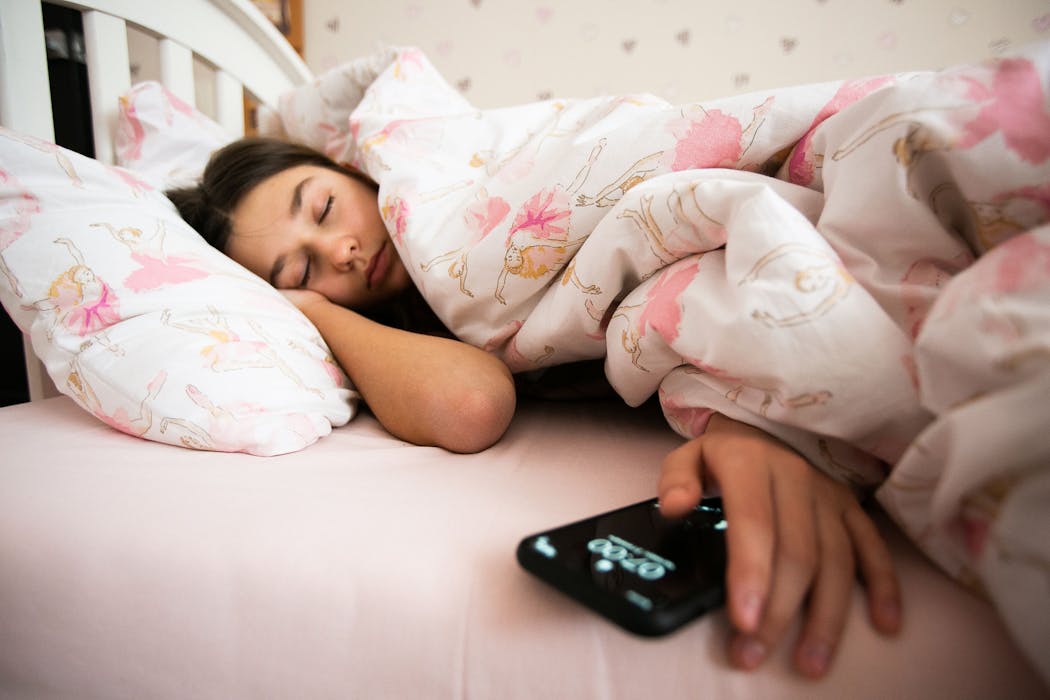
This year, students at The King’s School in Sydney are starting lessons later on Wednesdays. The start of the usual day has been pushed back from 8.50am to 9.40am. This is to allow students to do self-directed learning at home or school before formal lessons begin.
While the school hopes the move will build independence, later school times also better complement teenagers’ sleep patterns.
Research suggests typical school hours may be not be compatible with teenagers’ sleep needs. And this can harm their learning and wellbeing.
Why are school hours 9 ‘til 3?
The usual six-hour school day goes from about 9am to 3pm. Many public high schools and private schools also start earlier, at around 8.30am.
This convention dates back to the 19th and early 20th centuries. Back then, school was timed to maximise daylight hours and fit in with factory shifts. Bus timetabling also played a role, as transport was shared between schools.
Since then, parents’ work hours and after-school activities have added constraints on top. While school hours now seem “normal,” they are not necessarily what’s best for students as they grow, or when their brains are most alert and ready to learn.
What do teenagers need?
Throughout life, the amount of sleep needed for normal functioning changes as we age. For example, babies need regular naps while older children only sleep at night.
Traditional school hours suit younger children, as they tend to fall asleep and wake up earlier than adolescents.
But around puberty, things change. Teenagers experience what sleep scientists call a “circadian phase delay”, when the body’s internal clock shifts later. This is because melatonin, the sleep hormone, is released about two hours later than in childhood.
So, many adolescents cannot fall asleep much before 11pm and can still be in biological “night” if they are forced to get up at 6am or 7am to get ready for school.
Major medical bodies recommend eight to ten hours of sleep a night for teenagers. But early-morning school starts can make this hard to manage.
Studies of school systems with early starts, shows many teenagers only get six to seven hours of sleep on a school night.
This adds up. Chronic sleep deprivation in adolescents has been linked to poorer attention and memory, greater irritability, more behaviour problems and higher rates of anxiety and depression.
Obviously, none of this is conducive to learning or healthy development.
What is more brain-friendly?
To address this, more high schools could start later.
Schools could introduce an “arrival window” rather than a hard start time. The arrival window could allow for quiet study, wellbeing check-ins, or breakfast clubs. This could let students who need it get more sleep.
Then, once school officially starts, the most demanding subjects, which require sustained focus, would be held from mid-morning.
Schools could also consider more flexible learning models. Some schools already use partial learning from home, which can help in a limited way.
For older students, the first part of the day could be online and mostly at their own pace for low-stakes tasks such as reading, short quizzes, drafting and revision. In-person teaching could start later.
Learning from home depends on reliable internet, a quiet space and adult support, which are not evenly available to all students. So schools would need to make sure space and supervision were also available at school.
What stands in the way?
Starting later also means finishing later. This would require having enough staff across flexible hours. This may be a challenge for some schools, given teacher shortages around the country.
To address this, schools could use staggered staffing and community partnerships to cover early and late blocks. For example, this could involve youth services, cultural institutions and work-based placements for students doing teaching degrees.
There may also be fears about disrupting established routines and transport timetables. Yet practical experience and modelling work in the United States shows later high school start times are feasible when systems adjust bus routes. This requires coordinated work across education and transport sectors.
In Australia, school start and finish times are typically set locally at the school level. In many states, principals generally have discretion to determine (or adjust) start times, usually through consultation with the school community.
The real question is whether we are prepared to redesign school around teenagers’ brains, rather than expecting their brains to fit a timetable built for a different century.


