

Musk’s SpaceX is shaping up as the biggest IPO on record. It’s also bending the rules to do so
- Written by The Conversation
Elon Musk’s space exploration company SpaceX has filed confidential papers ahead of a planned public company listing on the US NASDAQ stock exchange.
The initial public offering (IPO) for the company controlled by the world’s richest man is targeting a total valuation of US$2 trillion. Musk plans to list only a small fraction of the company to raise US$75 billion from public investors, which would still make it the largest IPO in history.
So, why is SpaceX planning to go public? And what does the IPO mean for investors who might want a tiny slice of the action?
The backstory
SpaceX says it aims to “make humanity multiplanetary”. You would expect no less from Musk, who founded SpaceX in 2002.
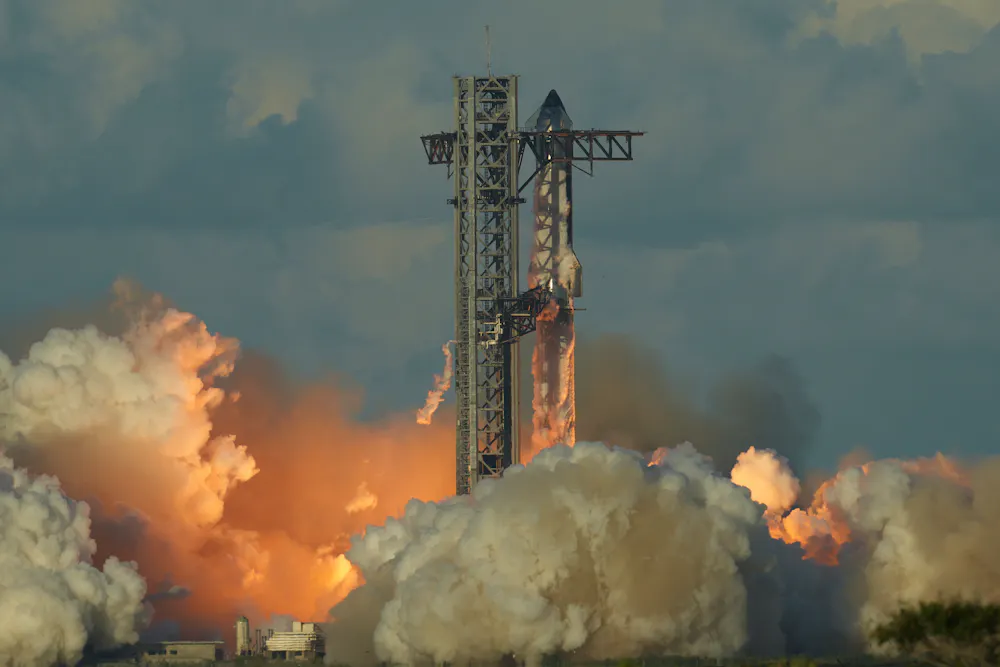
His company’s breakthrough was to re-use as much of the rocket and launcher vehicle as possible. This slashed launch costs to as little as 5% of the costs in the early 2000s, and turned commercial space flight from science fiction into reality. The company says it has now completed about 600 successful rocket landings.
Yet, for all its space ambitions, SpaceX still derives 50–80% of its revenue from Starlink, a communications business, which provides satellite internet to over 10 million users around the world.
In February 2026, SpaceX merged with xAI, the loss-making AI company behind the Grok chatbot, in what was the largest private merger transaction on record. The deal valued xAI at US$250 billion and SpaceX at US$1 trillion, creating a combined entity worth US$1.25 trillion.
The merger has helped to set the stage for the SpaceX IPO.
Musk suggested the IPO proceeds will be used for launching up to one million data centre satellites into space. The idea is that space-based data centres would be powered by abundant solar energy, and therefore bypass the constraints of electricity and water usage on Earth.
Bending the rules for the IPO
SpaceX may be the first of three mega-IPOs this year, ahead of potential listings of AI companies Anthropic and OpenAI.
If it goes ahead with plans to raise US$75 billion, that would represent just 3.75% of the company’s total value. It means the vast majority of SpaceX would remain in private hands, owned by Musk himself and a handful of early private investors. In stock market terms, this is called a low “free float”.
Normally, companies that only list such a small percentage of their total value would not qualify for inclusion in major stock market indices like the S&P 500 or the NASDAQ 100.
The NASDAQ normally requires at least a 10% free float of shares in a given company. But to allow a potential listing of SpaceX to be included in the index, the exchange has introduced a special adjustment to the weighting of shares and removed the 10% minimum.
NASDAQ also reduced the normal “seasoning period” before a newly listed company can join the index from three months to just 15 trading days. Again, this is to accommodate the SpaceX listing.
For investors in passive funds, including exchange-trade funds (ETFs), this matters a lot. Currently, more than US$600 billion of investors’ money is with passive funds that track the NASDAQ 100 index. As soon as SpaceX joins the index, these investors will automatically be buying in. The concern is that allowing giant companies such as SpaceX to enter the index too quickly could lead to big price swings, which would expose millions of investors to high volatility.
SpaceX wants investors to value it at US$2 trillion, but it only earned US$15 billion in revenue last year. At that rate, it would take 133 years of revenue just to match its current asking price.
Tesla, one of the most expensive stocks in the world, would take just 13 years — making SpaceX’s price tag ten times higher.
Other leading market indices, such as S&P 500 and FTSE Russell, are also bending their rules to fast-track the inclusion of very large, newly listed companies.
Many more investors have their money in funds that track S&P indices compared to Nasdaq 100 – more than US$16 trillion in passive funds track the S&P. If the S&P 500 follows NASDAQ’s lead and changes its own rules to accommodate SpaceX, the wave of automatic buying would be even larger.
What does this mean for investors?
Musk’s companies have long been the darlings of non-professional, retail investors, and SpaceX would be no exception. In fact, the company said it aims to sell up to 30% of its shares to non-institutional, individual investors.
With SpaceX’s sky-high valuation, investors need to stop and think before buying in. But when powerful companies can rewrite the rules in their own favour, thinking carefully becomes a luxury. Markets only work when everyone plays by the same rules, and right now, not everyone is.


