

Homeless camps are rising as affordability falls. It’s a problem Australia has solved before
- Written by The Conversation
A homelessness worker in regional Victoria has seen a 200% increase in people living in free campgrounds – and a big increase in families “sleeping rough”, he told the ABC this week. For many people, finding a rental is “nearly impossible”, he said.
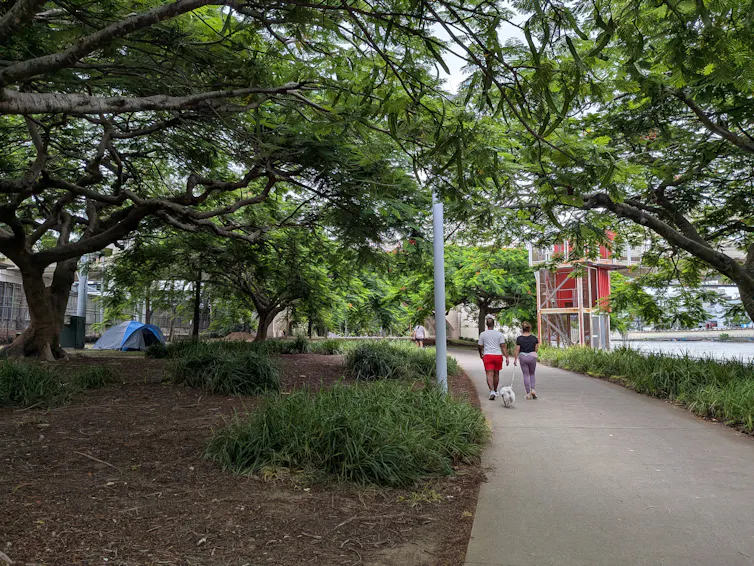
At the same time, disputes over homeless encampments are happening across Australia. Lately, local governments have abandoned their “welfare first” approach to people camping on public land, seizing and destroying tents and personal belongings.
In Queensland, legal action supported by Basic Rights Queensland recently found that eviction of a homeless camp by Moreton Bay City Council, north of Brisbane, violated human rights, with those evicted “not treated as humans”.
Such cases highlight growing tensions between local authorities and people forced to live in tents, vehicles or makeshift shelters as the housing crisis deepens.
Post war housing shortage
These camps are often treated as a new problem – but Australian cities have faced similar informal settlements before.
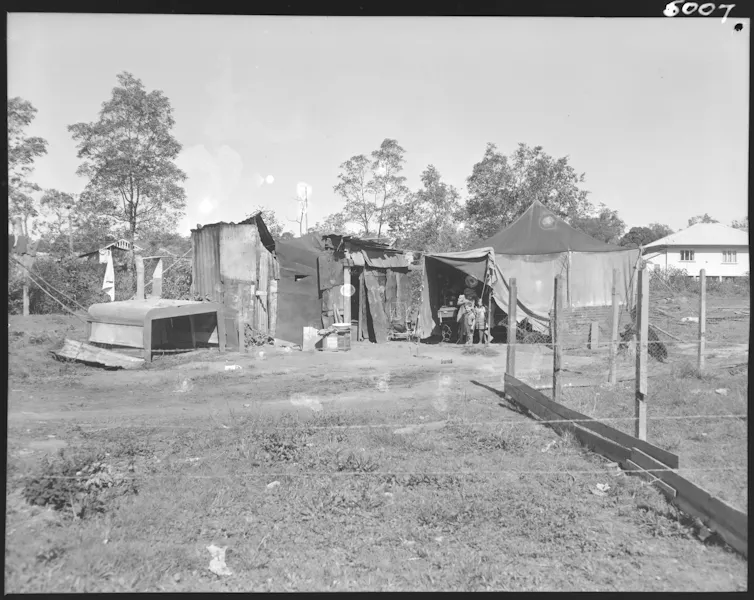
My research into postwar housing reveals that, in the 1940s, tent cities and “shanty” settlements appeared across the country, as families struggled to find homes.
Long before today’s debates about homelessness, Australians were improvising shelter in parks, decommissioned military camps and vacant land, forcing governments to confront a severe housing shortage.
By 1945, Australia’s postwar housing deficit was enormous – approximately 300,000 homes – leaving up to a million people homeless or living in overcrowded housing. Private builders could not keep up, so people resorted to ad hoc solutions.
Newspapers describe tent villages and tin-roofed “humpies” emerging on city fringes – from Sydney’s northern beaches to Adelaide and Lithgow in New South Wales, where a “tin town” of corrugated-iron dwellings housed workers and their families.
Brisbane’s housing camps
The housing shortage in Brisbane alone was calculated at 13,500 houses in 1945 – a time when the city’s population was 380,000 people. New house construction was “not keeping pace with the needs of a growing population”. By 1949, an estimated 30,000 to 40,000 people were considered homeless.
During World War II, Brisbane was a major United States military base. After the war, pressure mounted to convert abandoned sites, such as the US Army camp at Barrambin (Victoria Park), into temporary housing for families.
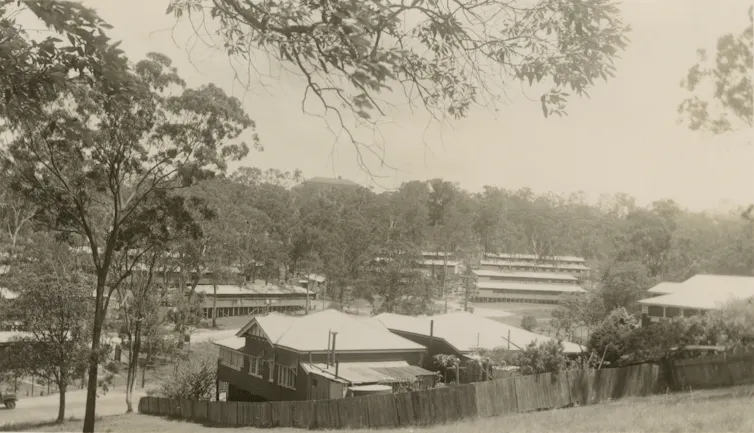
At first, the state government refused, stating that facilities designed for men would need upgrades if they were to be used by women and children. Undeterred, families started squatting in these disused facilities across the city.
My research identified a total of 11 informal settlements across Brisbane in this postwar period, including eight housing camps in former military facilities, and three on public parkland.
Living conditions were poor. Residents relied on kerosene stoves and there was no running water.
In 1947, dozens of children were hospitalised with gastroenteritis – and 14 died.
Faced with rising public pressure, including a campaign led by the Courier Mail, authorities recognised the futility of threatening eviction and began taking a position of tolerance.
The Queensland Housing Commission requisitioned military camps. Brisbane City Council and the Queensland government supplied drinking water, toilets and tents to families camping in the bush on the city’s fringe.
What solved the shortage?
After the war, housing shifted to being seen as “not only the need but the right of every citizen”.
The fastest housing supply expansion in Australian history occurred during the postwar decades. Construction surged as state and federal governments invested directly in the construction of homes.
At the peak of government investment in Australian housing construction, 20% to 30% of new homes were funded by government, compared to 1% to 2% today.
In the years 1945–50, construction accounted for 84% of building activity. The construction labour force doubled, mostly through migration. In Brisbane, public authorities constructed housing on the grounds of housing camps at Holland Park and Chermside, allowing former camp residents to remain within their communities.
Many residents were given government loans to purchase these homes, at construction cost.
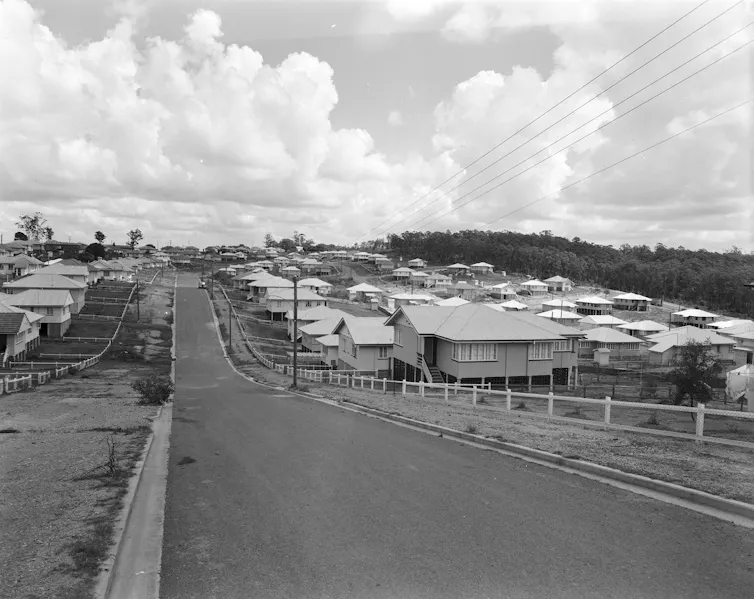
However, even at this level of construction, it took two decades to alleviate the housing shortage. Informal camps were a common band-aid that persisted for almost 20 years.
Lessons for our housing crisis
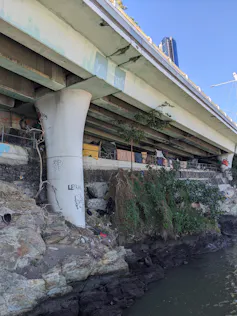
As housing affordability has worsened in the 2020s, informal encampments of tents, vans and makeshift shelters have re-emerged in urban parks and on the fringes of cities.
Like their postwar predecessors, these settlements are improvised solutions, created by people excluded from the formal housing market.
The 1940s informal camps provide three important lessons:
People will always find somewhere to live – even if it’s unhealthy, unsafe, or unlawful.
Governments will oscillate between tolerance and punishment. In the 1940s, they fluctuated between threatening eviction and installing water and toilets in camps.
The only durable solution is supply, but not market supply – public supply.
In the postwar era, state housing authorities tackled severe shortages with innovative mass construction — demonstrating that modern, serviced homes could be delivered at scale.
Addressing today’s structural shortage similarly demands a stronger housing system – anchored by sustained, large-scale public investment in construction.


